



Children in the United States typically receive two doses of the MMR vaccine: the first between 12 and 15 months of age and the second between 4 and 6 years.
Credit: Courtney Perry/Washington Post/Getty
Researchers warn that an executive order signed by US President Donald Trump earlier this week could harm children’s health across the country. Vaccination experts say the proposed changes are not supported by scientific evidence and could delay protection against serious infectious diseases.

Autism is on the rise. What is the real cause of the increase?
The August 10 order calls for children to receive vaccines against fewer diseases than are currently recommended. It also proposes separating combination vaccines into individual injections and spacing those doses over time, beginning with the measles, mumps and rubella vaccine, commonly known as the MMR vaccine.
The order is “not based in science in any way”, says Paul Offit, a viral immunologist and director of the Center for Vaccine Education at Children’s Hospital of Philadelphia in Pennsylvania.
Although President Trump has limited authority over childhood vaccination schedules — which are generally established by state health officials — the proposal could influence how families and health-care providers approach routine immunization. Nature spoke with paediatric vaccine experts about the potential health consequences of delaying or deferring childhood vaccinations.
What does the science say about splitting combination vaccines?
When signing the executive order, President Trump claimed that combination vaccines contain dangerous amounts of liquid, describing a vaccination as being “about the size of a soda bottle”. Offit says there is no evidence to support that claim. A single childhood vaccine dose, including an MMR dose, contains about one-tenth of a teaspoon — approximately 0.5 millilitres — of liquid, he says.
‘Staggering’ number of people believe unproven claims about vaccines, raw milk and more
Previous research1,2 suggests that combination vaccines can improve population immunity and lower health-care costs. Marc Zit, a health economist at New York University, says that combination vaccines reduce the number of clinic visits and injections required by families. For example, Belgium recorded an 8% increase in vaccination coverage against diphtheria, tetanus, whooping cough and the bacterial infection Haemophilus influenzae type B after introducing a four-dose combination vaccine.3
In 2006, researchers reported that children could develop immunity at a younger age when a combination vaccine was available.4 Earlier vaccination means that children do not have to wait for additional injections before gaining protection, says Jitt. For a highly contagious disease such as measles, even a delay of several months “could make all the difference” in determining whether a child becomes infected, he says.
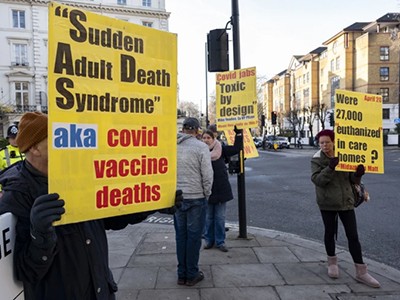
During the signing of the executive order, President Trump also repeated the false claim that vaccines are linked to autism. The idea can be traced to a 1998 paper that was later retracted.5 Concerns about a possible connection between the MMR vaccine and autism have contributed to calls for separating vaccine doses. However, dozens of countries and independent scientific committees have reviewed and confirmed the safety and effectiveness of the MMR vaccine. Since the vaccine was developed in 1971, hundreds of millions of doses have been administered, and no association with autism has been identified.
Are individual vaccines available for children in the United States?
Source: www.nature.com