


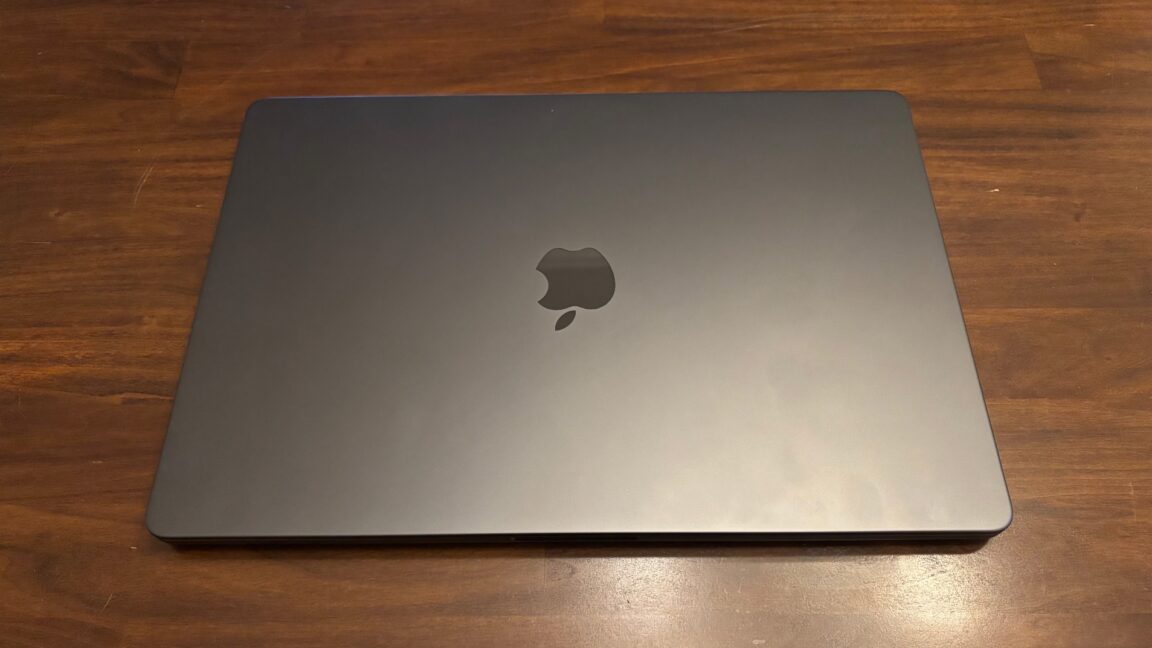
Apple’s latest MacBook Pro introduces a tandem OLED display with up to 2,000 nits of HDR peak brightness, per-pixel illumination and a 10–120 Hz variable refresh rate. The screen is a major upgrade over the previous MiniLED panel, although buyers focused on AI workflows or 3D applications may still want to wait another year as chip architectures continue to evolve and these machines remain expensive.
A major display upgrade
The MacBook Pro’s display is arguably its clearest improvement. Apple describes it as a “tandem OLED display,” meaning it uses two light-emitting layers. The design helps deliver higher peak brightness and may reduce the risk of burn-in by allowing the layers to share the workload rather than operating at full power continuously.
The panel reaches up to 2,000 nits for HDR highlights and offers sustained brightness of 1,000 nits. Apple’s operating-system-level handling of HDR also remains a strength.
Brightness is important for HDR content, but OLED’s biggest advantage is per-pixel illumination. Each pixel can be switched on or off independently, producing true black levels and exceptionally strong contrast. The previous MacBook Pro’s MiniLED panel delivered impressive contrast for an LCD, but OLED has a fundamental advantage that is visible in everyday use.
Color, refresh rate and size options
The display natively supports both the P3 and Adobe RGB color gamuts. It also offers a variable refresh rate ranging from 10 to 120 Hz, matching the range available on Apple’s other products.
The MacBook Pro is available in approximately 14-inch and 16-inch versions. The smaller model has a resolution of 3,024 × 1,986 pixels, while the larger model offers 3,472 × 2,226 pixels. Buyers can also choose nano-textured glass to reduce glare, although that option adds $150 to the price.
Why some buyers may want to wait
The display upgrade is clear, but the longer-term outlook for Mac hardware is less certain. Apple and other companies are rethinking chip architectures for emerging workflows such as AI applications and 3D software. Macs may benefit from similar advances, so users focused on those workloads could decide to wait another year, particularly given the high cost of these machines.
Source: arstechnica.com