


Close Menu
HitechubHitechub
    What's Hot
    Science

    Revolutionizing CAR T Cell Therapy: How 3D Printed Lymph Nodes Can Enhance Accessibility

    Science

    Red Stripes in Welsh Caves: Britain’s Oldest Art Finally Recognized After Natural Phenomenon Dismissal

    Wheels

    Sherp vehicle – still the best truck in the world

    Important Pages:
    • About Us
    • Privacy Policy
    • Terms & Conditions
    Facebook X (Twitter) Instagram Pinterest
    Facebook X (Twitter) Instagram
    HitechubHitechub
    Sunday, June 14
    • Technology
      1. AI
      2. Gadgets
      3. View All

      This is the most popular CEO in the world

      Sectors in which “Chat-GPT” is most often used

      AI Pioneer Expresses Concern About Potential for AI to Surpass Humanity

      Artificial intelligence has begun to “swallow” professions

      What’s new in Android 14

      Europeans have about 700 million old mobile phones in their drawers

      Here’s how you can tell if your phone is being tapped

      “Sneaker X” – computer case in the shape of a sneaker

      Russian Gamers Unite to Prevent Nuclear War: Join the Fight Online

      Challenges of Space Travel: Why Journeying to Space is So Difficult

      NASA Astronaut Casts Historic Vote from Space

      Discover the Future of Comfort: What If You Could Wear a Chair?

    • Science
      1. Space
      2. Wheels
      3. View All

      Galaxies in the universe are growing more slowly than they should

      “Espace” presented the new lander “Apex 1.0”

      The largest asteroid sample ever collected has arrived on Earth

      (VIDEO) Incredible flight of the Parker Solar Probe

      Toyota wants to make a new generation battery with a range of up to 1,200 km

      Meet Toyota’s lunar “baby” that could make exploring the Moon easier

      Microlino – Is this the perfect city car?

      Alfa Romeo 4C gets an electric successor

      Reversing Aging: Experts Share New Findings That Changed Their Perspective

      Harvard Study Challenges the Five-Meal-A-Day Diet: Time to Rethink Your Eating Habits

      20-Year-Old Director Achieves Success with Sci-Fi Horror Film ‘Backrooms’

      Can Lab-Grown Sperm Help Infertile Men Conceive Their Own Children?

    HitechubHitechub
    Home » The end of passwords
    Technology

    The end of passwords

    Share Facebook Twitter Pinterest WhatsApp
    passwords
    Share
    Facebook Twitter LinkedIn Pinterest WhatsApp

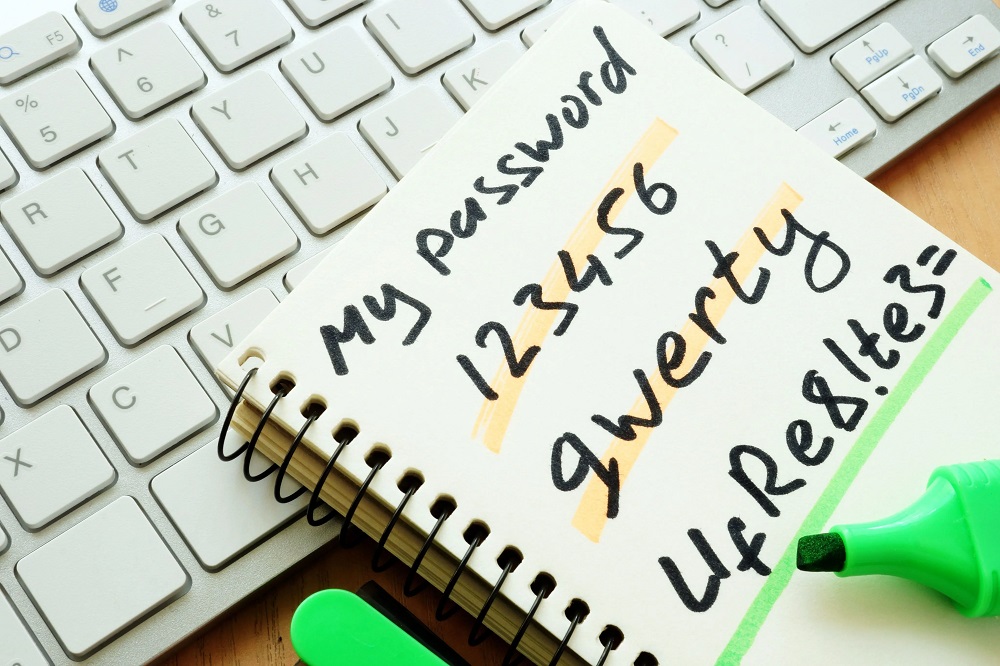
    Traditional passwords, once a cornerstone of user account security, are increasingly revealing their flaws over time. The need to remember them, susceptibility to hacking and user inconvenience are among the challenges plaguing these age-old security tools. Let’s not forget the habit of the elderly to write down their passwords on sticky notes on the devices themselves. In response to these limitations, tech giants Google, Apple and Microsoft are turning to passwordless authentication methods, using biometrics and security keys to provide users with increased security and an improved experience.
    passwords

    What’s the problem with passwords?

    While passwords have long held the title as the most popular means of authenticating users, a number of problems surround the concept. Numerous studies have highlighted the risks associated with compromised passwords, exacerbated by factors such as password retention and the habit of using the same password on multiple accounts, which significantly contribute to data misuse. For example, a 2019 study conducted by Yubico and the Ponemon Institute found that half of employees shared their passwords with colleagues. Similarly, findings from the Balbix Password Day 2020 report showed that 99% of users reused their passwords on an average of 2.7 accounts. This practice is primarily driven by the pursuit of convenience and speed, emphasizing the urgent need for safer and more convenient alternatives.

    Is biometric authentication better than a traditional password?

    Increased security

    Biometric authentication brings an extra layer of security. Biometric characteristics, unique to each individual, are resistant to replication. Unlike password, which can be guessed, stolen or shared, biometrics are intrinsically linked to the individual, which greatly increases the bar for unauthorized users trying to impersonate someone else.

    User experience

    Biometric authentication eliminates the need to remember or manage passwords. Users are freed from the worry of forgotten passwords or the laborious process of creating and maintaining complex passwords for different accounts, this contributes to a more pleasant user experience of the authentication process.

    Reduced risk of abuse

    Although passwords can be shared or stolen, intentionally or unintentionally, biometric characteristics are tied to the account owner and are not easily transferable. Sharing or borrowing one’s biometric attributes becomes significantly more challenging for those who wish to abuse it in some way.

    Resistance to brute force attacks and dictionary

    Biometric authentication also boasts increased resistance to standard attack techniques, such as brute force attacks. a dictionary attack, in which cybercriminals attempt to extract or compromise password uses.

    Share. Facebook Twitter Pinterest LinkedIn WhatsApp
    Previous ArticleDeep neural networks do not see the world as we see it
    Next Article After the asteroid hit that wiped out the dinosaurs

    Related Posts

    Technology

    Russian Gamers Unite to Prevent Nuclear War: Join the Fight Online

    Technology

    Challenges of Space Travel: Why Journeying to Space is So Difficult

    Technology

    NASA Astronaut Casts Historic Vote from Space

    Technology

    Discover the Future of Comfort: What If You Could Wear a Chair?

    Technology

    How Cell Phones and Screens Disrupt Your Child’s Sleep: Tips for Better Rest

    Technology

    Empowering Girls: Launching Africa’s First Private Space Satellite

    Technology

    Essential Guide for Parents: What to Know About Kids’ VR Gear Choices

    Technology

    How to Identify and Combat Fake News on Your Facebook Feed

    Add A Comment
    Leave A Reply Cancel Reply

    Stay In Touch
    • Facebook
    • Twitter
    • Instagram
    • Pinterest
    Top Picks
    Science

    Astronomers Discover the Missing Black Hole Wind in the Milky Way Galaxy

    After five decades of diligent research, astronomers have discovered compelling evidence that Sagittarius A*, the…

    How Earth’s Water Enabled the Evolution of Intelligent Life – Cyworthy

    Massachusetts Shaken by Meteor Impact: Widespread Tremors Felt Across the State

    Harvard Study Challenges the Five-Meal-A-Day Diet: Time to Rethink Your Eating Habits

    After a Decade of Research, Scientists Uncover East Asia’s Tallest Tree

    Most Popular
    Science

    Exploring the Risks of an AI Hallucination-Based Encyclopedia: What Could Go Wrong?

    Science

    Atlantic’s Mysterious Cold Mass: Implications for AMOC Weakening

    Categories
    • AI (13)
    • Gadgets (10)
    • Science (228)
    • Space (9)
    • Technology (37)
    • Wheels (9)
    Our Picks
    Technology

    Discover the Future of Comfort: What If You Could Wear a Chair?

    Science

    How Hidden Manganese Stores Contributed to Earth’s Oxygen Formation

    © 2026 Hitechub.
    • Home
    • About Us
    • Privacy Policy
    • Terms & Conditions

    Type above and press Enter to search. Press Esc to cancel.

    We are using cookies to give you the best experience on our website.

    You can find out more about which cookies we are using or switch them off in .

    Ad Blocker Enabled!
    Ad Blocker Enabled!
    Our website is made possible by displaying online advertisements to our visitors. Please support us by disabling your Ad Blocker.
    Go to mobile version
    Hitechub
    Powered by  GDPR Cookie Compliance
    Privacy Overview

    This website uses cookies so that we can provide you with the best user experience possible. Cookie information is stored in your browser and performs functions such as recognising you when you return to our website and helping our team to understand which sections of the website you find most interesting and useful.

    Strictly Necessary Cookies

    Strictly Necessary Cookie should be enabled at all times so that we can save your preferences for cookie settings.