


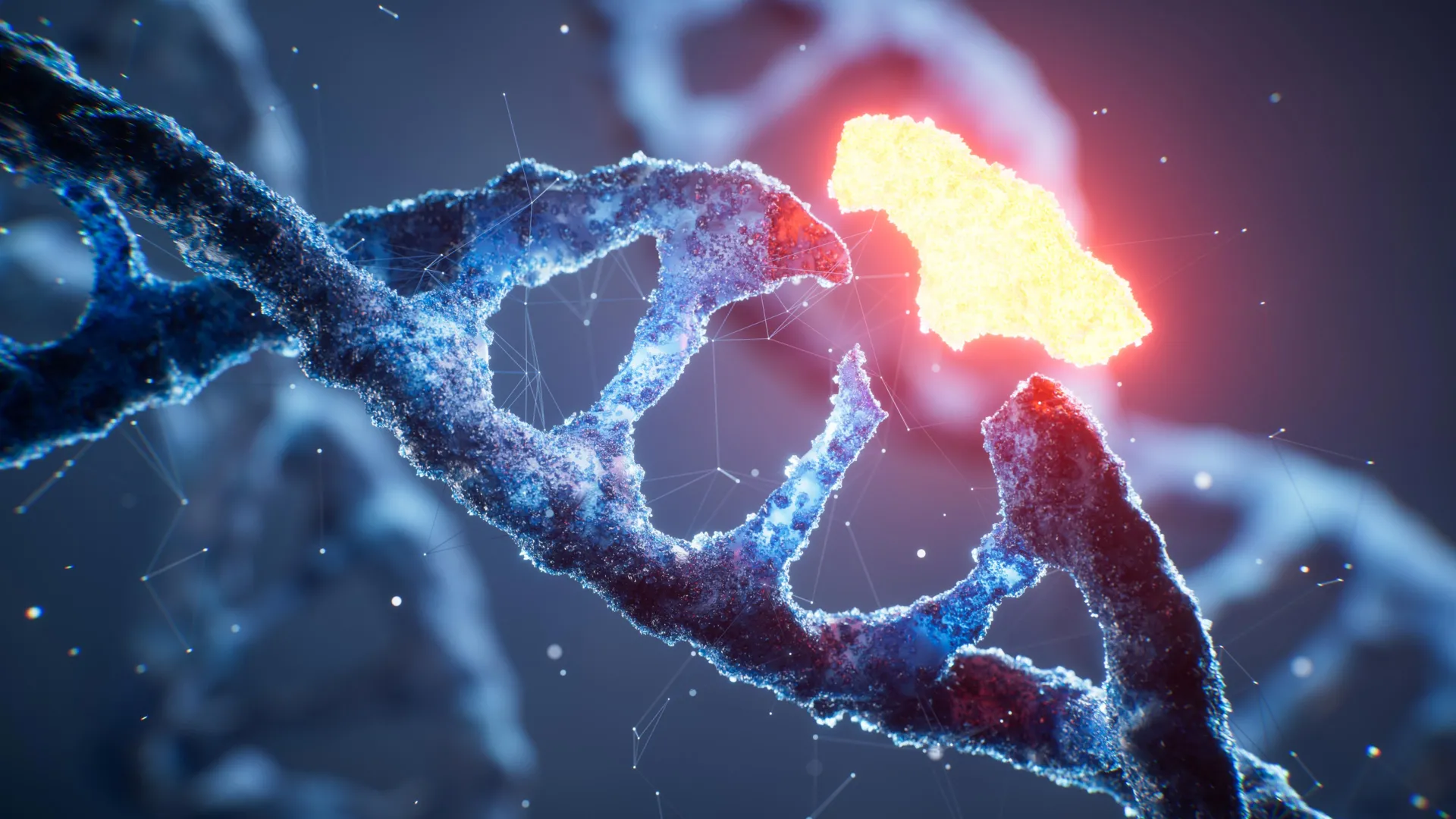
For more than 50 years, scientists have debated whether evolution can protect an organism’s most important genes by making them less likely to mutate. A new study from the University of Bath, published in PLOS Biology, finds no evidence for that idea in two microorganisms, Escherichia coli and baker’s yeast. Instead, the researchers argue that earlier findings may have been distorted by harmful mutations disappearing through natural selection before scientists could detect them.
Testing a long-standing evolutionary hypothesis
Dr Sophia Radrizzani and Professor Lawrence D. Hurst of the Center for Evolution at the University of Bath analyzed what they describe as the largest collection of naturally occurring genetic mutations ever assembled. Their work examined Escherichia coli and the unicellular fungus baker’s yeast, also known as budding yeast.
The findings challenge the claim that natural selection reduces mutation rates in genes essential for survival. The theory has attracted scientific attention since it was first proposed in 1972, including renewed debate in 2023.
“The claim that important genes are slow to mutate is a triumph of hype over fact,” said Dr. Radrizzani, who co-authored the paper as part of his doctoral work. “This is a very old proposal, and it’s being reinvented in many different ways on a daily basis.”
How mutation and natural selection drive evolution
Traditional explanations of evolution involve two main processes. Mutations create genetic variation among organisms, and natural selection influences which variants become more common by favoring traits that improve survival and reproduction.
Darwin’s finches provide a familiar example. When Charles Darwin encountered the birds in the Galapagos Islands in 1835, he observed species with different beak shapes suited to different foods. Random mutations can contribute to changes in beak size and shape. If certain food sources become more abundant, birds with better-suited beaks may be more likely to survive and reproduce. Over many generations, those advantageous traits can spread through a population.
Alternative hypotheses propose that mutations may not occur as randomly as traditional models assume. Under one such hypothesis, organisms may have evolved mechanisms that reduce mutations in their most important genes, including genes involved in DNA replication and the maintenance of basic cellular machinery. Genes that could produce useful adaptations, such as antibiotic resistance in bacteria or changes in beak dimensions, might instead have higher mutation rates.
Protecting essential genes could initially appear to offer an evolutionary advantage. Mutations in these genes can disrupt crucial biological processes, cause inherited diseases or kill an organism. However, the researchers said mutations in individual genes are already relatively rare. Reducing their frequency even further would provide only a small additional benefit, making it difficult for natural selection to favor such a protection system.
The problem of “ghost mutations”
Previous studies may have made important genes appear to mutate less often because harmful mutations in those genes are rapidly removed from a population.
“When mutations occur in more important genes, we would expect natural selection to quickly remove them, because these mutations are likely to be harmful to the organism,” Professor Hurst said. “This can create the illusion that there are fewer mutations in important genes, when in fact some mutations simply disappear before they have a chance to be analyzed – what we think of as ‘ghost mutations’.”
This distinction is important because researchers examining the genetic changes that remain in a population may miss mutations that occurred but were later eliminated. The apparent stability of essential genes could therefore reflect the removal of harmful mutations, rather than a lower probability that those mutations occurred.
A direct test using mutation accumulation experiments
To investigate the issue more directly, the University of Bath team analyzed data from mutation accumulation experiments. These studies are designed to record mutations while minimizing the effects of natural selection, allowing researchers to examine genetic changes that might otherwise quickly disappear.
The scientists also carried out three independent tests to determine whether natural selection was still significantly biasing the data. None found evidence of substantial bias.
“This appears to be the largest and cleanest sample of mutations ever collected,” Dr. Radrizzani said.
The researchers then examined whether genes that are more important for survival actually mutate less frequently. They assessed gene importance using experiments in which individual genes were removed from the organisms. Some genes are essential: without them, cells die. Others can be removed with little or no noticeable effect.
If the protective-mutation hypothesis were correct, the most important genes should consistently have the lowest mutation rates. Instead, the researchers found no such relationship in either microorganism.
“No matter how we analyzed the data, we found nothing. There was no lower mutation rate in these important genes in either species,” Professor Hurst said.
What determines mutation rates?
The team also tested whether other measures of a gene’s importance could explain differences in mutation rates. These measures included the amount of protein produced by each gene and the degree to which natural selection had shaped the genes over thousands of years.
Again, the results did not support the idea that more important genes receive special protection.
“We found that genes that produce more abundant proteins do not have lower mutation rates, and we also cannot predict how often genes will mutate based on the way genes have evolved over thousands of years,” Dr. Radrizzani said.
The findings do not mean that every gene experiences exactly the same mutation rate. Researchers have identified features of genome structure and DNA replication that affect how often mutations occur. For example, genes copied later during DNA replication tend to accumulate mutations more frequently than genes copied earlier.
Mutation rates can therefore vary across the genome, but the differences do not appear to reflect a system that specifically protects essential genes from genetic change.
“While we know the known causes of variations in mutation rates, we found no evidence for the effects that have been proposed as a challenge to traditional models,” Professor Hurst said. “No one has predicted which genes will have high or low mutation rates, and there is certainly no basis for a shift in paradigm.”
The study supports the traditional distinction between mutation and natural selection. Mutations do not occur at the same rate everywhere in the genome, but the evidence from bacteria and yeast does not indicate that evolution systematically protects the most important genes by reducing their mutation rates.
Source: www.sciencedaily.com