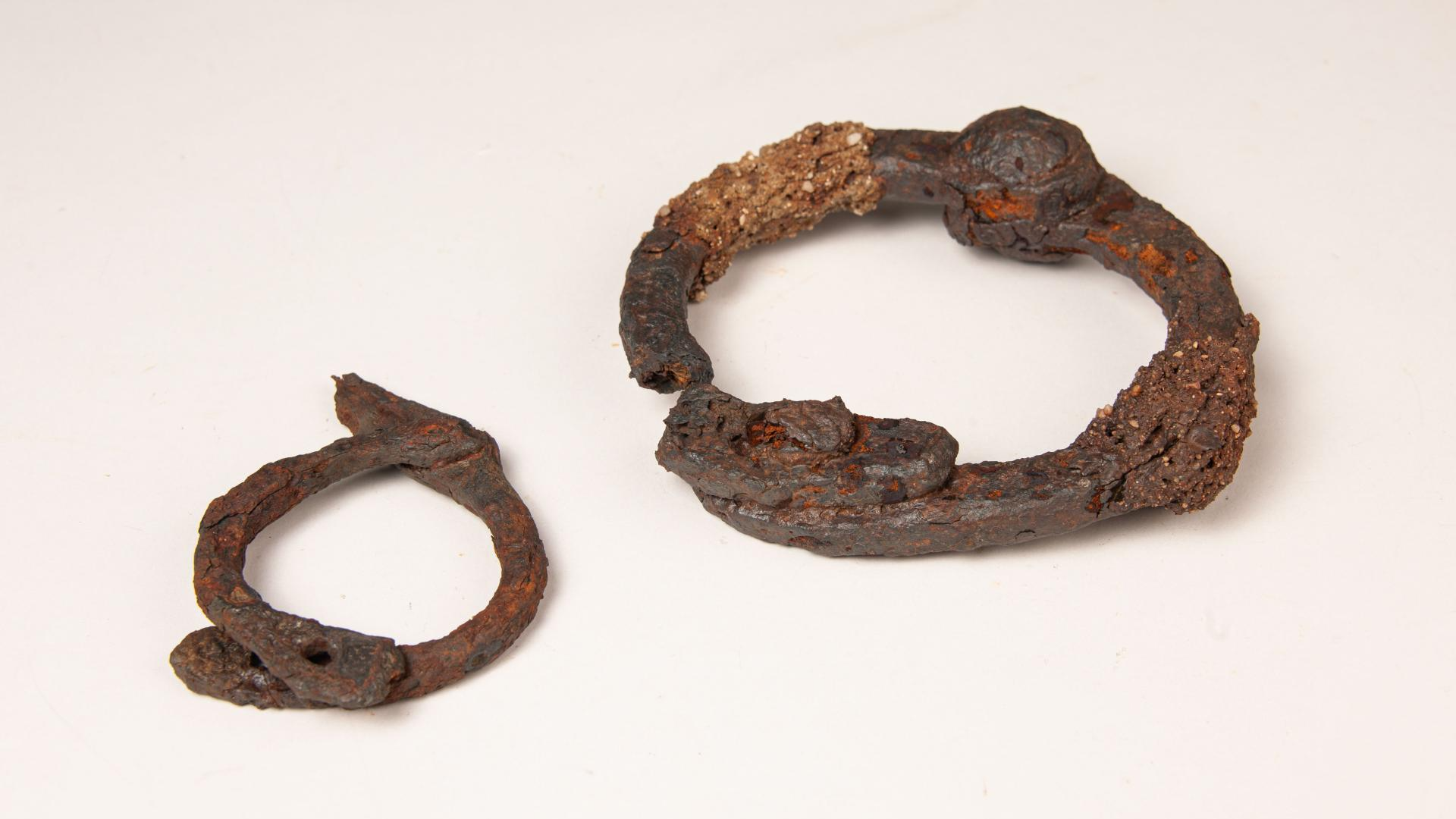
Archaeologists have unearthed five pairs of iron shackles at a 2,300-year-old site known as the Celtic French Ruins, indicating that this small settlement was a hub for metalsmiths and slave traders.
The “extremely rare” shackles were located in Allonne, situated in France’s Loire Valley, during 2019 excavations. The findings were officially disclosed to the public via a translated document on July 9, as noted in a statement from the French National Institute of Preventive Archeology (INRAP).
According to the statement, the settlement at Allonne was established in the 3rd century BC and featured religious facilities. Archaeologists have discovered specialized craftsmen such as blacksmiths, coppersmiths, bronzesmiths, and sheet metal workers who thrived in small workshops.
During the excavation, the team found various high-quality metal artifacts, including swords, spearheads, keys, and harness hardware. The discovery of the iron fetters was particularly surprising, as such items were extremely rare at the time. The excavators unearthed double wrist restraints, an ankle restraint, and three additional metal pieces.
The presence of these shackles implies that Allonne may have served as a center for the late Iron Age slave trade, dating from 450-50 BC, according to the statement.
“The identification of restraints and weapons indicates a hierarchical social structure comprising dominant and subordinate groups, including prisoners and slaves,” stated Thierry Legard, a Celtic metalworking expert, in an INRAP interview.
The Gauls, an association of Celtic tribes, were known for enslaving captives, prisoners, and debtors through force. These individuals lost their rights and could be traded by their owners. However, historical records regarding slavery in pre-Roman Gaul are scarce, as the Celts left few documents. The Bondage of Allonne sheds new light on the lives of individuals often overlooked in historical narratives.
Get the world’s most fascinating discoveries delivered straight to your inbox.
Illustration of wrist restraints and ankle shackles likely used on women and children.
The wrist restraints were 2.4 inches (6 centimeters) in diameter, indicating they were likely designed for women or children. The ankle restraints weighed over 2.2 pounds (1 kilogram), highlighting the burden that enslaved individuals were forced to bear.
In addition to the shackles, archaeologists discovered a religious sanctuary in Allonne, along with offerings that included clothing and jewelry such as rings and amulets. Many of these items showed signs of intentional damage, suggesting they were transformed into gifts for the gods.
The excavation yielded hundreds of coins, spanning over five centuries. Isabel Bollard-Raynaud, an expert in ancient coins from the French Ministry of Culture, noted in an INRAP interview that about a third of the coins found at Allonne had been sanded, scratched, or carved.
“These markings indicate ritualistic purposes: intended to strip the coins of their commercial value, dedicating them instead to sacred purposes, thereby ensuring the permanence of the offering,” explained Bollard-Raynaud.
The analysis of metals discovered at Allonne, a significant ancient Celtic site located along crucial trading routes, provides critical new insights into the most marginalized members of Gallic society.
Find out how much you know about the Celts.Celtic quiz!