


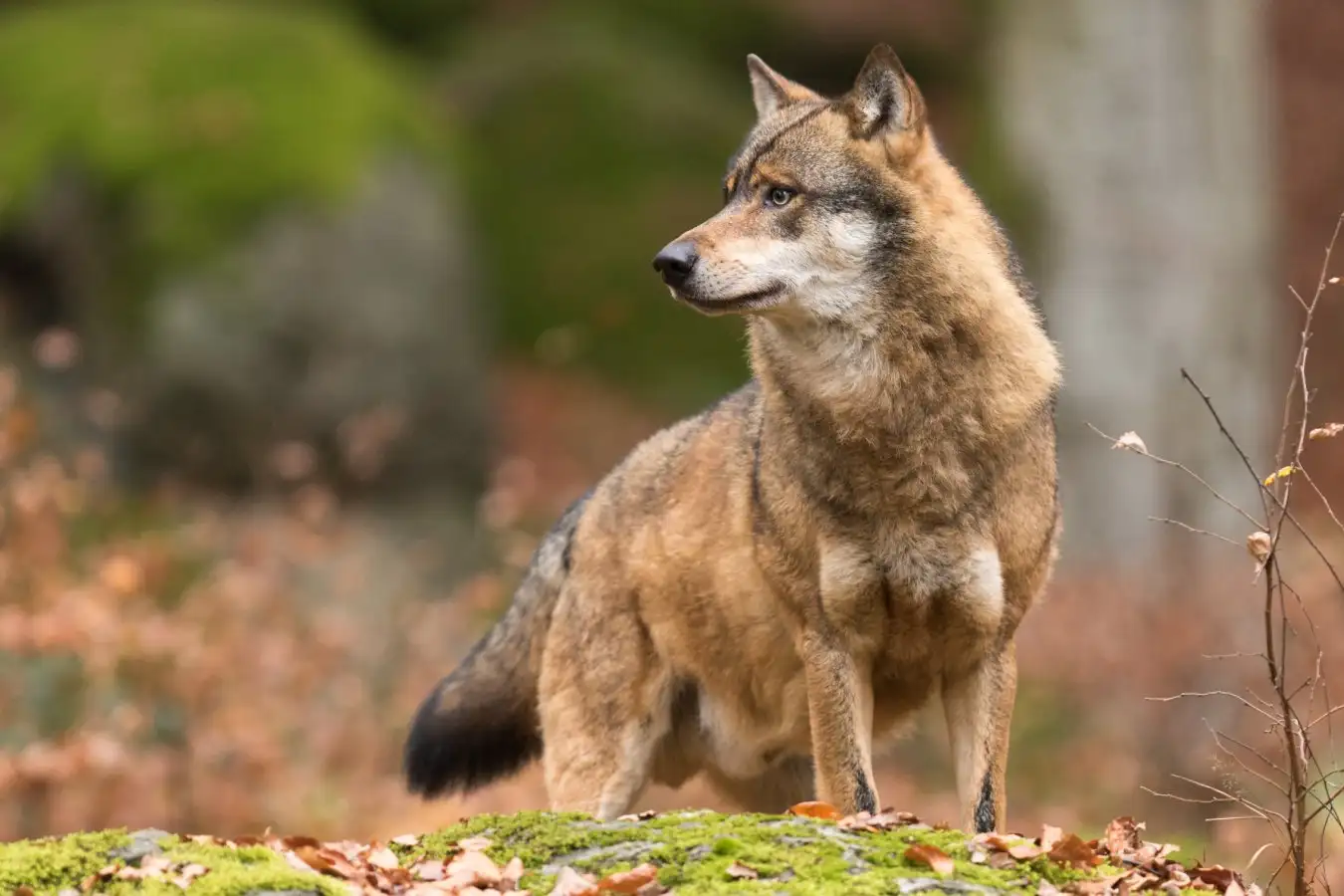

Wolves are Making a Comeback in Europe
John Ceulemans/Shutterstock
A stunning pack of wolves has been captured on camera as it preys on a young bison deep within the Polish wilderness.
This extraordinary footage indicates that bison could be more frequently targeted by wolves in Europe than previously assumed.
“I was amazed,” says Robin Winans from the Polish Academy of Sciences. “I didn’t anticipate wolves hunting bison given the abundant alternative prey in the forest.”
European bison (bison bonasus) were once widespread but became extinct in the wild early last century due to overhunting and habitat destruction. Thanks to conservation efforts, they were reintroduced to the wild in the 1950s, with roughly 9,000 individuals now scattered across the continent.
Wolves have gained popularity in Europe, with a 58% increase in their population over the last decade. However, since the reintroduction of bison, only a handful of wolf-bison hunting incidents have been documented.
Winans and his team, including Tomasz Borowik, used camera traps to capture this remarkable event in September 2025 while conducting research in the Białowieża Forest, where European bison were first reintroduced in the 1950s.
https://www.youtube.com/watch?v=0DGyqzIBdR4" title="Watch wolves hunt bison
At 7:25 a.m., a pack of seven wolves initiated a hunt by targeting a herd of 11 bison, skillfully distracting the adults while focusing on a vulnerable calf. The wolves attempted to bite the calf’s neck twice, but the adult bison defended their young by charging at the wolves. The herd united to shield the calf, successfully driving the predator away.
The confrontation lasted around 20 minutes, leaving the fate of the newborn bison unclear.
“It’s rare to capture such predator-prey interactions on camera. This footage is serendipitous,” remarks Oswald Schmitz from Yale University, who was not involved in the study.
Concerns about overpopulation of bison and its potential to harm habitats and agricultural areas have led researchers to suggest that wolf predation could serve as a beneficial control mechanism.
“Even if wolf predation occurs more frequently than we realize, it likely won’t lead to a drastic decrease in bison populations. In fact, it may contribute to maintaining a balanced population,” Winans explains. “Understanding the frequency and ecological impact of this behavior is imperative.”
Topic:
Source: www.newscientist.com