


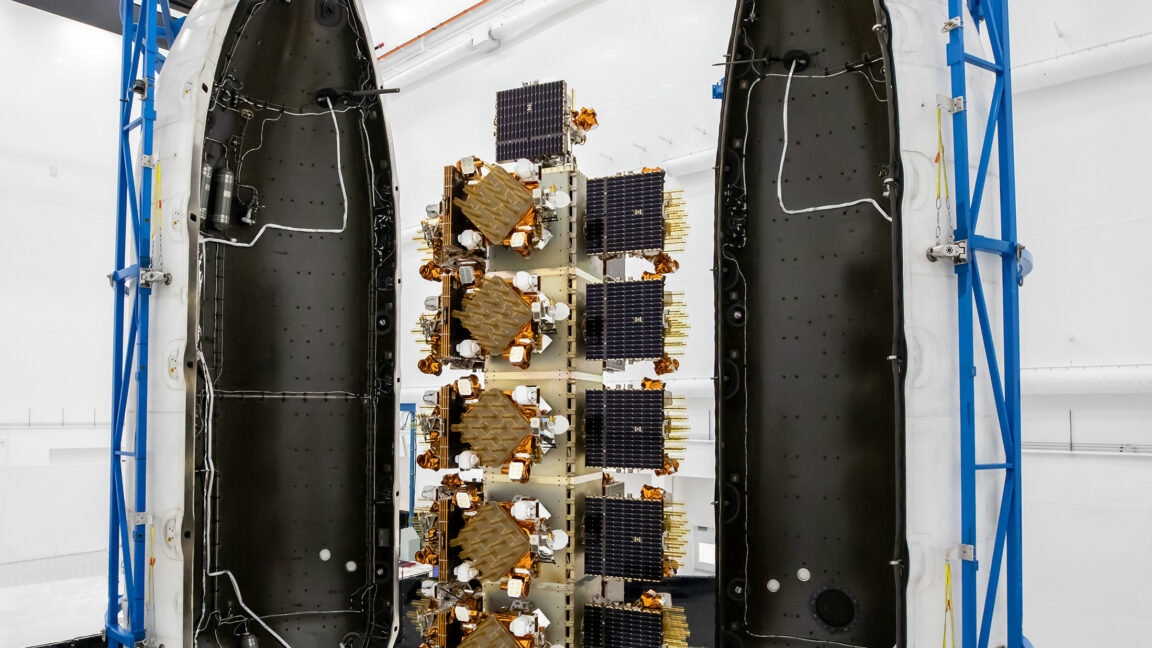
Sandhoo highlighted several challenges with the initial Tranche 1 satellite during a roundtable with reporters prior to its launch this week. Following last year’s launch, ground controllers faced inadequate ground station coverage, hindering effective communication with the satellite. Moreover, some satellites experienced issues with their thermal control and propulsion systems during their ascent from launch orbits to operational altitudes exceeding 600 miles (1,000 kilometers), which is significantly higher than SpaceX’s Starlink Internet network, Sandhoo noted.
“We’re navigating a particularly harsh radiation environment at 1,000 kilometers altitude, which has made the orbital ascent unpredictable,” he stated. “It’s erratic, but we are working through the challenges.” Sandhoo remains optimistic that ground teams will soon declare most satellites operational, although the timeline is taking longer than originally anticipated.
Credit: Space Development Agency
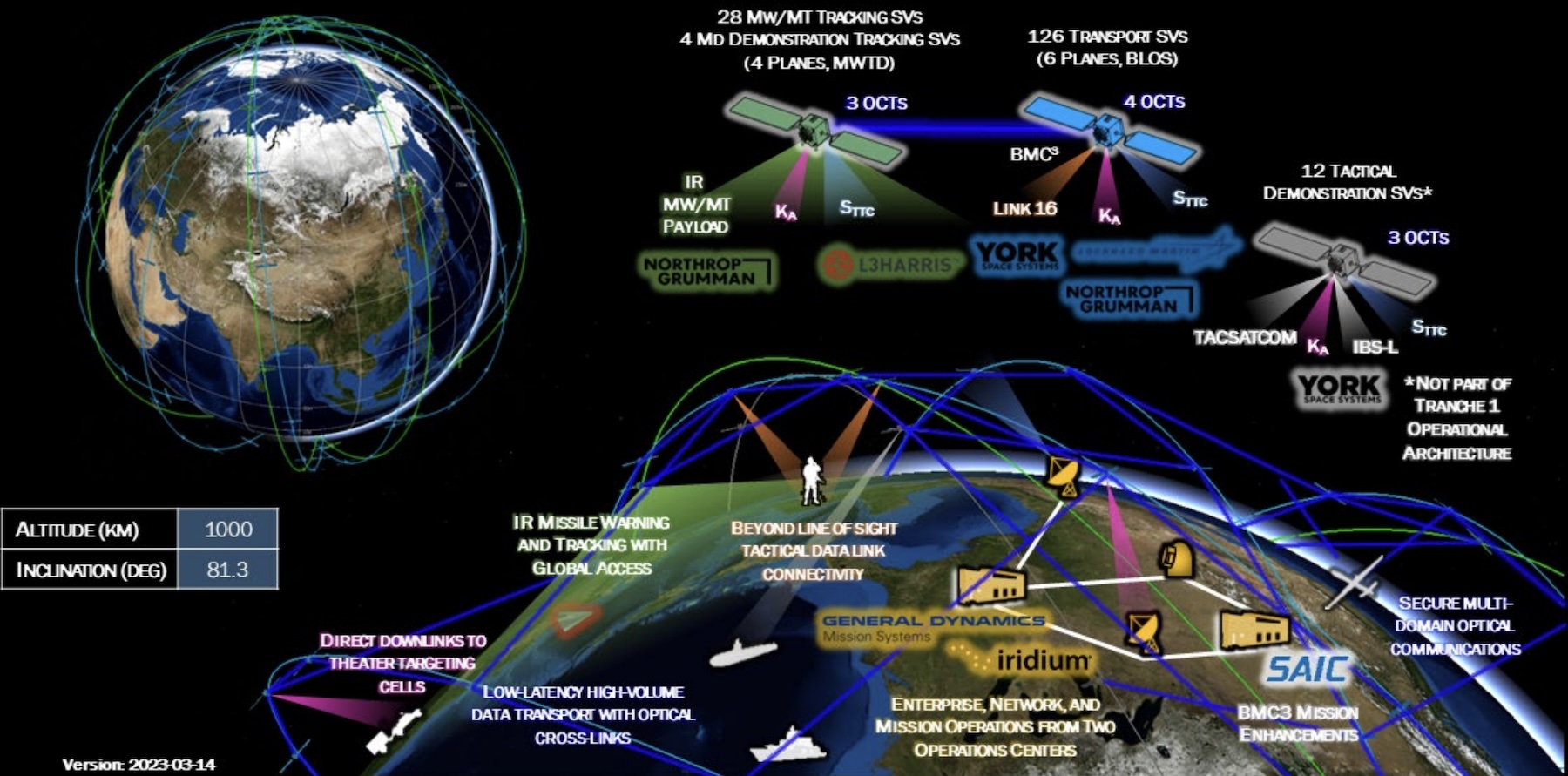
The Space Development Agency’s “Tranche 1” architecture features 154 operational satellites, comprising 126 for data relay and 28 focused on missile tracking.
Credit: Space Development Agency
Understanding the Situation
SDA and its contractors “paused” operations following last year’s launch to ensure that identified issues were addressed, according to Sandhoo. “We anticipate this launch will proceed much more smoothly than the previous one.”
Thursday’s launch represents SDA’s second deployment of York’s data transport satellite and marks the third for Tranche 1 overall. An additional seven launches will finalize the tranche, introducing 63 data-carrying satellites and 28 missile-tracking satellites from companies like Lockheed Martin, Northrop Grumman, and L3Harris. The launch for the Tranche 1 tracking satellite is still pending.
Sandhoo mentioned that the timeline for the next SDA satellite series “remains constrained” due to the availability of crucial optical communications terminals, along with laser transmitters and receivers that are essential for integrating transport and tracking satellites into a cohesive mesh network.
Although SDA officials have not disclosed specific dates for upcoming launches, they indicated that the Tranche 1 satellites “are expected to deliver initial combat capabilities by 2027.” Sandhoo clarified that the agency is shifting its focus away from achieving a monthly launch schedule toward ensuring that the satellites are deployed when they are fully prepared. “Our priority is to commence operations as swiftly as possible once we achieve orbit.”
Source: arstechnica.com