


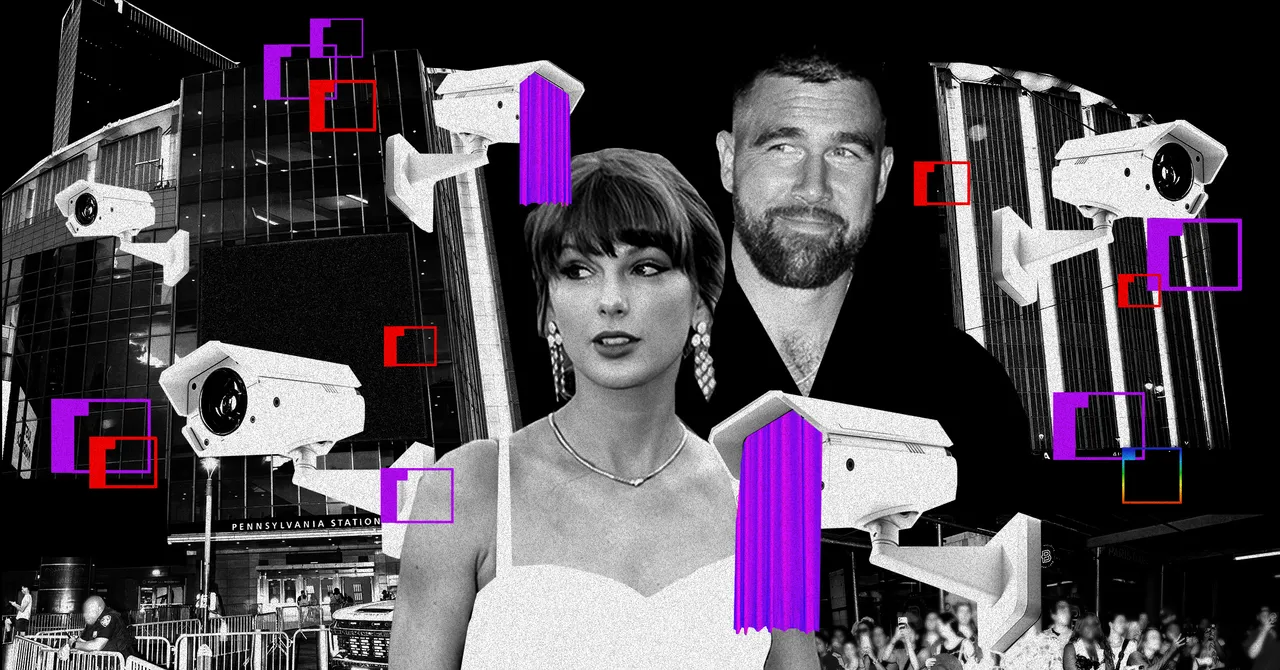
Madison Square Garden owner James Dolan asserts that advanced facial recognition systems and a vast network of CCTV cameras at the venue are “extremely effective for security.” This technology contributes to the reputation of MSG as the “safest venue in the nation.” Discover the reasons.
On the evening of July 2nd, security measures at Madison Square Garden intensified significantly, with approximately 130 police officers deployed in the vicinity. Local authorities were set to close nearby streets to vehicles and pedestrians the following day in anticipation of a major event.
This date marked the rehearsal dinner for Taylor Swift and Travis Kelce’s wedding celebration, attended by around 100 guests at the Infosys Theater within Madison Square Garden. However, on this sensitive evening, internal documents reviewed by WIRED indicate that Dolan and MSG effectively barred most of the security team from accessing the venue’s surveillance camera network. This limitation hindered the full operation of MSG’s controversial facial recognition program on that night.
Although the closure order was confirmed to only be in effect on July 2, sources indicated that similar restrictions were enforced on July 3, the night of Swift and Kelce’s wedding, which attracted around 1,000 celebrities from various fields including media, music, business, and sports.
Swift and Kelce’s planning team took extraordinary precautions to maintain secrecy throughout the event planning. Guests were required to sign a non-disclosure agreement prior to receiving their digital invitations. An elaborate tent was established for discreet access, potentially avoiding the biometric monitoring set up at standard entrances. Attendees faced a strict no-phone policy. One attendee shared a description of the event, noting that details were removed immediately.
On July 2, MSG executives mandated a seven-hour lockdown of the park’s video management system, developed by security technology firm Genetec, “due to customer privacy requests,” according to internal documents. Security staff who typically oversee the venue’s internal cameras and facial recognition software were prohibited from their duties. The memorandum indicated that only select company leaders and engineers retained access to Genetec’s accounts, while the majority were “disabled.”
The document further warned MSG security personnel, stating, “If you are able to access the camera in any way after 3:00 p.m., you will be forced to log off.”
Since 2018, Dolan’s organization has been testing biometric surveillance across venues like Radio City Music Hall in New York, the Beacon Theater, and the Sphere in Las Vegas. While the use of such technology is defended as a security measure, there are numerous instances where facial recognition systems appear to have been misused for retaliatory actions.
Individuals who voiced criticism of Dolan had their images captured and placed on a watch list. A legal representative for a suspended police officer filed a lawsuit against MSG after her mother attempted to retrieve her 9-year-old daughter, who had been flagged by facial recognition and barred from entering a Christmas show at Radio City Music Hall due to her mother’s legal disputes with Dolan’s organization.
Genetec’s software is fundamental to MSG’s video security apparatus, overseeing feeds from a diverse array of cameras and enabling security personnel to operate applications that depend on these feeds, including facial recognition technology. The guest entrance camera is connected to e-connect. If a person’s face triggers an alert, Genetec facilitates real-time tracking across the camera network. “It simplifies the tracking process since you can move from camera to camera in real time,” stated a source familiar with the surveillance setup.
As previously highlighted by WIRED, the security systems at Madison Square Garden monitored transgender women inside the arena in meticulous detail, including their comings and goings in restrooms.
Source: www.wired.com