The ongoing conversation surrounding artificial intelligence (AI) often highlights monumental themes such as the emergence of general artificial intelligence (AGI) and the prospect of superintelligence. There is significant speculation that this technology could disrupt the job market, potentially leading to a steep decline in employment opportunities. What does this mean for the future of human creativity? Often overlooked are the subtle yet profound impacts AI will have on our social structure and our collective vision for the future.
According to sociologists and AI researchers, including Mona Sloan, an assistant professor specializing in data science and media studies at the University of Virginia, these issues are at the core of her upcoming book: Prediction: How AI Will Reshape Social Life (University of California Press, 2026). AI is intricately woven into our interactions with the digital landscape—whether through email filtering, predictive analytics, or social media platforms. Its pervasive integration is giving rise to new types of “predictive logics” that shape our identities and anticipated behaviors.
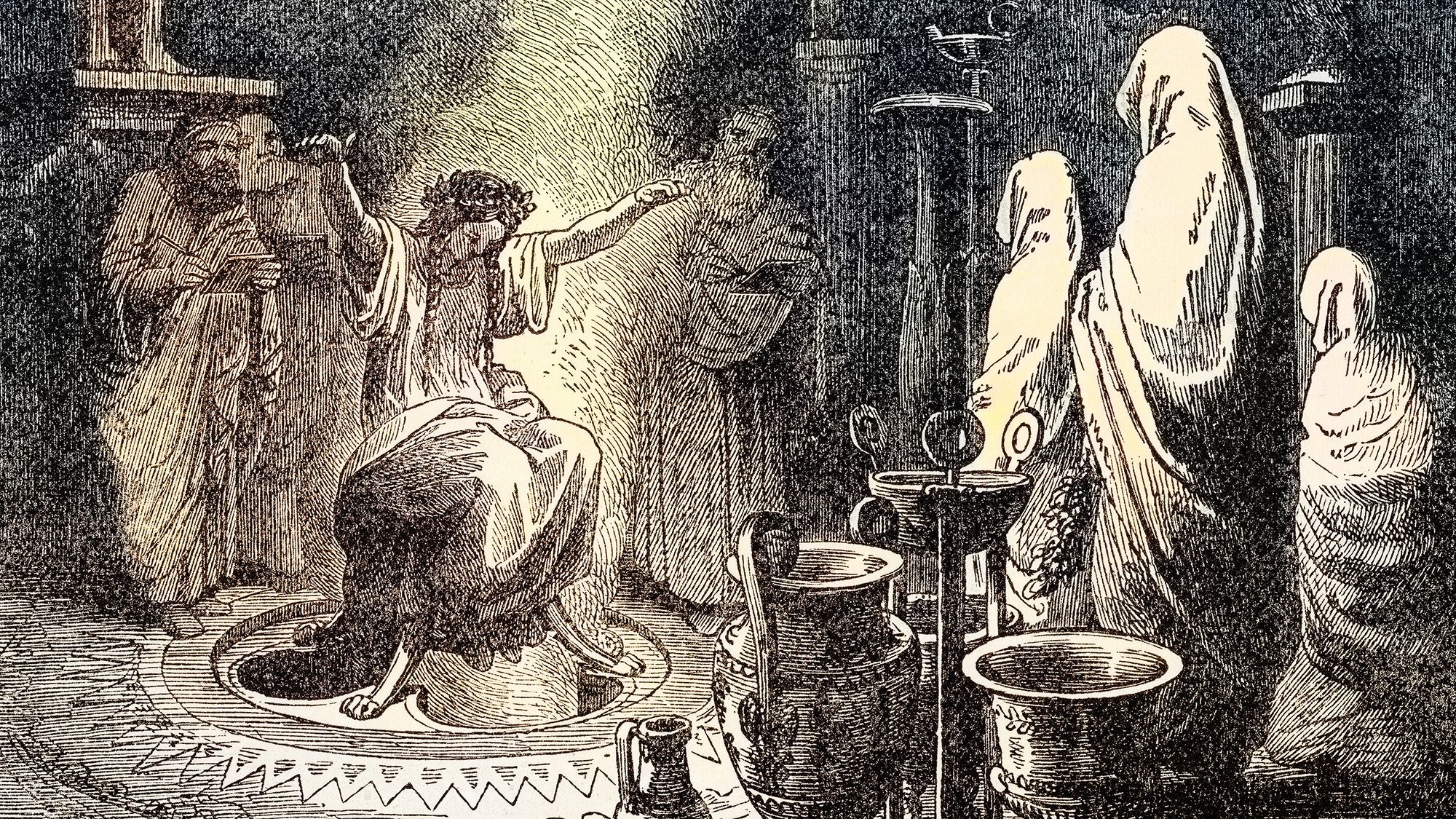
In her work, Sloan likens modern AI technologies to the oracles of ancient Greece, describing them as powerful entities that organize society through predictive models. This significantly influences our learning, social connections, and even our outlook on the future.
Today, we exist in a reality populated by oracles, consistently making predictions that shape our social interactions, including how we socialize, love, work, and secure resources. Just like in ancient Greece, these predictions play a crucial role in our contemporary society, believed to exert influence over entire economies and geopolitical climates. The epicenter of our world lies where these oracles exist.
However, unlike the high priestesses of ancient legends, today’s oracles are AI systems embedded in the very fabric of our daily lives. It is nearly impossible to disconnect from AI predictions as we utilize them involuntarily—through AI-enhanced spam filters in our email, automated fraud detection in online banking, or AI-assisted administrative tasks. This has become an inseparable part of our experiences.
AI can bring peace of mind by helping us tackle tasks we find daunting, such as creating spreadsheet templates, streamlining documents for reports, or generating visuals for presentations. Often, we must engage with AI—review its output, modify it, or even start over from scratch when frustration sets in.
The prevalence of AI predictions can lead us to view these systems as unavoidable forces of nature rather than tools we engage with. Nonetheless, they are deeply intertwined with our shared understanding of the world.
Get the world’s most fascinating discoveries delivered straight to your inbox.
Logician and philosophy of science scholar Rudolf Carnap posited in 1966 that “quantitative concepts are not inherent to nature; they emerge from our practice of quantifying natural phenomena.” He argued that numbers function as a language that effectively conveys information across various contexts, facilitating mathematical predictions.
Carnap highlighted that this approach was vital for engineering progress and clarity in expressing quantitative laws, especially in physics. Predictive capabilities regarding energy, compounds, and materials allowed the creation of modern conveniences such as airplanes, cars, and telephones.
The predictive power of AI is transforming our perspective on the future.
(Image credit: Yana Iskayeva, Getty Images)
Now, nearly 60 years later, this practical outlook on mathematical prediction has shifted dramatically due to AI. Prediction has evolved beyond a mere utility in physics and engineering; it has morphed into a governing logic that shapes social interactions. This poses a troubling notion: that AI is both necessary and inevitable, distracting us from the societal forces that mediate how we perceive this technology.
AI systems are not intrinsic phenomena but are collective societal expressions. This reveals that their existence is not merely hype generated by technological elites but indicates larger societal shifts in how we envisage and enact our communal lives. While critiques of AI often revolve around surveillance and capitalist exploitation, this represents a limited view. The most significant impact of AI is a nuanced yet comprehensive recalibration of the predictions that shape our societal structure. I term this the predictive paradigm.
AI has become integral to our daily lives and the social structures that govern how we relate both publicly and privately. Like all infrastructural systems, AI directs resources and ideas towards certain pathways, while limiting others. Utilizing data from our collective history, AI forecasts individual futures, thereby reinforcing a linear timeline that strengthens our societal commitment to causality. The core issue with AI is not the emergence of intelligent machines, but the immense social implications stemming from this linearity—the fixation on the future leaves little space for contemplation of alternative futures or what we truly desire.
In Predicted, Mona Sloan provides a practical framework to understand these changes in prediction, classification, and linearity, encouraging us to view AI as a collaboratively produced social arrangement. Leveraging over a decade of empirical research and real-world examples, this book illuminates the deeply social, deeply political nature of AI and its potential for change.