


Author: Lucy Thompson, Senior Research Fellow, University of New Brunswick, Canada
Scheduled Earth Plan Date: Friday, July 27, 2026
As the APXS uplink director and strategic planner, I collaborate closely with the rover’s engineers during my operational days. The APXS (Alpha Particle X-ray Spectrometer) instrument, which analyzes the chemistry of rocks, loose materials, and the Martian atmosphere, is mounted on Curiosity’s robotic arm. This setup requires precise targeting to deploy the arm and the APXS effectively, along with the MAHLI (Mars Hand Lens Imager). We depend heavily on our engineers’ expertise in assessing and sequencing the arm’s movements to ensure safe targeting. Recently, we’ve encountered increased dust in our work areas due to several mitigations. However, the rover’s engineering team successfully identified a clean area suitable for APXS and MAHLI analysis. This week brought similar challenges; initial assessments indicated less-than-ideal workspaces, yet the team managed to discover five intriguing rock targets. The engineers have now safely positioned and brushed the arm to analyze these rocks with APXS and MAHLI, ensuring we capture high-quality compositional data and visuals as we ascend Mount Sharp, transitioning through various rock formations while monitoring changes in chemical reactions and depositional environments.
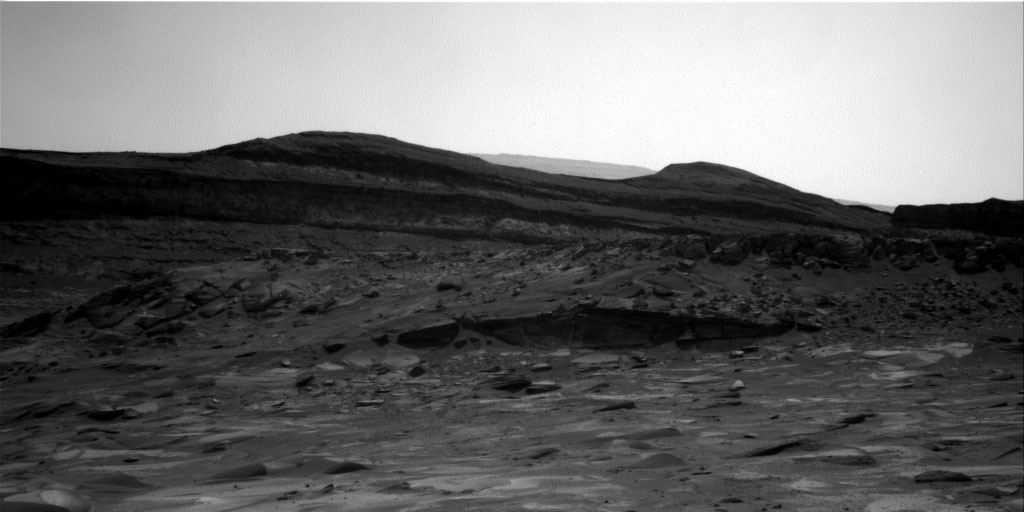
The rover’s engineers play a crucial role in navigating Curiosity to scientifically significant sites identified by our science team. They meticulously assess the terrain for potential hazards, such as large rock formations that could damage the rover’s wheels and patches of loose sand or soil that might pose a risk of getting stuck, as well as steep slopes that could lead to slips. Despite early mission challenges that included unexpected wheel damage and getting stuck in soft areas, our engineers have successfully maneuvered over 23 miles (37 kilometers) and gained more than 4,400 feet (approximately 1.35 kilometers) in elevation. Recently, we requested a drive to capture images of what might be an eroded surface containing magnesium sulfate and carbonate (View image attached to this post). The engineer accommodated this request, allowing us to change our destination and continue on our planned route for the weekend.
Additionally, rover engineers ensure that all drilling operations are performed safely and efficiently. They are responsible for sequencing the robotic arm’s movements to deliver the drilled samples to the onboard CheMin (Chemistry and Mineralogy) and SAM (Sample Analysis at Mars) instruments. Following a motor failure in 2016, we underwent a comprehensive reconfiguration of our drilling techniques, with extensive behind-the-scenes work at JPL for about 18 months before resuming operations. Since then, Curiosity has successfully drilled more than 20 rock targets.
Thanks to the dedicated rover engineers, along with all the professionals on the Curiosity team, we have spent yet another productive week in Gale Crater. We will continue utilizing APXS, ChemCam, MAHLI, and Mastcam to monitor the chemistry, texture, tone, and sedimentary structures of the sulfate and carbonate units as we ascend Mt. Sharp and approach the Yardan unit. Moreover, Curiosity remains vigilant in monitoring the local environment and atmospheric conditions within Gale Crater.
Source: science.nasa.gov