


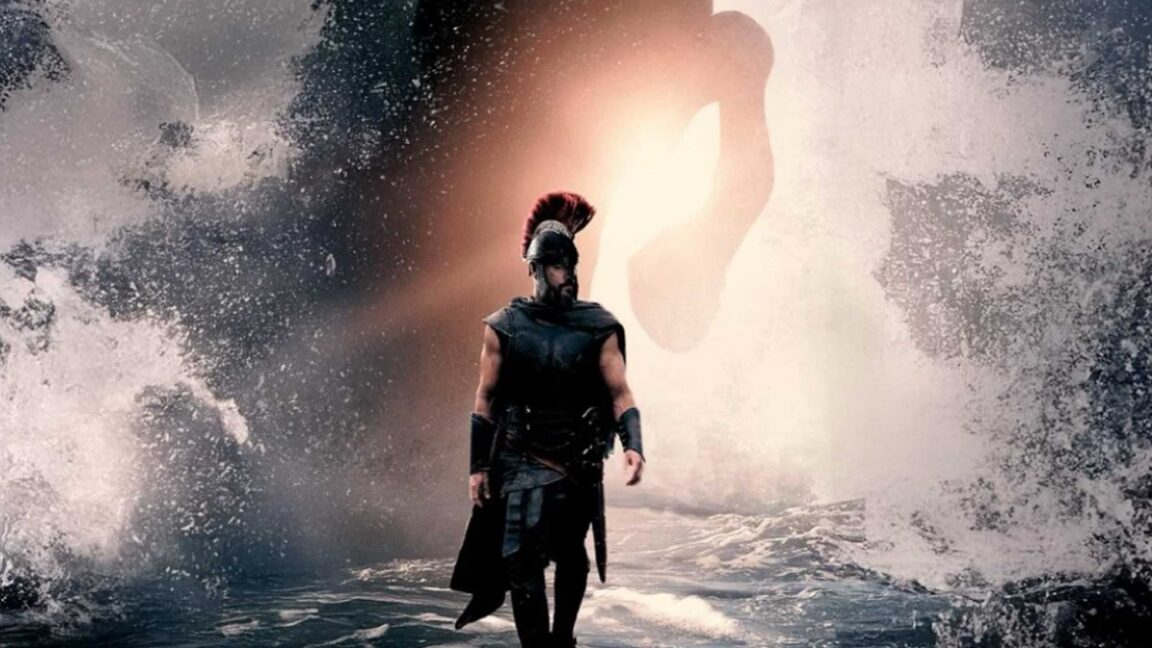
Christopher Nolan’s The Odyssey has sparked controversy since its earliest casting announcements and production design reveals. Each new trailer has fueled further debate about the director’s interpretation of Homer’s ancient epic. Despite the controversy, the film has earned widespread critical praise and impressive box-office results. Discussions among classicists, historians, and moviegoers continue, even though Homer’s Odyssey has been part of Western literature since approximately the 8th century BCE.
My take: while Christopher Nolan’s IMAX presentation gives The Odyssey a truly epic scale, the film remains surprisingly intimate. Nolan creates a captivating, nearly three-hour cinematic experience that gradually lingers in the mind after the credits roll. The movie’s striking imagery stays with you for days, while its emotional perspective gave me a fresh understanding of Odysseus as both a legendary hero and a deeply troubled man.
(Spoilers below.)
Most audiences encounter some version of The Odyssey in high school, making the central story familiar. Odysseus (Matt Damon), the legendary king of Ithaca, begins his journey home after spending 10 years fighting in the Trojan War. His return becomes an epic struggle as he and his remaining crew face the cyclops Polyphemus (Bill Irwin), the deadly Sirens, the enchantress Circe (Samantha Morton), and numerous other supernatural obstacles.
Back in Ithaca, Odysseus’ devoted wife, Penelope (Anne Hathaway), fends off hundreds of suitors who want to claim her hand, the kingdom, and the throne. Their son and heir, Telemachus (Tom Holland), refuses to believe that his father is dead. Convinced Odysseus is still alive, Telemachus sets out to discover the truth and bring the missing king home.
Nolan establishes the film’s mythic tone with an opening sequence in which a bard (Travis Scott) begins recounting the fall of Troy. The story he tells reflects the idealized heroic version that ancient audiences wanted to hear. Rather than attempting to recreate the exact traditions of Greek oral storytelling, Nolan uses the scene to evoke the atmosphere of an epic being passed from one generation to the next—and the approach proves remarkably effective.
The director also retains Homer’s nonlinear storytelling, allowing one narrative to unfold inside another. Nolan presents Odysseus as a seemingly broken man whose fragmented memories of the Trojan War and its aftermath slowly return. Years spent under the intoxicating influence of the lotus fruit with Calypso (Charlize Theron) on the island of Ogygia have further distanced him from his past.
As Odysseus’ memories resurface, The Odyssey becomes more than an adventure story about a king trying to return home. It becomes a mystery about trauma, guilt, identity, and the painful truths he has tried to bury. What was Odysseus so determined to forget? And what must he finally confront before he can truly find his way home?
Source: arstechnica.com