


3,000-Year-Old Skull From Ecuador Reveals the Face of a Man at the Center of an Anthropological Mystery
A new facial reconstruction of “Punin 2” suggests that the ancient man was a Native American hunter-gatherer—not evidence of an extinct human relative or prehistoric contact with Australia and the Pacific Islands.
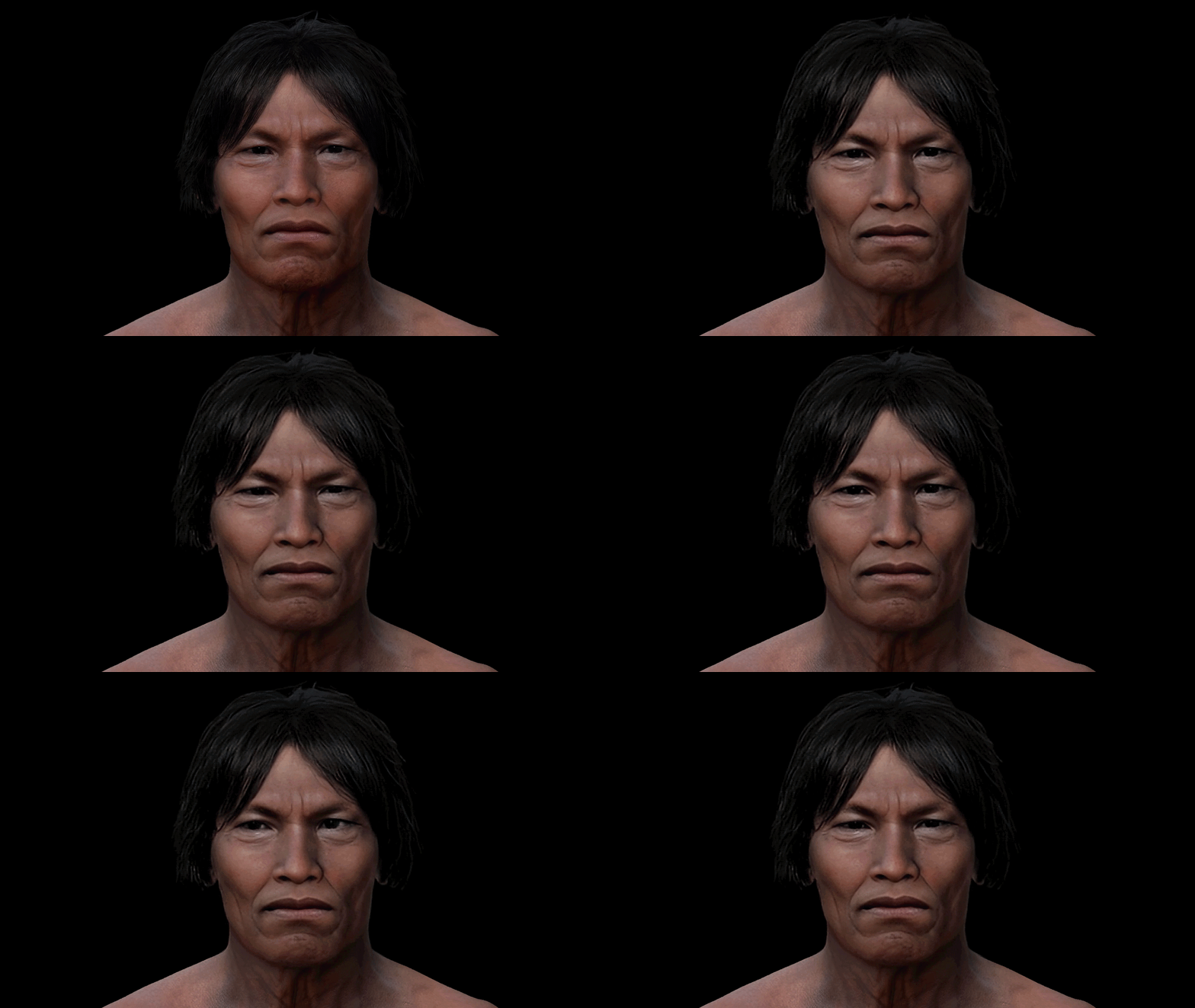
An international research team has reconstructed the face of a man who lived in what is now Ecuador more than 3,000 years ago. His skull, known as Punin 2, was discovered by a farmer in the 1970s in a ravine near Punin, in Ecuador’s central Andean Chimborazo region.
The reconstruction brings new attention to one of anthropology’s long-running debates: whether unusual features on skulls from the Punin Valley represented an ancient human lineage or simply reflected normal variation among Native American populations.
The Punin skulls and a century-old debate
A similar skull, known as Punin 1, was found in the same valley in 1923 during an expedition led by the American Museum of Natural History. Some scientists at the time considered its prominent eyebrows and other physical features to be archaic.
In 1925, researchers proposed that Punin 1 might provide evidence of a marine origin for the people of the region, possibly indicating ancient contact with populations from Australia and the Pacific Islands. Other interpretations suggested that the skulls could have belonged to an extinct human relative, such as Homo erectus or Neanderthals.
Later research challenged those ideas. New facial reconstructions indicate that Punin 2 belonged to a modern human male with Native American ancestry.
What the facial reconstruction reveals
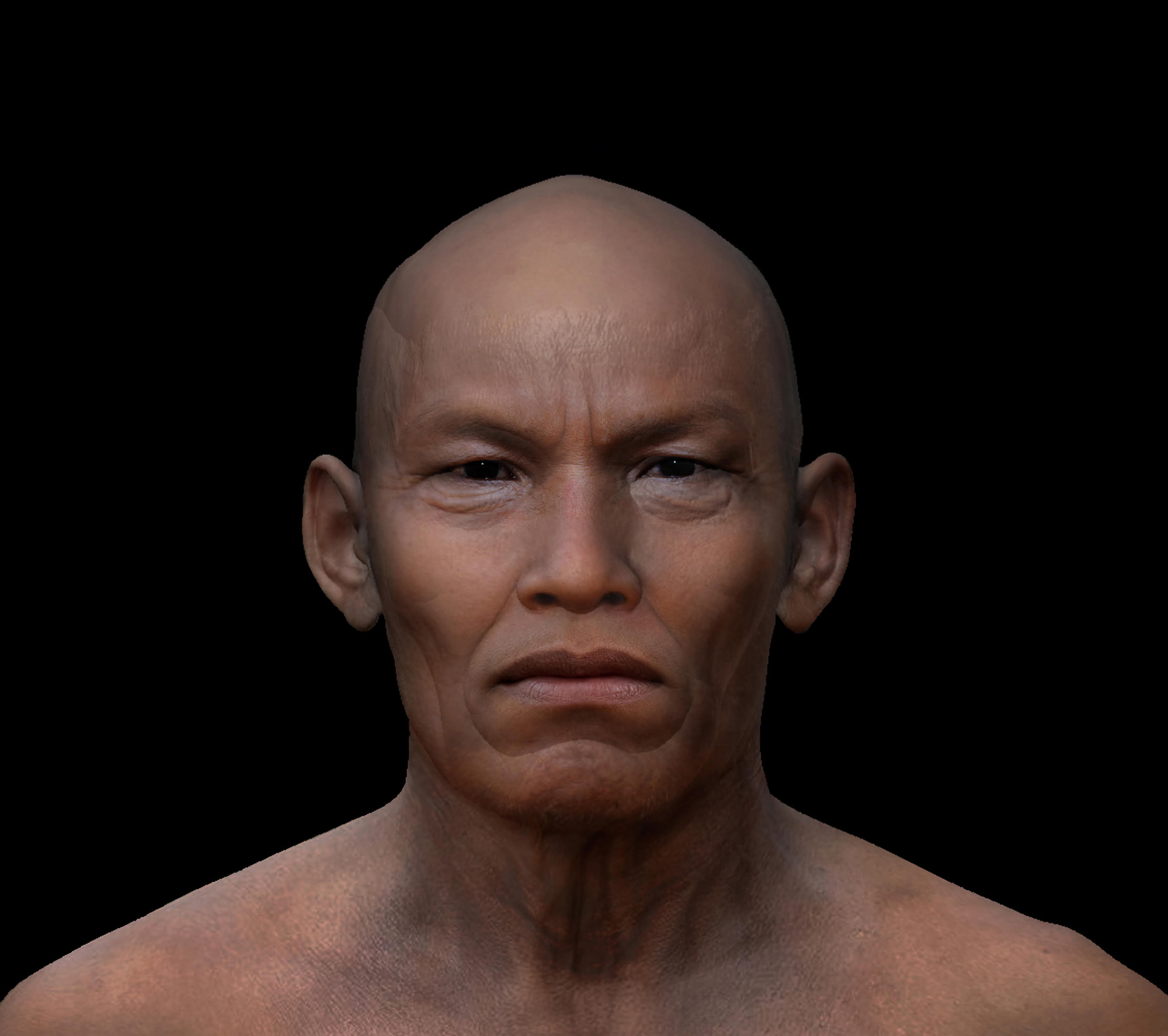
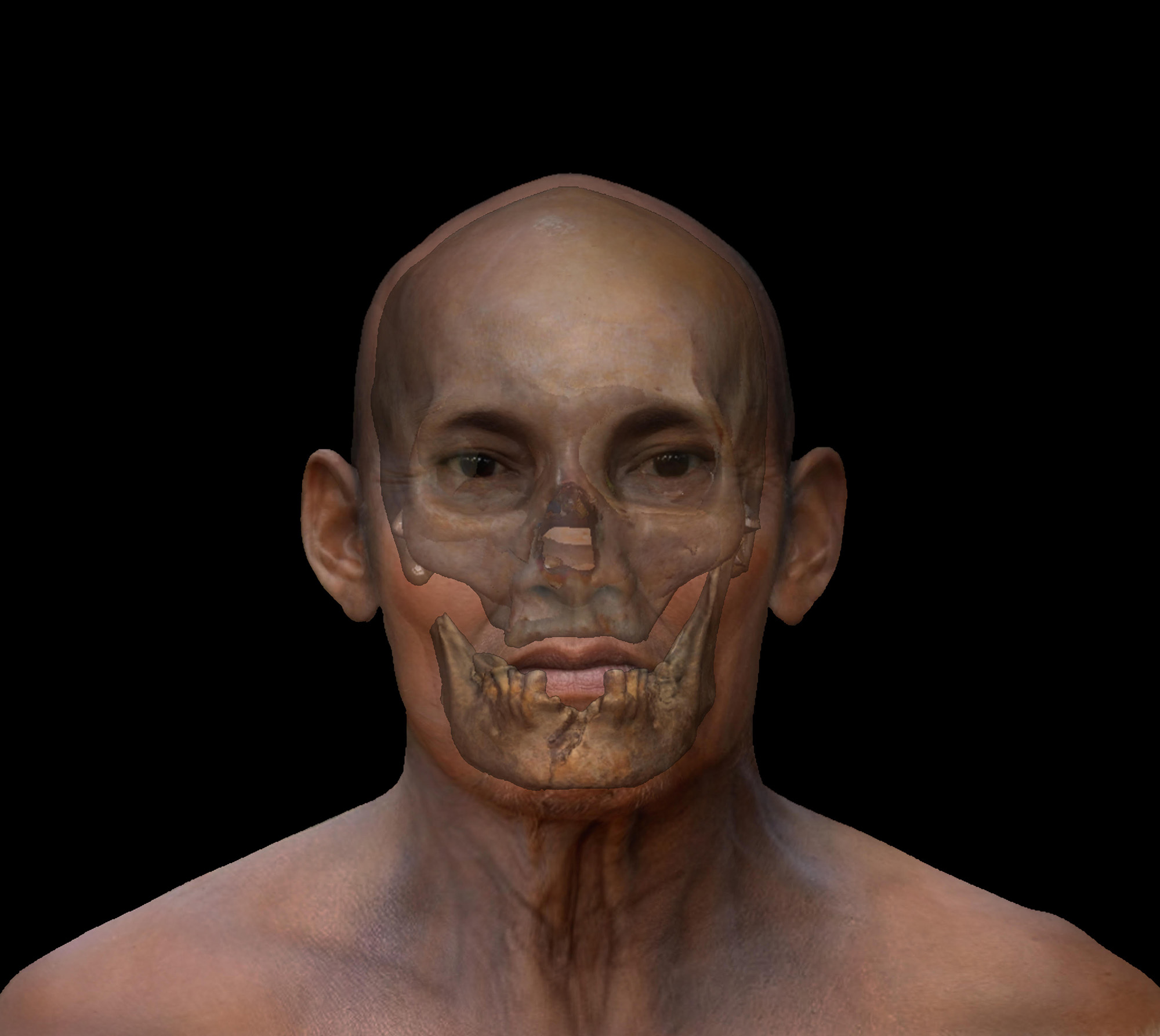
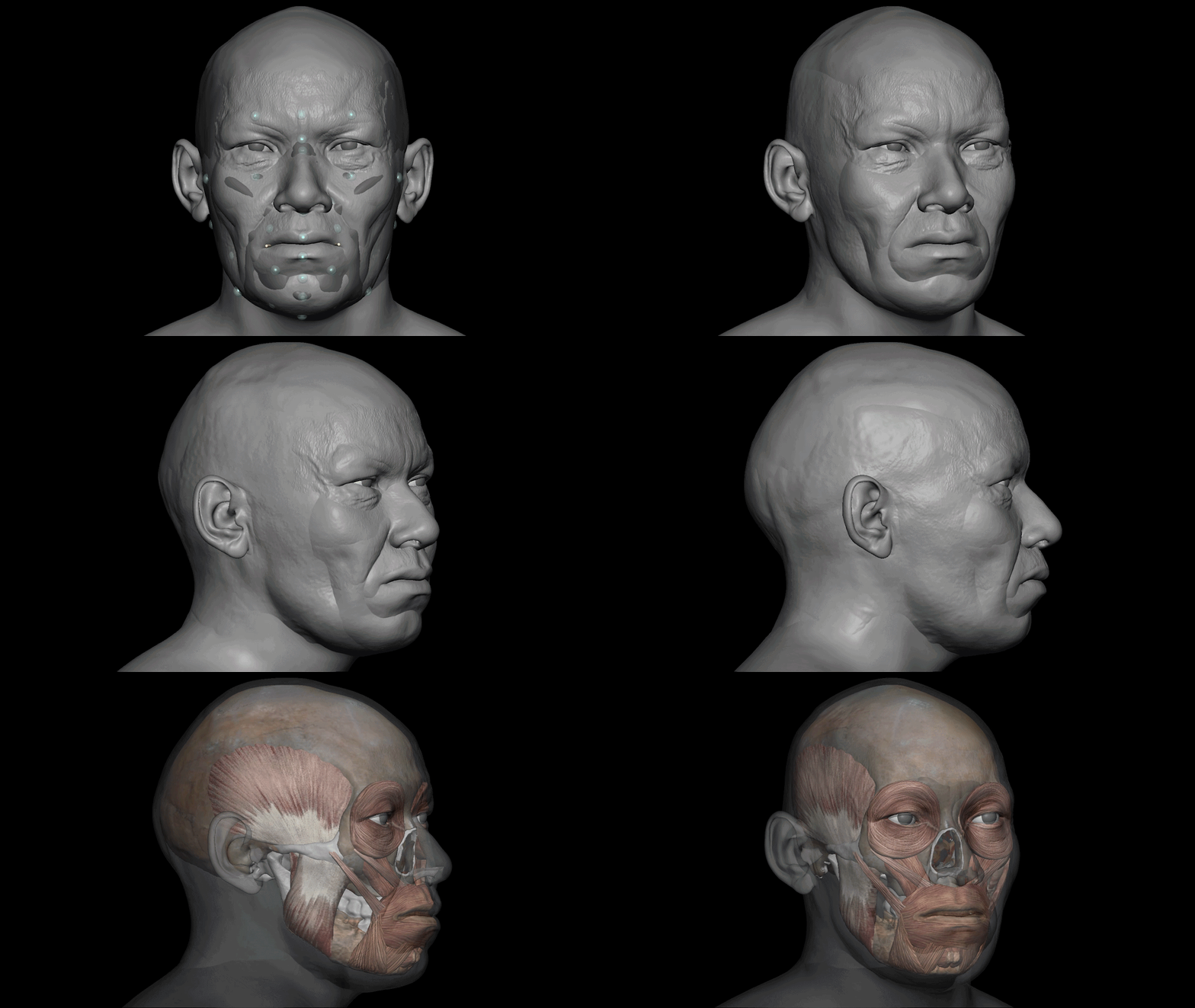
Forensic craniofacial anthropologists at the University of Dundee in Scotland worked with colleagues in Ecuador to reconstruct the man’s appearance. The team based the face primarily on the shape of his skull rather than on assumptions about his ancestry or appearance.
Viewed from the front, Punin 2’s skull resembles an East Asian skull. From the side, however, it looks markedly different. The researchers said this combination of features reflects the complex differences in skull and facial shape between Native American and East Asian populations.
The digital reconstruction depicts a man who was approximately 50 years old when he died. He likely lived as a hunter-gatherer in the Chimborazo region between 3,000 and 4,000 years ago.
Because hair is not preserved in a skull, the team consulted local people in the Chimborazo region about an appropriate hairstyle. The reconstruction shows black hair parted in the middle, reflecting a style associated with a local tribe. A physical bust using real hair is expected to be completed in 2027.
Why the skull’s dating was controversial
When Punin 2 was discovered, researchers suggested that it could be as old as extinct Ice Age animals found in the same valley, including mastodons and giant sloths. Similar claims had been made about Punin 1 and the Pleistocene era, which lasted from about 2.6 million to 11,700 years ago.
Geological studies later contradicted that interpretation. Erosion and soil movement appear to have mixed the remains of much younger humans with Pleistocene fossils in the valley. This means the Punin skulls were likely deposited in layers alongside much older animal remains rather than being as old as those fossils themselves.
The evidence now suggests that Punin 1 and Punin 2 belonged to people who lived thousands of years ago, not to a population that survived from the Ice Age.
DNA could settle the question
The reconstruction team was led by forensic craniofacial anthropologists and sculptor Hector Flores Franco, a graduate of Chimborazo University in Ecuador. The skull of Punin 1 is currently housed at the American Museum of Natural History in New York City.
Future research may include reconstructing Punin 1 and analyzing ancient DNA from both skulls. Genetic evidence could help establish the individuals’ true lineage and provide a clearer answer to the debate surrounding their origins.
“DNA will tell us the true genetic lineage,” the reconstruction team said.
Bringing an ancient person back to life
Facial reconstructions help transform archaeological remains into a more recognizable portrait of the past. Although the techniques cannot reproduce every detail of a person’s appearance, they allow researchers and the public to connect with individuals who might otherwise be known only through their bones.
For Punin 2, the team combined digital methods with a partial physical reconstruction using wax. A library of anatomical data helped determine the likely thickness of tissue at different points on the face.
The result is a portrait of a Native American man who lived in the Andes thousands of years ago—one that challenges earlier theories about the mysterious Punin skulls while offering a more personal view of Ecuador’s ancient past.
Source: www.livescience.com