


Museums are meant to safeguard the world’s cultural and scientific heritage, yet valuable fossil specimens can sometimes disappear from collections—only to be rediscovered decades later.
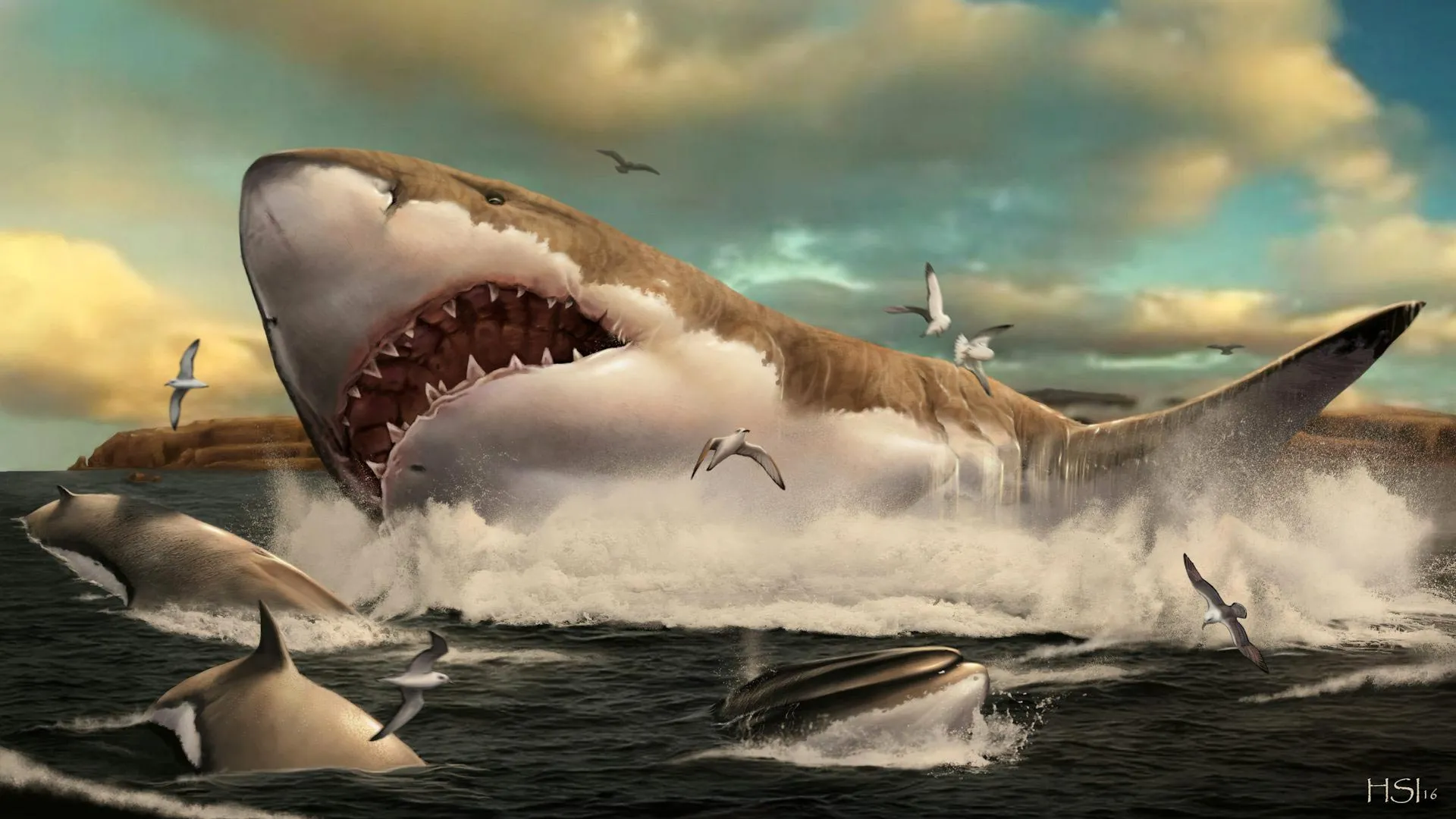
That is exactly what happened with several vertebrae belonging to the legendary prehistoric shark commonly known as Megalodon, now scientifically classified as Otodus megalodon. As a new study reveals, the fossils were recently found on a museum shelf after being considered lost for many years.
The research reassesses the size, growth and life history of this giant shark, which lived between 15 and 3.5 million years ago. Its findings support earlier estimates that Otodus megalodon could have exceeded 24 meters (79 feet) in length. For comparison, even the most exaggerated sharks portrayed in the Jaws film franchise reached only about 10.5 meters (34 feet). Megalodon was an exceptionally enormous marine predator.
The study analyzed several approximately 11-million-year-old vertebrae from a single shark discovered in Denmark. Because shark skeletons are made primarily of cartilage, fossilized vertebrae are rare and scientifically valuable. Unlike individual teeth, vertebrae provide important clues about the animal’s overall size. These specimens are the largest known vertebrae from O. megalodon, measuring up to 23 centimeters (9 inches) in diameter.
The fossils were believed to have been destroyed during a 1989 transfer from the Geological Museum of Copenhagen—now part of the Natural History Museum of Denmark—to the Museum of Southern Jutland. For decades, the only surviving evidence consisted of old photographs and written descriptions. However, researchers recently located several vertebrae on a museum shelf, where they had apparently remained unidentified. Their rediscovery made the new analysis possible and helped researchers estimate that a newborn O. megalodon may have measured about 3.6 meters (12 feet) long and lived for almost a century.
How can museums and paleontologists lose valuable fossils?
Fossils can disappear from museum collections for many reasons, including war, natural disasters, accidents, misidentification, poor record-keeping and theft.
Armed conflict has caused some of the most significant fossil losses. During the Second World War, dinosaur specimens were destroyed on both sides of the conflict. The original fossils of the sail-backed dinosaur Spinosaurus were destroyed in Munich during an Allied bombing raid in 1944. Earlier, several specimens—including remains of the early dinosaur Thecodontosaurus—were destroyed in Bristol after an Axis air raid in 1940.
These were not the first fossils lost through wartime action. In 1916, the Canadian ship SS Mount Temple was sunk by a German vessel. Although the ship was primarily carrying wheat, it also transported a collection of dinosaur fossils from Alberta to the United Kingdom. Because the cargo records are incomplete, researchers do not know which dinosaur species were among the lost specimens.
Indirect effects of war can also put fossils at risk. In 1941, Chinese researchers attempted to move as many as 40 specimens of “Peking man,” Homo erectus, to the United States. The fossils represented some of the earliest human relatives known to have human-like body proportions, and the transfer was intended to protect them from invading Japanese forces. The specimens never arrived and may have been lost at sea when the ship carrying them sank, although it is also possible they never made it onto the vessel.
Some fossils are lost through simple misplacement or deterioration. In 1877, American paleontologist Edward Cope named an apparent giant sauropod similar to Diplodocus Amphicoelias fragillimus. He described the dinosaur from a single incomplete and extremely fragile vertebra.
Cope recorded different measurements for the fossil at different times, leaving uncertainty about its true size. After his death, his collection was sold to the American Museum of Natural History, but researchers were unable to locate the specimen. Because the vertebra was so fragile, it may have disintegrated on a shelf, been overlooked or accidentally discarded.
Even major museums are not immune to losing specimens. When an institution houses millions of fossils and other scientific objects—the Natural History Museum in London, for example, has an estimated 80 million objects—it is inevitable that some items will be misplaced or incorrectly cataloged.
Lost fossils can sometimes be found in unexpected places. One researcher has described seeing a dinosaur skull and a pterosaur skeleton sitting on the wrong museum shelf, much like misplaced books in a library. More troubling cases involve researchers deliberately moving specimens to prevent others from studying them, as well as the occasional theft of fossil material from institutional collections.
Natural disasters and accidents can also destroy irreplaceable scientific records. The 2011 Fukushima earthquake and tsunami in Japan caused extensive damage to the nearby Iwaki museum, including damage to fossil specimens. In 2018, one wing of the National Museum of Brazil in Rio de Janeiro was destroyed by fire, resulting in the loss of many fossil specimens and other irreplaceable objects.
Despite these risks, museums remain among the safest places to preserve fossils. Millions of specimens have been protected by institutions around the world for decades or even centuries. Occasional accidents, natural disasters and deliberate acts can cause losses, but the rediscovery of the Danish Otodus megalodon vertebrae shows that missing fossils can sometimes return. When they do, they can provide researchers with valuable new evidence about prehistoric life and create exciting opportunities for paleontological research.
Source: www.sciencedaily.com