


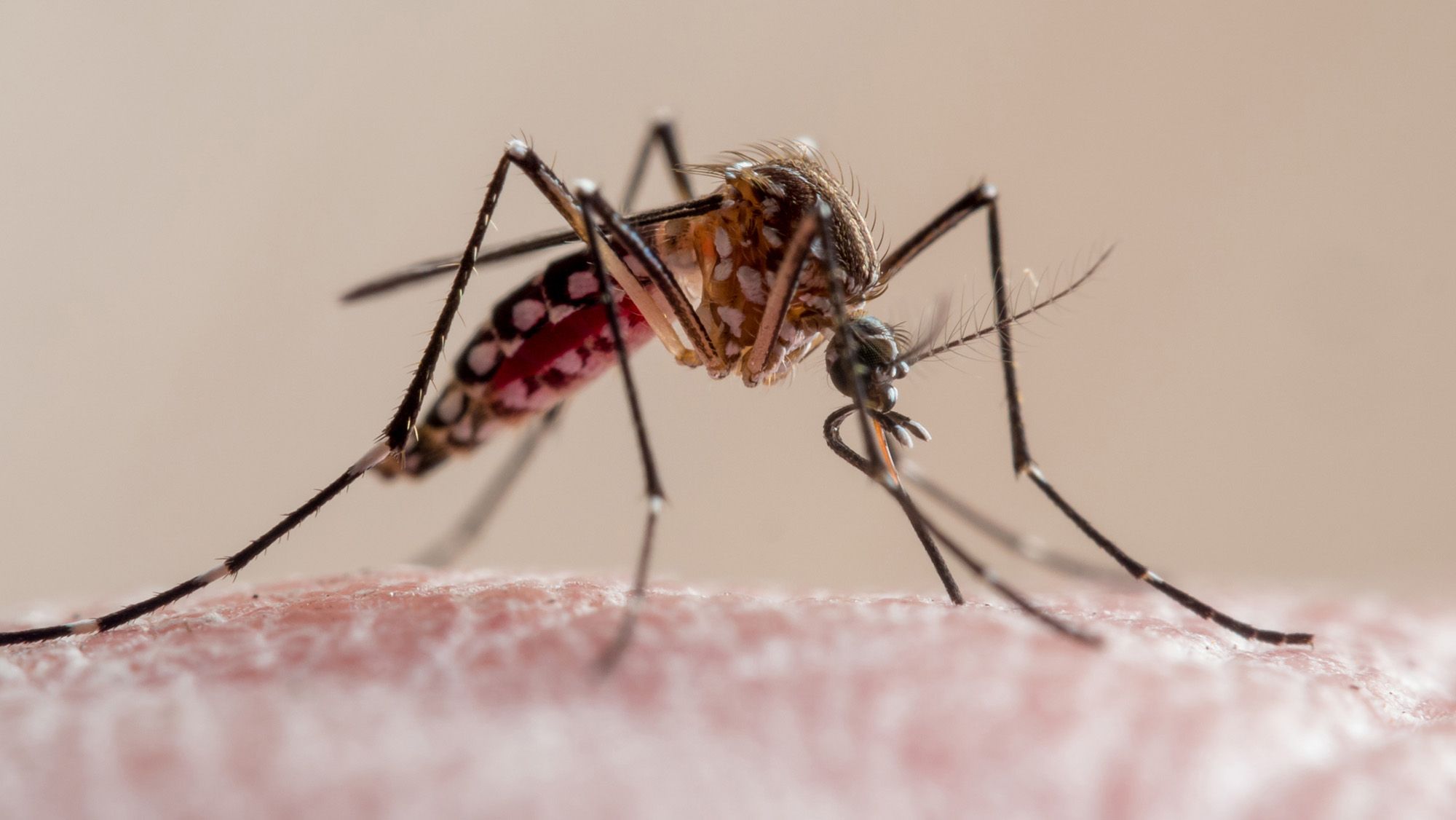
Florida Dengue Cases Surge as Local Mosquito Transmission Spreads Across Tampa Bay
Dengue cases are rapidly increasing in Florida, with several counties declaring local states of emergency as health officials detect an unusual rise in infections spread by mosquitoes within the state.
Florida has reported 497 dengue cases so far this year. Of those, 252 cases—about 51%—were locally transmitted rather than brought into Florida by travelers.
The state also recorded its first confirmed dengue-related death in nearly a century. The death occurred in Hillsborough County, which includes Tampa.
Florida’s locally transmitted dengue cases have surged
Until recent years, most dengue cases diagnosed in Florida were travel-related. People contracted the virus abroad and then traveled to Florida, where their infections were identified.
Florida has recorded 245 travel-related infections this year—a number that is not unusually high, according to Caroline Waddell, a public health researcher at the University of Florida who spoke with Live Science.
The major change is the number of infections acquired from mosquitoes in Florida. The state has reported more than five times as many locally transmitted cases as in previous years at this point in the season.
“Why are the number of dengue cases particularly high in the country this year?” Live Science spoke with experts to examine the possible causes.
What is dengue fever?
Dengue fever is caused by Orthoflavivirus denguei, a virus transmitted to people through the bites of infected mosquitoes. Dengue does not spread directly from person to person.
The primary mosquito species that transmit dengue are Aedes aegypti and Aedes albopictus. These mosquitoes can also carry viruses responsible for yellow fever, Zika and chikungunya.
(Image courtesy of the Centers for Disease Control and Prevention)
An estimated 100 million to 400 million dengue infections occur worldwide each year. Only about one in four people infected with dengue develop symptoms.
Common symptoms include:
- Fever
- Headache
- Muscle and body aches
- Nausea
- Rash
About one in 20 people with dengue become seriously ill. Children, older adults, pregnant people and those with weakened immune systems may be especially vulnerable to severe infections.
Warning signs of severe dengue include abdominal pain, persistent vomiting, difficulty breathing and bleeding from the nose or gums. Severe infections can cause leaky blood vessels, heavy bleeding, shock, organ failure and death.
There is no specific antiviral treatment for dengue fever. Medical care focuses on managing symptoms and maintaining vital signs.
Why dengue is becoming a larger global health concern
Dengue has become a growing global health concern over the past several decades. Between 2000 and 2019, the number of reported dengue cases worldwide increased tenfold. Dengue-related deaths also doubled between 1990 and 2021, according to research.
Scientists have linked the increase to several factors, including climate change and expanded mosquito habitat. Warmer temperatures can expand the range of Aedes aegypti mosquitoes, speed up their life cycle and accelerate dengue virus replication.
International travel is another important factor. Dengue cases increased around the world in 2023 after international travel rebounded following the COVID-19 pandemic, allowing more infected travelers to carry the virus across borders.
Why Tampa Bay is at the center of Florida’s dengue outbreak
The United States has also seen dengue cases rise. Nearly 3,800 cases were reported in 2024, more than a 300% increase over the annual average of the previous 10 years. The increase was linked to travel-related infections, the global spread of dengue and warmer temperatures, as well as the introduction of dengue-carrying mosquitoes into new areas.
Florida typically sees dengue outbreaks in its southernmost regions, including Miami and the Florida Keys. Historically, outbreaks in Miami generally involved about 50 cases or fewer. A 2019 outbreak, however, produced more than 200 cases, while outbreaks from 2022 through 2024 ranged from approximately 500 to 675 cases.
This year’s outbreak is different because it is centered farther north in Hillsborough County. The region usually sees only a few sporadic locally transmitted cases.
Hillsborough County has reported 223 of Florida’s 252 locally transmitted cases this year. The county also recorded the state’s dengue-related death.
“Approximately 75% of dengue infections are asymptomatic, so the virus can circulate within the community for some time without being immediately detected.”
Kyra Lucas, deputy executive director of the Collier Mosquito Control District
Florida’s Department of Health traps mosquitoes and tests them for dengue. So far this year, 20 mosquito pools in seven counties have tested positive for the virus. Nineteen of those positive pools were found in the greater Tampa area.
By comparison, only four mosquito pools tested positive statewide in 2025, and one tested positive in 2023.
“Dengue fever is not endemic to the state,” Lucas told Live Science. “In many ways, it can be like looking for a needle in a haystack.”
Routine mosquito trapping is also a relatively inefficient way to detect the virus. Lucas said that finding dengue-positive mosquito pools could indicate that a substantial number of human infections have already occurred, particularly because many infections cause mild or no symptoms.
In addition to Hillsborough County, neighboring Pasco County and Pinellas County have declared local states of emergency related to dengue fever.
Climate, drought and mosquitoes may be creating the right conditions
Historically, local dengue outbreaks in Florida have been concentrated in the south, where warmer temperatures, lower rainfall and higher levels of travel-related dengue may help sustain transmission.
The shift toward central and northern areas of the state could reflect changing weather patterns that are making more parts of Florida suitable for dengue-carrying mosquitoes. However, researchers say it is too early to determine exactly why Tampa has recorded more local cases than Miami this year.
For dengue to persist among local mosquitoes, the virus must periodically be reintroduced through travel-related infections. Dengue is not yet endemic in Florida, meaning it does not circulate continuously among local mosquitoes. However, a more predictable dengue season may be emerging as international travel increases.

(Image credit: koto_feja via Getty Images)
Florida has also experienced its worst drought in more than a decade. At first, dry conditions might appear likely to reduce mosquito numbers because mosquitoes need water to breed. But drought can lead people to use sprinklers more often, leaving puddles and overfilled containers that provide breeding sites.
Aedes aegypti mosquitoes are particularly well adapted to living near people and often breed in artificial containers. Research also suggests that dehydrated mosquitoes may bite more frequently while searching for bodily fluids.
“It’s almost like a combination of bad luck,” said Pampim Dongsipon, a disease ecologist at the University of Florida. “If everything comes together at the right time and in the right place and there’s a boom, the conditions are right for an outbreak.”
Waddell said the actual number of dengue infections may be higher than official case totals. Reported cases generally include people who visited a doctor and were tested, while many mild or asymptomatic infections may never be diagnosed.
How Floridians can reduce dengue risk
Researchers are still gathering data, so it is too early to identify every factor behind Florida’s increase in dengue cases. Even so, experts say mosquito control agencies and residents can take steps to reduce transmission.
Mosquito control districts are working with health departments to use surveillance data to determine where to apply larvicides, which kill mosquito larvae before they mature and bite people.
Residents can also reduce mosquito breeding sites and lower their risk by:
- Using mosquito repellent when spending time outdoors
- Draining water from pet bowls, plant saucers, buckets and old tires
- Removing or covering containers that collect rainwater
- Taking extra precautions during periods of increased mosquito activity
This year’s strong El Niño pattern could bring a wetter winter to Florida, potentially creating more mosquito habitat than usual. As a result, dengue infections could continue to increase.
“We are still reporting cases that will develop in September,” Waddell said. “So we are not out of the woods.”
This article is for informational purposes only and does not provide medical advice.
Source: www.livescience.com