


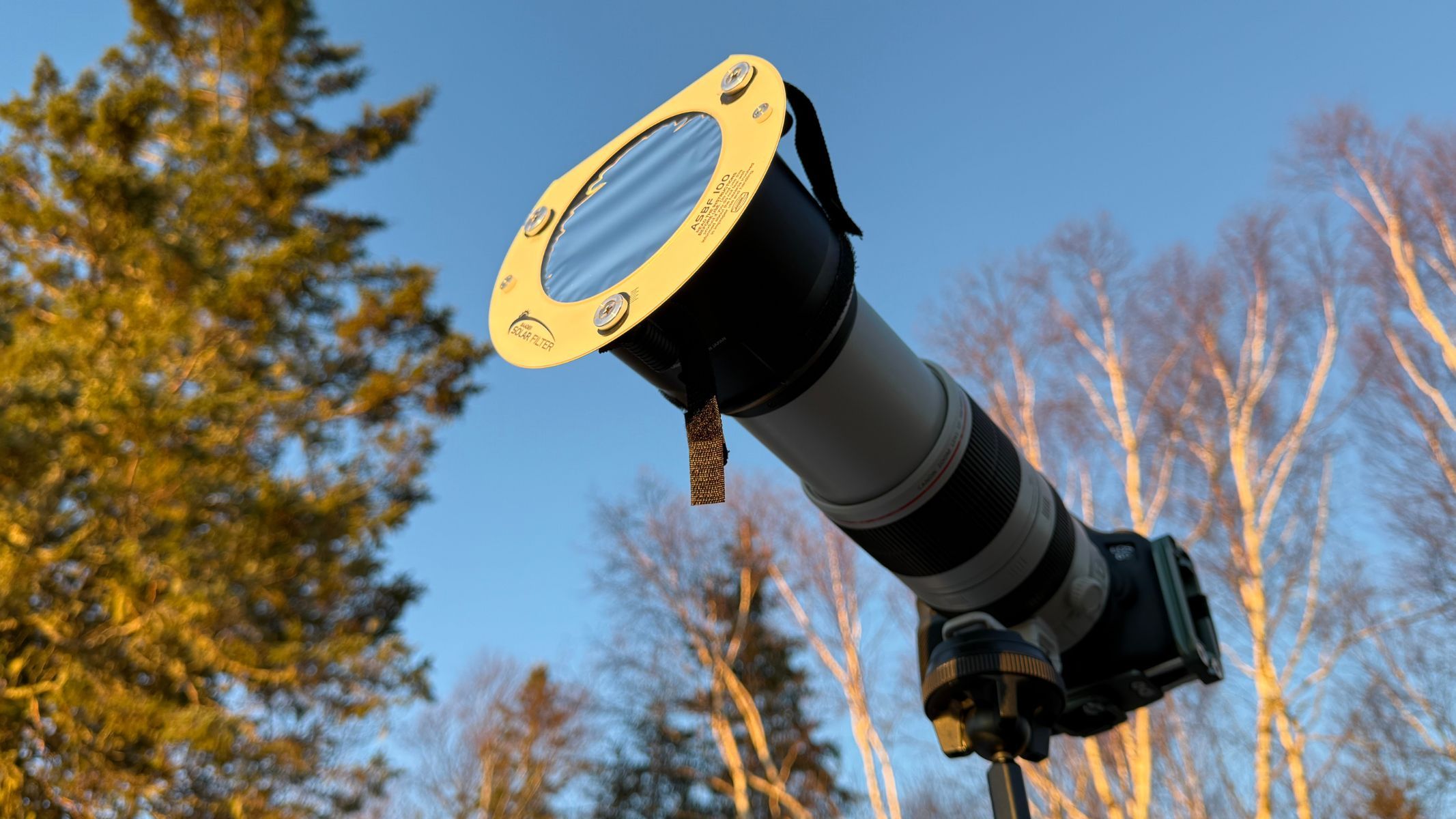
Baader AstroSolar Filter Film OD 5.0 is a lightweight, versatile solar filter material for safely photographing and observing the Sun. Sold as a thin, metalized sheet or incorporated into ready-made filters, it can be used with camera lenses, binoculars, spotting scopes and telescopes.
Its main appeal is image quality. When mounted correctly over the front of an optical system, Baader AstroSolar Film OD 5.0 produces sharp, high-contrast white-light views of the Sun. Sunspots are clearly defined, the edge of the solar disk remains crisp and photographers can use relatively fast shutter speeds to reduce camera shake and atmospheric blur.
Although Baader also makes the brighter AstroSolar Photo Film OD 3.8, that product is intended for photography only and is not suitable for direct visual observation. This review focuses on Baader AstroSolar Safety Film OD 5.0, both as a DIY solar-filter material and as the core material used in ready-made Baader solar filters.
Baader AstroSolar Filter Film OD 5.0: Design and construction
(Image credit: Jamie Carter)
- Extremely thin and lightweight
- Suitable for DIY solar-filter projects
- Available as loose sheets and ready-made filters
- Designed for safe white-light solar observation when used correctly
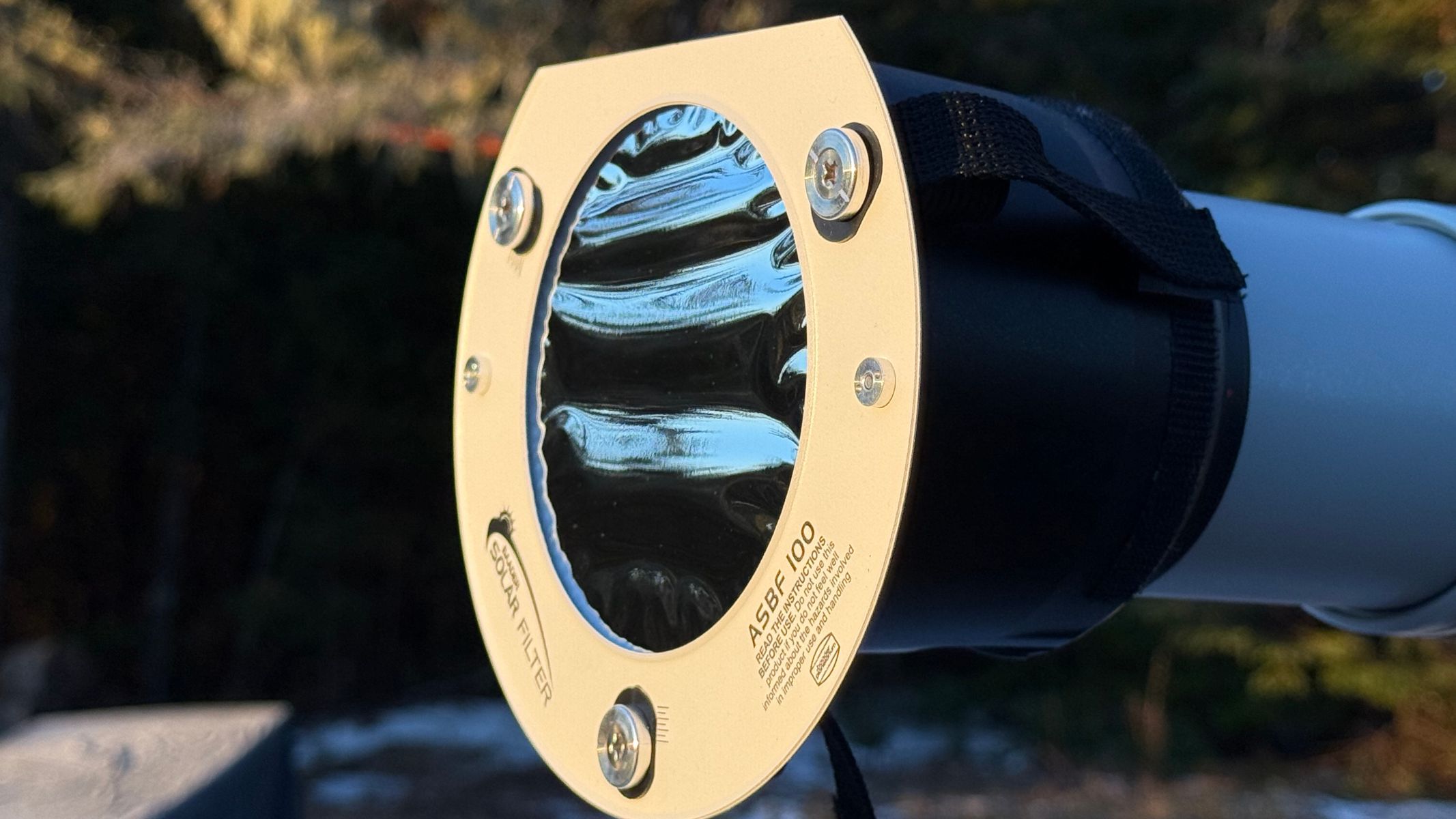
The defining characteristic of Baader AstroSolar Film OD 5.0 is its very thin construction. At approximately 0.01 mm thick, it is significantly more delicate than many polymer or glass solar-filter materials. The film wrinkles easily and should not be stretched tightly during installation.
That apparent fragility is not necessarily a problem. A correctly made solar filter does not require perfectly flat film. Baader recommends mounting the material with a small amount of slack. Wrinkles and gentle ripples generally do not reduce image quality and can help prevent the film from being placed under damaging tension.
The film’s flexibility makes it highly adaptable. A single sheet can be cut to create filters for camera lenses, binoculars, spotting scopes or telescopes. However, every solar filter must be installed securely over the front aperture of the equipment. Never place solar-filter material behind the lens, inside a telescope or over an eyepiece, where concentrated sunlight could cause damage.
When using binoculars, a filter should be fitted to the front of each objective lens for two-eyed viewing. Alternatively, one objective can be filtered for safe one-eyed observation while the other objective is completely capped. The unused side must never be left open.
Baader AstroSolar Film OD 5.0 specifications
Product type: AstroSolar Safety Film OD 5.0
Material: Metalized solar-filter film
Approximate thickness: 0.01 mm
Light reduction: Blocks 99.999% of visible sunlight
Solar color: Neutral white
Available formats: Loose sheets and ready-made filters
Baader AstroSolar Safety Film is sold in several sheet sizes, including ECO, A4, 100 x 50 cm and Giant 117 x 117 cm formats. Ready-made products are also available, including telescope, spotting-scope and binocular filters in a range of apertures.
Pre-made filters are cleaner and more convenient than cardboard DIY versions, but they use the same basic optical principle. Loose film is particularly useful if you own multiple lenses or want to build a filter that fits a specific lens hood, telescope tube or binocular objective.
Baader AstroSolar Filter Film OD 5.0: Optical performance
(Image credit: Jamie Carter)
- Sharp, high-contrast solar detail
- Neutral white appearance
- Suitable for cameras, binoculars and telescopes
- Supports fast shutter speeds for solar photography
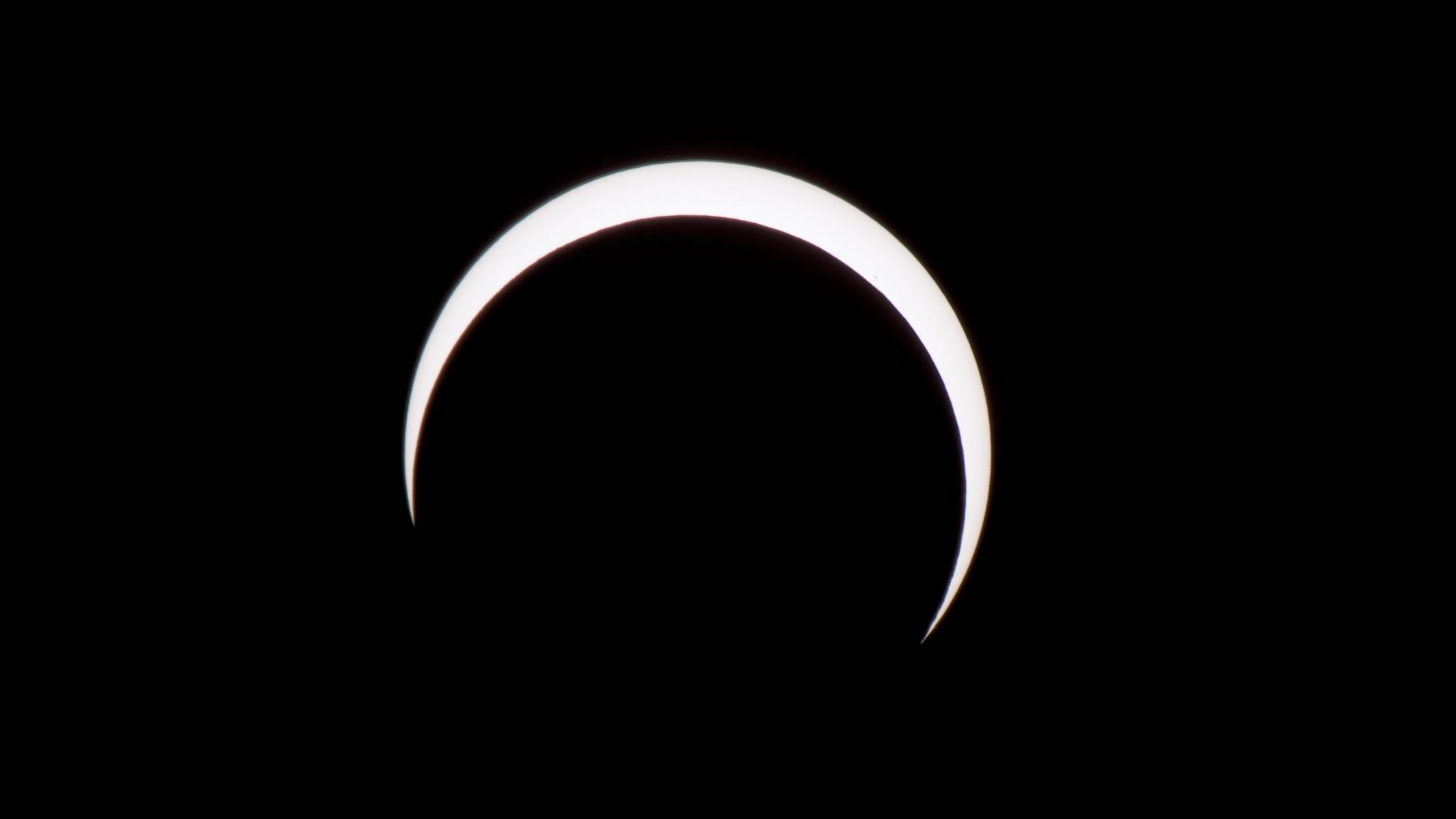
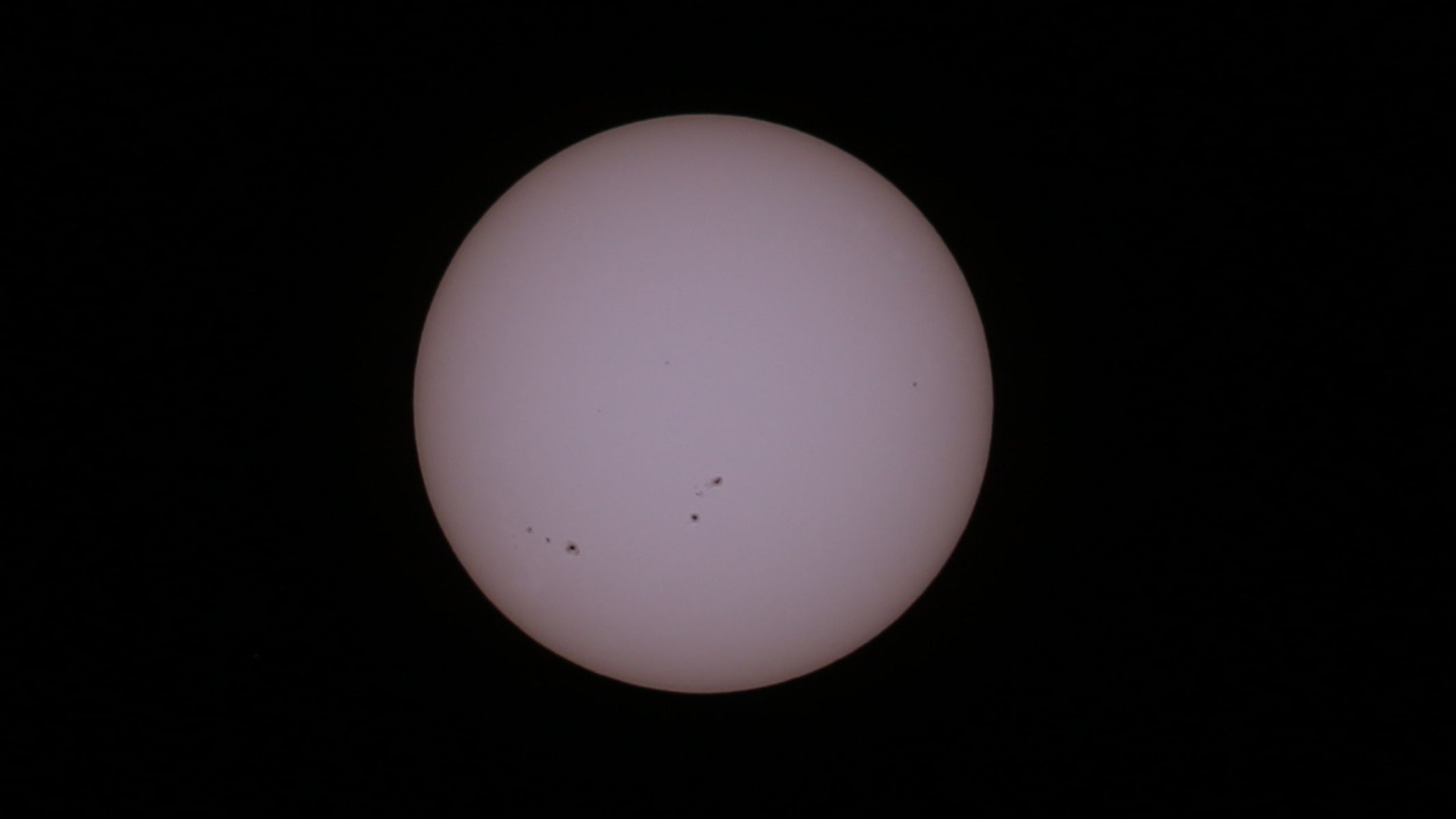
The strongest reason to choose Baader AstroSolar Filter Film OD 5.0 is its image quality. Used correctly, it produces a sharp, high-contrast white-light image of the Sun. Sunspots appear well defined, the solar limb is crisp and the overall color is neutral rather than strongly orange.
That neutral presentation may look unusual if you are accustomed to orange solar images from eclipse glasses or some glass and polymer filters. For photographers, however, the white rendering is useful. It provides a flexible starting point for editing, allowing the image to be warmed or recolored later without having to correct a strong filter tint.
The film’s light transmission also makes a difference when photographing the Sun with long telephoto lenses. Shorter exposures help reduce the effects of camera movement, vibration and atmospheric turbulence. The improvement is most noticeable when using lenses with focal lengths of 400 mm, 500 mm or more, where small losses in sharpness become easier to see.
In testing with a 400 mm lens at f/8 and ISO 100, shutter speeds around 1/800 sec and 1/1,000 sec produced strong results. Actual exposure settings will vary with atmospheric conditions, camera type, focal length and the Sun’s altitude, so photographers should use these figures only as a starting point.
(Image credit: Jamie Carter)
Baader AstroSolar Film also performs well with binoculars. A DIY filter made from the material can transform a pair of 10×50 binoculars into a useful solar-viewing instrument for the partial phases of an eclipse. Any homemade binocular filter should be checked carefully, reinforced where necessary and secured so it cannot slip off in wind or during handling.
For long-term use, protecting the edges of a DIY filter with suitable tape can extend its lifespan. However, tape should never be used to hide damage to the film itself. Holes, tears, deep scratches or areas where the metalized coating has separated are reasons to discard the filter.
Baader AstroSolar Filter Film OD 5.0: Ease of use and safety
(Image credit: Jamie Carter)
- Simple to customize for different equipment
- Works with camera lenses, binoculars and telescopes
- More affordable when covering multiple optical devices
- Requires careful inspection before every use
Buying a ready-made Baader filter is the simplest option, but the loose film is an attractive choice for photographers who use several pieces of equipment. With cardboard, tape, glue and scissors, the material can be shaped to fit almost any lens hood, binocular objective or telescope tube.
A typical DIY solar filter uses two cardboard rings to hold the film in place. A short cardboard sleeve then slides over the front of the optical device. The finished filter must fit tightly enough that it cannot fall off accidentally, while still being removable when required. In windy conditions, additional masking tape can provide extra security.
DIY construction is also more economical than purchasing a separate screw-in photographic filter for every lens. It avoids compatibility issues with different filter-thread diameters and makes it possible to create filters for equipment that does not accept threaded accessories.
Solar-filter safety checklist
- Always place the filter over the front of the lens, binocular or telescope.
- Secure the filter so it cannot be blown or knocked off.
- Inspect the film before every use and replace it if damaged.
- Never look at the Sun through unfiltered optics.
- Do not use OD 3.8 photographic film for direct visual observation.
- Remove the filter only during the fully total phase of a total solar eclipse.
During a total solar eclipse, Baader AstroSolar Film is intended for the partial phases, when any portion of the bright solar photosphere is visible. The filter should be removed only after totality has begun and the Sun is completely covered. It must be replaced before the bright photosphere reappears.
A removable slip-on DIY filter can be convenient during an eclipse because it can be taken off quickly without unscrewing a hot threaded filter. Store the filter safely during totality and reinstall it before observing or photographing the post-totality partial phase.
Should you buy Baader AstroSolar Filter Film OD 5.0?
Buy it if:
✅ You want to make custom solar filters for cameras or binoculars.
✅ You need sharp, neutral-white solar images.
✅ You use several lenses or optical devices.
✅ You are comfortable handling delicate filter material.
Choose another option if:
❌ You want the quickest and simplest eclipse-viewing solution.
❌ You prefer a more rugged glass or polymer filter.
❌ You do not want to build or inspect a DIY filter.
❌ You strongly prefer an orange-colored solar image.
Baader AstroSolar Filter Film OD 5.0 is not the most durable or convenient choice for casual eclipse viewing. The material is delicate and requires careful storage, secure mounting and a thorough inspection before every use.
For solar photographers and binocular users, though, it is difficult to beat. The film is lightweight, versatile, cost-effective and capable of producing detailed white-light views of the Sun. It can be used to create a filter for a 400 mm telephoto lens, a pair of binoculars, a compact telescope or almost any other front-mounted optical system.
Verdict: Treat Baader AstroSolar Film OD 5.0 carefully, mount it securely and inspect it regularly. In return, you get one of the most adaptable and effective solar-filter materials available for safe solar observation and eclipse photography.
Source: www.livescience.com