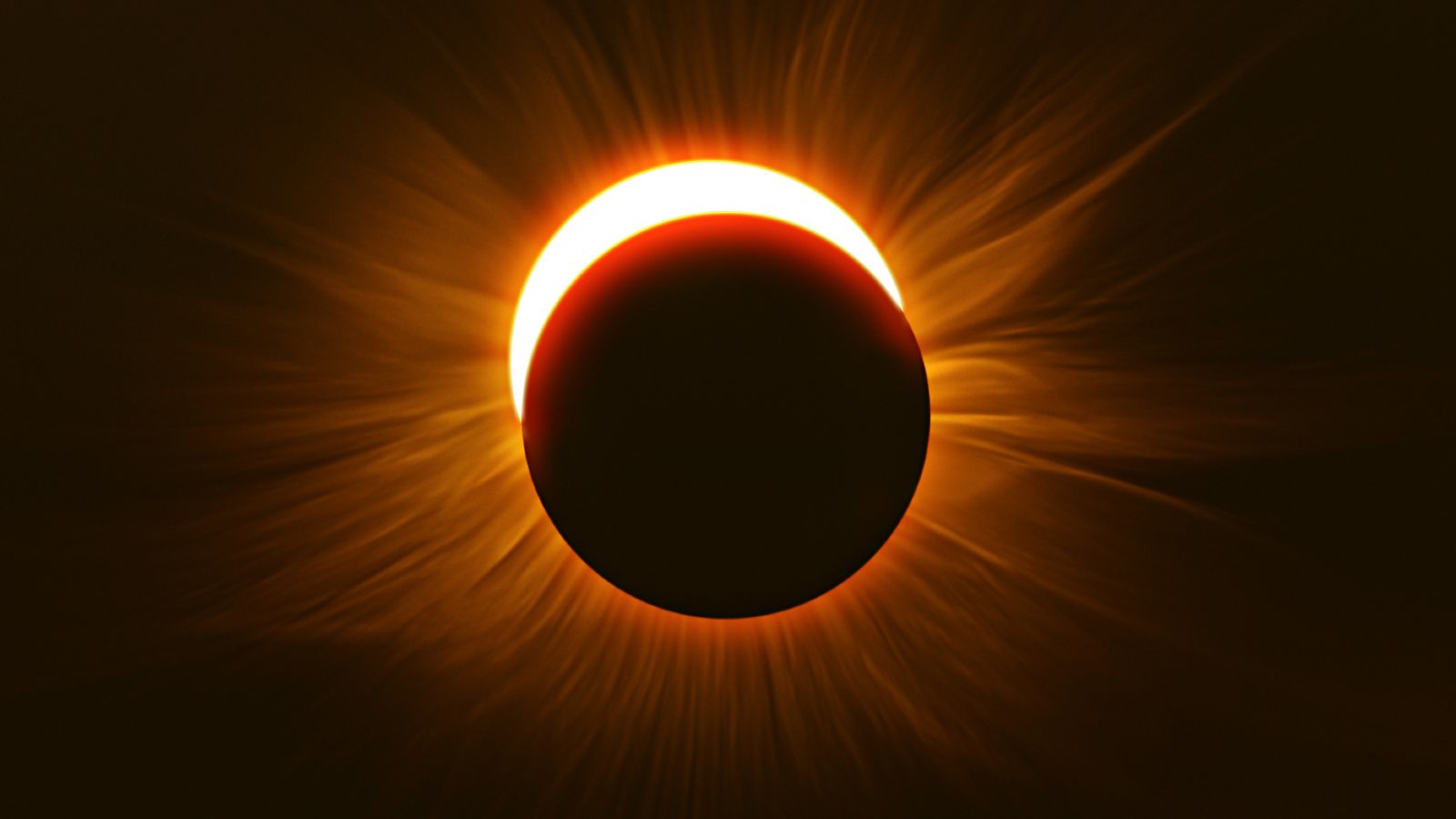
On Wednesday, Aug. 12, the new moon will pass directly in front of the sun, casting its shadow across Earth from Iceland and Greenland to northern Spain. Observers inside the eclipse’s path of totality will witness a spectacular total solar eclipse.
Millions of skywatchers across North America and Europe will also see a partial solar eclipse. In some locations, the moon will cover more than 90% of the sun’s visible disk, creating one of the most impressive skywatching events of the year.
Here’s everything you need to know about where to see the Aug. 12 total solar eclipse, how long totality will last, how to watch safely and where to stream the eclipse online.
Latest Videos FromLive Science
Where is the Aug. 12 total solar eclipse visible?
The path of totality for the Aug. 12 total solar eclipse follows a remarkable arc from northern Siberia near the North Pole to Greenland, western Iceland and southern Spain. Prime destinations for viewing totality include Scoresby Sund in Greenland, Reykjavik in Iceland and León in Spain.
The following locations will experience totality at these approximate local times:
- Scoresby Sund, Greenland: 4:35 p.m. WGST — up to 2 minutes, 17 seconds of totality
- Reykjavik, Iceland: 5:48 p.m. GMT — 60 seconds
- León, Spain: 8:28 p.m. CEST — 1 minute, 45 seconds
- Soria, Spain: 8:29 p.m. CEST — 1 minute, 43 seconds
- S’Arenal, Mallorca, Spain: 8:31 p.m. CEST — 1 minute, 36 seconds
Totality is the only phase of a solar eclipse when it is safe to look at the sun without certified solar eclipse glasses. During every partial phase, viewers must wear approved protective eyewear, including people watching from locations just outside the path of totality. Certified eclipse glasses are still available online.
You can also safely watch the partial eclipse with binoculars or a telescope fitted with a proper solar filter. Never look at the sun through unfiltered optical equipment.
Where is the Aug. 12 partial solar eclipse visible?
North America will not have the best overall view of the Aug. 12 eclipse, but skywatchers in parts of the Northeast and Alaska will be able to see the moon pass across the sun during the day.
These are some of the best North American locations for viewing the partial solar eclipse:
- Iqaluit, Nunavut: 1:24 p.m. EDT — 61% eclipse
- St. John’s, Newfoundland and Labrador: 3:00 p.m. NDT — 53%
- Fairbanks, Alaska: 8:27 a.m. AKDT — 37%
- Anchorage, Alaska: 8:21 a.m. AKDT — 28%
- Quebec City: 1:46 p.m. EDT — 24%
- Bangor, Maine: 1:53 p.m. EDT — 23%
- Montreal: 1:45 p.m. EDT — 18%
- Boston: 1:55 p.m. EDT — 16%
- New York: 1:54 p.m. EDT — 9%
Viewers in Europe will see a deeper partial eclipse, with daylight fading and temperatures potentially dropping slightly. Even during a 99% eclipse, however, the sun remains dangerous to view without protection. Solar eclipse glasses must be worn throughout the partial eclipse.
- Madrid: 8:32 p.m. CEST — 99.9%
- Lisbon, Portugal: 7:36 p.m. WEST — 94%
- Dublin, Ireland: 7:10 p.m. BST — 94%
- Cardiff, Wales: 7:13 p.m. BST — 93%
- Belfast, Northern Ireland: 7:08 p.m. BST — 93%
- Paris: 8:17 p.m. CEST — 92%
- London: 7:13 p.m. BST — 91%
- Edinburgh, Scotland: 7:05 p.m. BST — 91%
Where to stream the Aug. 12 solar eclipse online
Viewers who cannot travel to the path of totality can watch the Aug. 12 eclipse online. Major broadcasters and space agencies, including CNN, NASA and the European Space Agency, plan to provide livestream coverage.
NASA will livestream the eclipse from Iceland and Spain beginning at 1:15 p.m. EDT. The broadcast will be available on NASA’s website and YouTube channel, as well as through other live coverage.
The European Space Agency will also stream the total solar eclipse from the Astrophysical Observatory of Javalambre in Teruel, Spain. CNN will livestream totality from Spain beginning at 1 p.m. EDT on Wednesday.
When is the next eclipse?
If you cannot watch the Aug. 12 total solar eclipse in person, another major celestial event will follow soon. As is typical, this solar eclipse will be followed by a lunar eclipse two weeks later. From Aug. 27 to 28, a deep partial lunar eclipse will be visible across much of North and South America, beginning around midnight EDT.
In 2027, skywatchers will have the chance to see the longest total solar eclipse of the century. The event will cross southern Spain and northern Africa on Aug. 2, 2027.
Test your knowledge of the sun with our sun quiz!