


The Dodo Bird May Have Been Intelligent—and Active at Night, Study Suggests
The dodo has long been portrayed as a slow, clumsy and unintelligent bird. However, a new study of dodo skulls suggests that this extinct bird may have been relatively intelligent—and possibly active during low-light conditions.
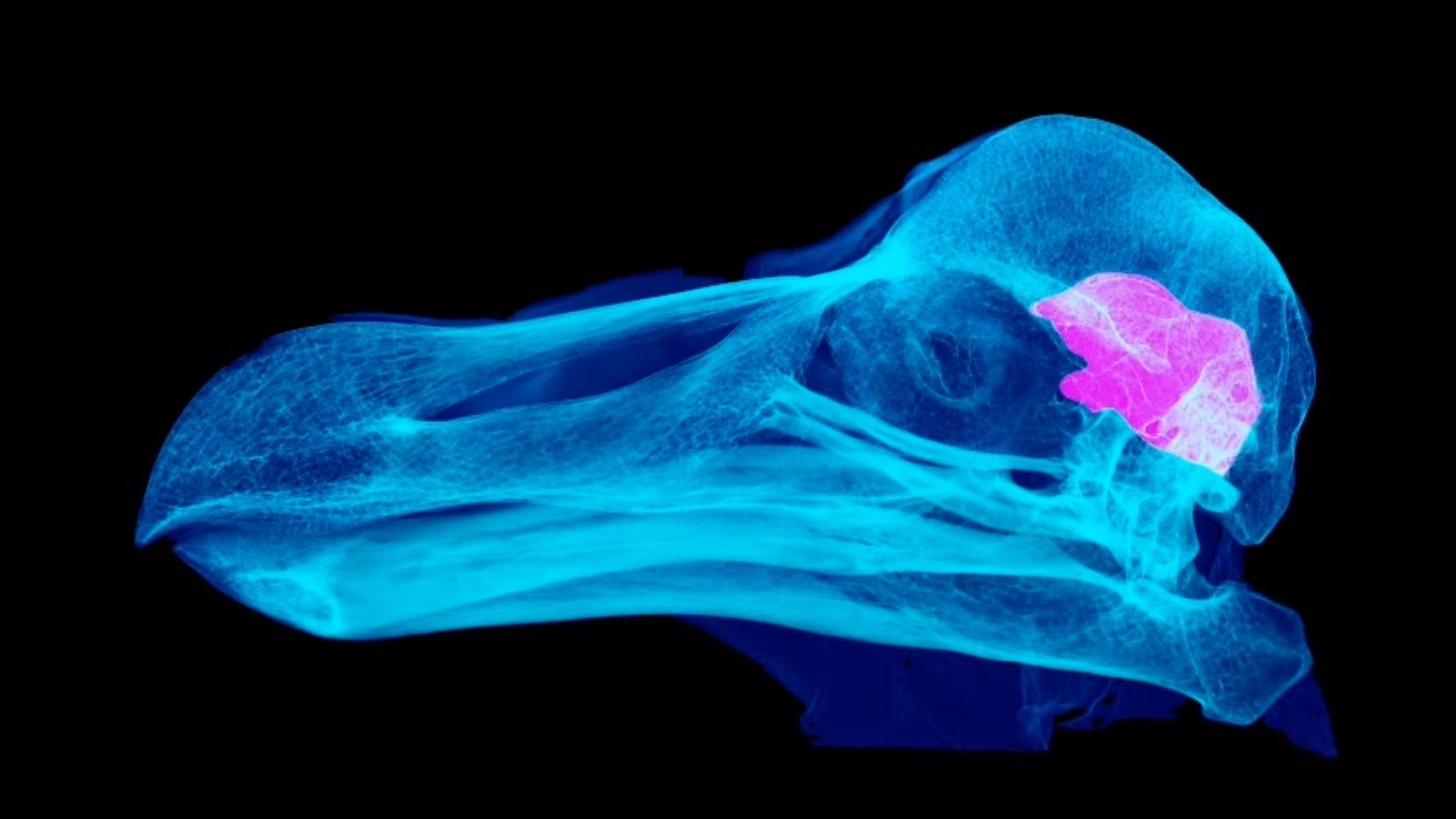
Researchers used detailed skull scans to reconstruct the dodo’s brain and examine how its sensory systems may have worked. They found that the dodo’s brain was appropriately sized for its body and comparable to the brains of related pigeon species. This finding challenges the long-standing myth that dodos were inherently stupid.
“Our interpretation is that this species was actually less reliant on vision,” Sarah Citron, lead author of the study and a doctoral candidate in behavior and evolution at the University of Lethbridge in Canada, told Live Science. “The only situation where you don’t rely on vision is when there’s no light.”
The dodo became extinct within about a century of humans settling on Mauritius in 1598. Hunting contributed to its decline, but it was not the only threat. Sailors introduced dogs, cats, pigs and rats, which likely killed dodos and raided their nests. These invasive animals severely disrupted the island’s ecosystem and continue to affect Mauritius’ native wildlife.
In a study published in the Zoological Journal of the Linnean Society, researchers found that the dodo’s brain size was consistent with its body size and evolutionary relationship to pigeons. In other words, the dodo did not have an unusually small brain, and there is no anatomical evidence that it was less intelligent than its close relatives.
The findings build on earlier research challenging traditional images of the dodo. A 2024 study suggested that the dodo may have been faster and more powerful than historical illustrations imply. Research published in 2016 also proposed that dodos may have had cognitive abilities similar to those of modern pigeons, including the ability to solve problems and understand abstract concepts related to space and time.
The myth of the “stupid dodo” may partly come from accounts describing the birds as unafraid of humans. Historical reports also suggested that when sailors captured or distressed one dodo, other birds approached in response to its calls. This behavior may have made it easier for hunters to catch multiple birds.
Get the world’s most fascinating discoveries delivered straight to your inbox.
“Apparently they grabbed one dodo, screamed and waited, and all the other dodos ran toward that dodo to see what was happening,” Citron said.
Although this response may appear to have been a poor survival strategy, it was likely a consequence of the dodo’s environment rather than a sign of low intelligence. Like many island species, dodos evolved without mammalian predators. They were therefore not adapted to avoid humans or the unfamiliar animals brought to Mauritius by sailors.
What the dodo’s brain reveals
To learn more about dodo biology, an international team of researchers used computed tomography, or CT, scans to study preserved dodo skulls. These scans allowed the scientists to estimate the size and shape of the bird’s brain, including the regions responsible for vision and other senses.
“As soon as we started researching, we found that the optic lobe—the part of the brain that processes visual information—was severely reduced in the dodo,” Citron said. “That is usually a strong indication that something about the species’ behavior was very different.”
The team compared dodo scans with scans from 36 living pigeon species and the extinct Rodrigues solitaire (Pezophaps solitaria), a close relative of the dodo that lived on Rodrigues Island, east of Mauritius. Unlike the dodo, the Rodrigues solitaire had an optic lobe and overall brain structure more typical of a large pigeon.
Researchers know surprisingly little about dodo behavior, but this artist has depicted how the bird might have looked if it were active at night.
Image credit: Adel Lee, Instagram: @sykonebabblin
The dodo’s reduced visual-processing region, combined with evidence of an enhanced sense of smell, may indicate that the bird was crepuscular—active around dawn and dusk—or even nocturnal. However, this interpretation remains uncertain. There are no reliable historical records confirming that dodos regularly moved around in complete darkness.
“The most ridiculous thing is that the dodo is this famous bird,” Citron said. “Everyone knows what the dodo was and what it looked like, but we have no idea about its behavior or ecological niche. If we look at historical accounts, we can learn more about what the dodo ate and how it lived.”
For now, the idea that dodos were nocturnal or active at twilight remains a scientific hypothesis. Still, the research offers a more nuanced view of one of the world’s most famous extinct animals.
Citron hopes the dodo will no longer be portrayed as a foolish animal that was destined to disappear.
“Endangered animals are intelligent, and they have adapted to their environments over millions of years,” she said. “The fact that humans are destroying those environments does not mean these animals are stupid or that they do not deserve to continue living.”
Citron, S., Hipsley, C. A., Hume, J., James, H., Hosner, P. A., Czeibert, K., Keirnan, A., Silva, A. C. C. R., Walsh, S., Weisbecker, V., and Ivaniuk, A. N. (2026). The sensory world of dodo and solitaire revealed by endocasts and skull anatomy. Zoological Journal of the Linnean Society, 207(4).
Source: www.livescience.com