


Blood Pressure Arm Position Can Raise Readings by Nearly 7 mmHg, Johns Hopkins Study Finds
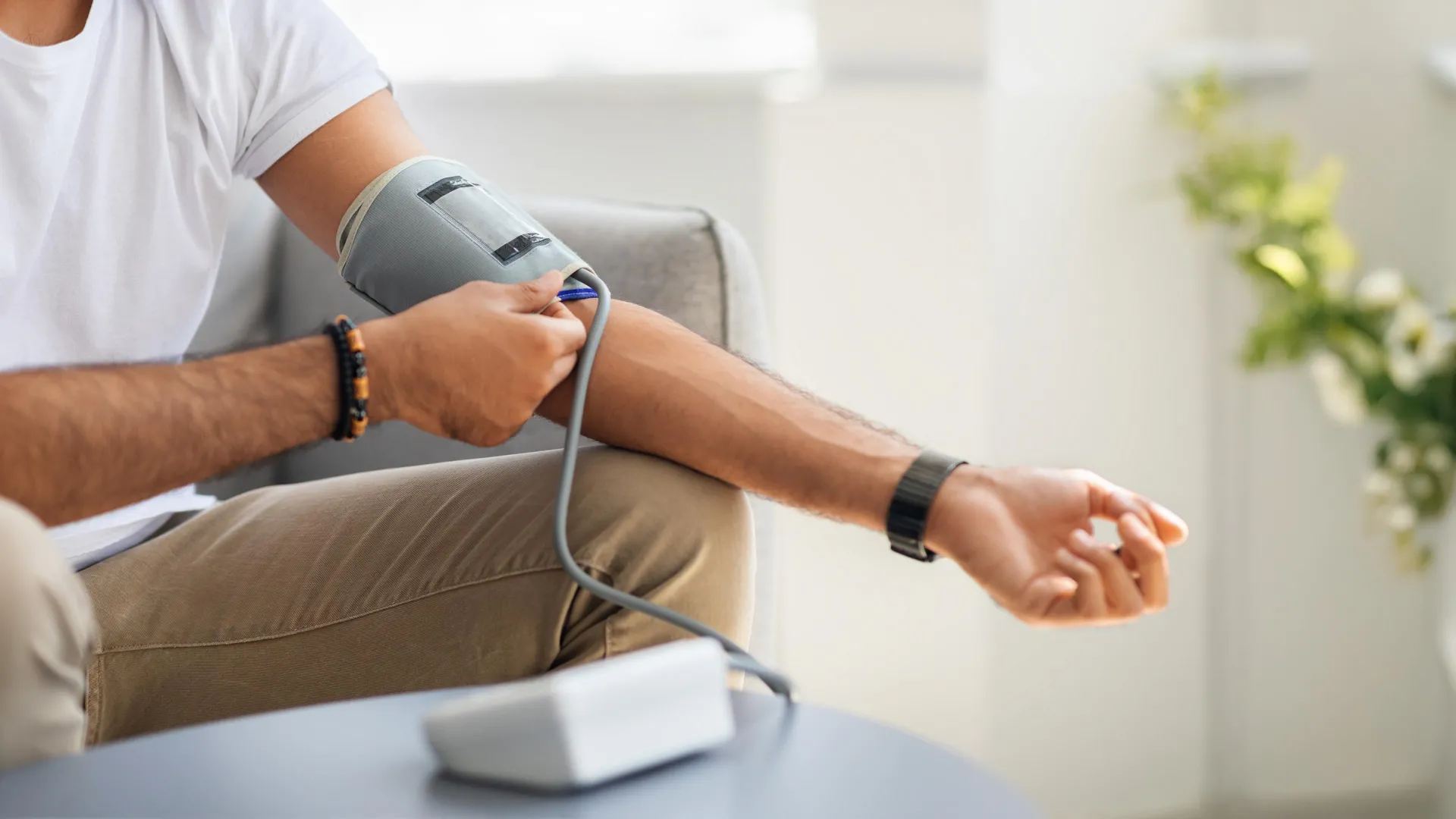
A study led by Johns Hopkins School of Medicine suggests that arm position during a blood pressure test can significantly affect the results. Common arm positions used during screening may make blood pressure appear higher than it actually is, potentially contributing to an incorrect diagnosis of hypertension.
In a research report published in JAMA Internal Medicine, researchers compared three arm positions: an arm supported on a desk, an arm supported on the lap, and an unsupported arm hanging by the patient’s side. They found that resting the arm on the lap increased systolic blood pressure—the top number—by nearly 4 mmHg. Letting the arm hang unsupported increased systolic blood pressure by nearly 7 mmHg.
Arm position can significantly affect blood pressure readings
The findings show that arm position makes a “huge difference” in accurately measuring blood pressure, said Tammy Brady, M.D., associate director of pediatric clinical research at the Johns Hopkins University School of Medicine, medical director of the Pediatric Hypertension Program at the Johns Hopkins Children’s Center, associate director of the Welch Center for Prevention, Epidemiology, and Clinical Research, and senior author of the study.
Researchers say the findings reinforce clinical recommendations to firmly support a patient’s arm on a desk or another surface during blood pressure measurements.
According to the American Heart Association, almost half of adults in the United States have high blood pressure. The condition is diagnosed when the force of blood flowing through the blood vessels is higher than what is generally considered normal, often described as an average reading of 120/80 mmHg. If left untreated, high blood pressure can increase the risk of heart attack, stroke, and other serious cardiovascular diseases.
High blood pressure often causes few or no noticeable symptoms. Getting tested early and regularly during health care visits is therefore an important part of managing the condition. Blood pressure can often be controlled through lifestyle changes such as weight loss, healthy eating, and exercise, as well as with medication.
How to measure blood pressure accurately
The American Heart Association’s clinical practice guidelines outline several steps to improve measurement accuracy. These include using the correct cuff size, supporting the back, keeping both feet flat on the floor without crossing the legs, and positioning the arms correctly. The center of the blood pressure cuff should be at the level of the heart while the arm rests on a desk or table.
Despite these recommendations, researchers say blood pressure is frequently checked while patients sit on an examination table with little or no support for their arms. A clinician may hold the patient’s arm, or the patient may rest the arm in their lap.
For the Johns Hopkins study, researchers enrolled 133 adults between August 9, 2022, and June 1, 2023. Participants ranged in age from 18 to 80 years; 78% were Black and 52% were female. They were randomly assigned to one of six groups that used different testing orders for the three seated arm positions.
All measurements were collected during a single visit between 9:00 a.m. and 6:00 p.m. Before blood pressure was measured, participants emptied their bladders and walked for two minutes to simulate the typical experience of entering a doctor’s office before screening. They then sat and rested for five minutes with their backs and legs supported.
Each participant wore a bicep blood pressure cuff selected according to their bicep size. Researchers used a digital blood pressure device to collect three sets of three measurements, with 30 seconds between each reading.
Researchers carefully controlled each blood pressure measurement
The researchers took three measurements for each arm position and then removed the cuff. Participants walked for two minutes and rested for another five minutes. During the same visit, each person completed a fourth set of three measurements while supporting their arm on a desk. This additional set helped account for the variations that can occur between blood pressure measurements.
All measurements were performed in a quiet, private environment. Participants were instructed not to talk with researchers or use their cell phones while their blood pressure was being measured.
The results showed that two arm positions commonly seen in clinical practice—resting the arm on the lap or leaving it unsupported at the side—produced significantly higher blood pressure readings than the recommended position of supporting the arm on a desk.
Resting the arm in the lap overestimated systolic blood pressure by 3.9 mmHg and diastolic blood pressure by 4.0 mmHg. Systolic blood pressure is the top number and reflects the force of blood flow as the heart pumps. Diastolic blood pressure is the bottom number and reflects pressure in the arteries while the heart rests between beats.
Leaving the arm unsupported at the side had an even greater effect. Systolic blood pressure was overestimated by 6.5 mmHg, while diastolic blood pressure was overestimated by 4.4 mmHg.
Small measurement errors could affect a hypertension diagnosis
“If you are consistently measuring your blood pressure with your unsupported arm and your blood pressure is overestimated by 6.5 mmHg, this is a potential difference between systolic blood pressures of 123 and 130, or 133 and 140,” said Sherry Liu, MHS, epidemiological research coordinator at the Welch Center for Prevention, Epidemiology, and Clinical Research. Liu is also a clinical research fellow and study author in the Department of Epidemiology at the Johns Hopkins University Bloomberg School of Public Health.
Those differences could move a reading across blood pressure classification thresholds, including the threshold for stage 2 hypertension.
The researchers note that the findings may apply only to blood pressure measurements taken with automated devices. The results do not necessarily extend to measurements collected with other types of blood pressure devices.
Still, Brady said the findings show why clinicians should follow recommended blood pressure measurement procedures more carefully. She also said patients “must advocate for themselves when measuring their blood pressure in a clinical setting or at home.”
In addition to Brady and Liu, other Johns Hopkins authors include Di Zhao, Ahmed Savit, Chaturangi Pathiravasan, Junichi Ishigami, Jeanne Charleston, Edgar Miller III, Kunihiro Matsushita, and Lawrence Appel.
This research was supported by Resolve to Save Lives, funded by Gates Philanthropies Partners, which is funded with support from Bloomberg Philanthropies, the Bill and Melinda Gates Foundation, and the Chan Zuckerberg Foundation.
Source: www.sciencedaily.com