


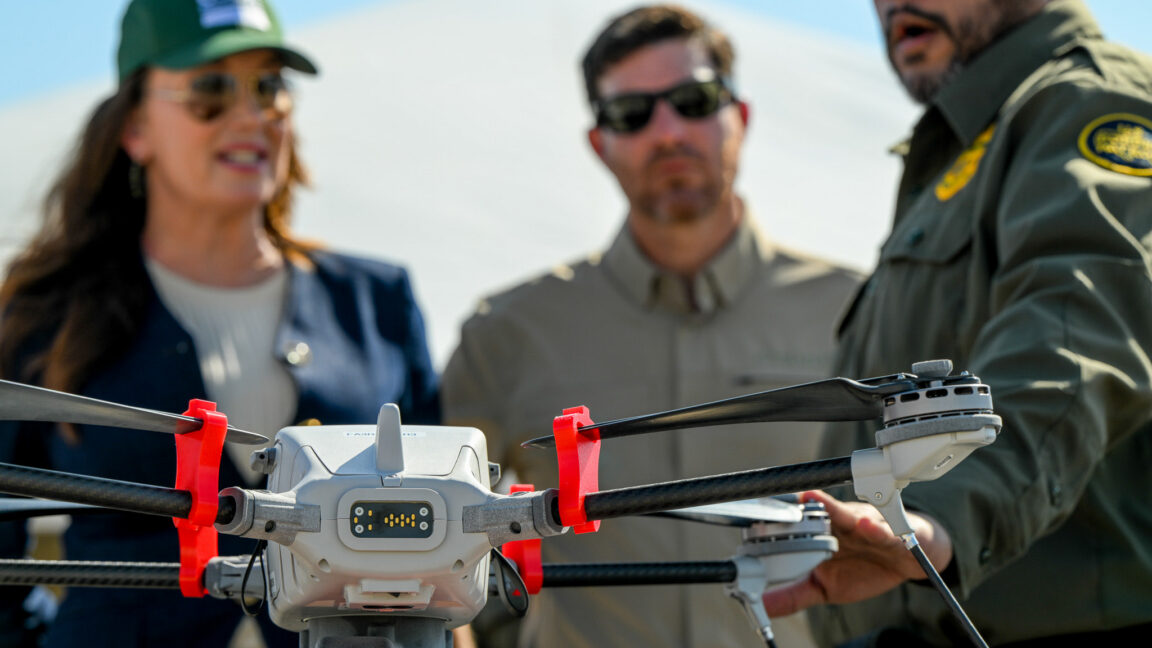
With the landowner’s permission, a drone team arrived shortly after sunrise to survey livestock and wildlife on the ranch. The early morning conditions helped the drone’s infrared sensors distinguish warm-blooded animals from the cooler ground, improving aerial detection.
The US Department of Agriculture (USDA) is researching how artificial intelligence could help “analyze drone images to detect wounds, identify animals, and prioritize testing,” the agency said. AI-powered drone surveillance could make it easier to monitor large ranches and identify animals that may require further examination for New World screwworm.
To date, the USDA has monitored more than 26,000 animals using drones and fixed cameras positioned near wildlife and livestock trails. Officials have also installed and monitored more than 8,000 fly traps. So far, none has detected the New World screwworm fly, despite confirmed animal infections in the United States.
From Screwworm Detection to Eradication
Drones are an “important power amplifier” for surveying large numbers of animals across rugged terrain, according to a USDA article. However, the technology is not a replacement for the proven eradication strategy of releasing sterile male flies to control wild New World screwworm populations.
Known as sterile insect technology, the method previously helped eradicate screwworm from the United States and Central America. It also pushed the pest’s population south across the Darién Gap on the Panama-Colombia border. However, the screwworm fly breached that barrier in 2022 and began moving north, contributing to a new outbreak of animal infections in the United States this year.
To combat the infestation, the USDA jointly funds and administers a sterile fly production and dispersal program. Approximately 100 million sterile flies are released every week in Panama. After completing a $21 million renovation of its fruit fly facility in June, the agency also began releasing similar numbers of sterile flies each week in Mexico.
Following the latest screwworm outbreak in the United States, the USDA is working with the US Army Corps of Engineers to build a new sterile fly production facility at Moore Air Force Base in South Texas. US Secretary of Agriculture Brooke Rollins said the facility is expected to be completed by April 1, 2027, according to a Border Report.
On July 29, Rollins also announced that the USDA had committed $25 million to construct a separate sterile fly facility in Douglas, Arizona. A USDA press release said construction could be completed in as little as a few months.
For now, the greatest threat posed by New World screwworm in the United States is to the livestock industry. However, Mexico has reported more than 500 human infections in 2025 and 2026, while recent studies indicate that the rate of infection may be accelerating.
Source: arstechnica.com