


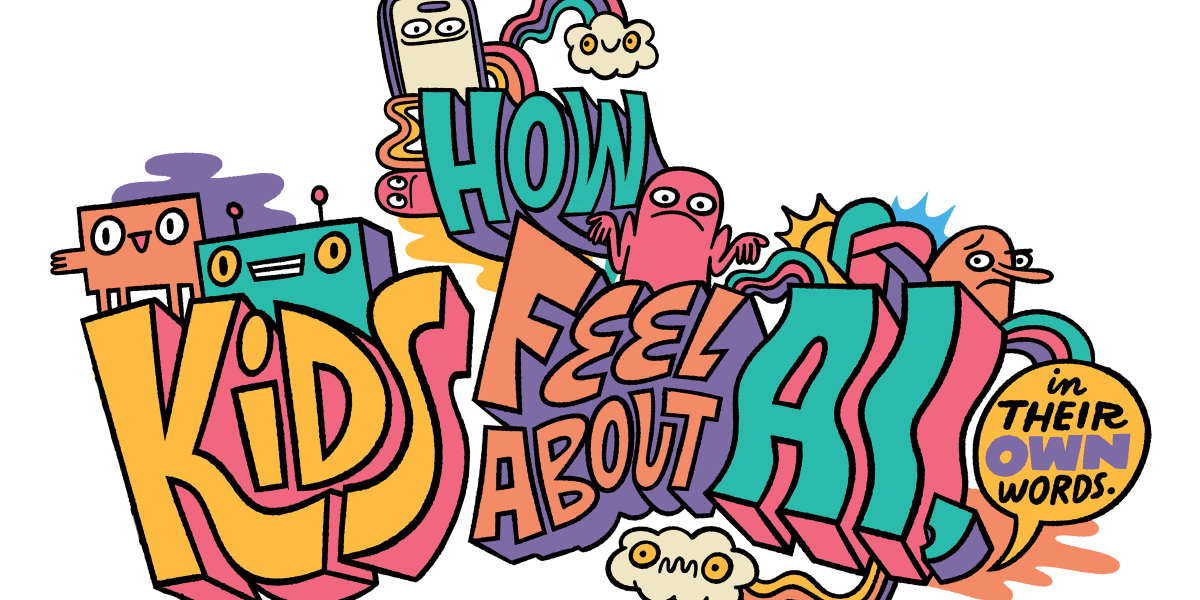
When we spoke with children ages 10 to 18 about artificial intelligence, we expected to hear familiar concerns about fraud, deepfakes, job losses, and other controversial uses of AI. Instead, their responses revealed a much more nuanced perspective on the technology and its role in everyday life.
Some young people did not want to discuss AI at all. Their reasons varied: some strongly opposed the technology, while others simply were not interested in making AI part of their lives. Others raised concerns about online fraud, AI’s environmental impact, and the potential effects of artificial intelligence on creativity, independent thought, and critical-thinking skills.
For many children and teenagers, AI is not yet a major focus. Unlike smartphones, the iPhone, or social media platforms such as Snapchat, artificial intelligence is not something they necessarily seek out. However, one of the biggest surprises was how effectively young people can help adults understand the opportunities, risks, and real-world impact of AI.
Discover how children are preparing for an AI-powered future—and what their views can teach us about artificial intelligence, technology, and society.
Scientists Create the First Female Clone of a Male Mouse
Scientists in Japan have developed a groundbreaking method for creating female mice from male mouse cells. Using a CRISPR-based technique, the research team removed the Y chromosome from male cells and altered the genetic material to produce female clones of male mice.
The achievement could reshape scientific understanding of reproduction, according to Takashi Ishiuchi, a reproductive biologist at the University of Yamanashi and co-leader of the study. “In our scientific field, there is a stereotype that reproduction requires both a female and a male,” Ishiuchi says. “I think we can change this concept.”
The researchers hope this technology could eventually support conservation efforts by helping rescue endangered species, particularly when only a small number of animals remain. Learn how the male-to-female mouse cloning technique works and what it could mean for the future of genetic research, animal breeding, and wildlife conservation.
—Jessica Hamzelow
Source: www.technologyreview.com