


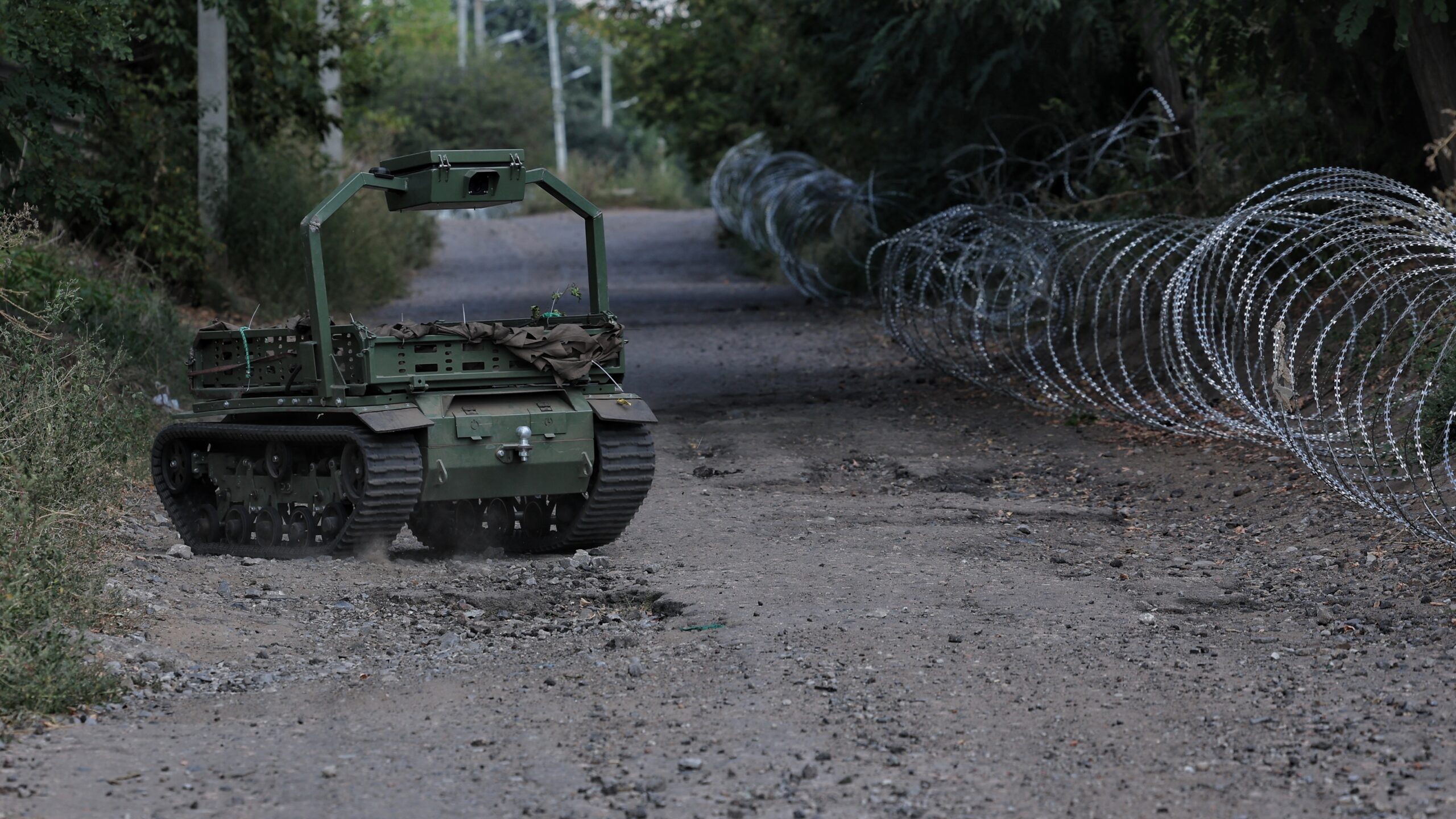
Ukraine’s Operation Vivaldi Uses Drones and Ground Robots to Retake Territory
Ukraine’s latest battlefield operation is combining ground robots, drone warfare, electronic warfare and operational secrecy to help retake up to 96 square miles of territory. Operation Vivaldi also pushed back Russian forces in the northern part of a pincer movement aimed at surrounding the “fortress zone” cities of eastern Ukraine.
According to the Institute for the Study of War (ISW), a Washington, DC-based think tank, the operation has disrupted Russia’s offensive efforts while giving Ukrainian forces greater control of the battlefield.
How Operation Vivaldi gained momentum
Since its launch in May 2026, Ukraine’s III Corps has maintained strict operational security. The results of its operations were kept secret for an extended period, helping mislead Russian commanders about the actual battlefield situation.
ISW has described a “pervasive culture of lies within the Russian military,” particularly when battlefield conditions deteriorate for Russia. Ukraine’s secrecy appears to have further complicated Russian efforts to assess the scale and direction of the Ukrainian advance.
Ukrainian drone strikes targeted Russian fuel and electronic warfare
Ukraine’s medium-range drone strikes against Russian fuel supplies also contributed to the operation’s success. The attacks reduced the availability of diesel fuel used by generators that power Russian electronic warfare systems.
At the same time, Ukraine’s electronic warfare capabilities reportedly disabled approximately 20,000 Russian drones. ISW assessed that these factors combined to give Ukraine “tactical drone supremacy” and support a mechanized advance into Lyman in Donetsk Oblast.
Russian Rubicon drone unit reportedly withdraws from the region
Members of Russia’s elite Rubicon drone unit reportedly withdrew from the area after Ukraine’s III Corps inflicted losses on Russian drone operators and military resources. The Kyiv Independent reported on the withdrawal.
However, Russian forces continue directing armored vehicles and unmanned aerial vehicles, including Rubicon units, toward Dobropillya in the Donetsk region. The movement appears intended to support a future mechanized attack during the autumn season.
Russian tanks continue to face Ukraine’s drone defenses
Over the summer, the Russian military tested a new anti-drone defense system for its advanced tanks. The system achieved limited success, while Ukrainian drones continued to overwhelm tank defenses.
Russia is also adopting many of the drone warfare innovations developed by Ukraine, while pursuing some of its own. Russian forces continue to attack Ukrainian cities with missiles and drones.
Russia expands hybrid warfare operations in Europe
Russia has also increased its “hybrid warfare” activity against Europe. Recent examples include the appearance of explosive drone boats near important offshore gas fields and an attempted drone attack on a Ukrainian cargo plane parked at Germany’s Leipzig airport.
Operation Vivaldi shows how Ukraine is combining drones, electronic warfare, mechanized forces and operational secrecy to challenge Russia’s battlefield advantages. The operation’s gains remain contested, as Russian forces continue preparing new attacks in Donetsk and elsewhere.
Source: arstechnica.com