


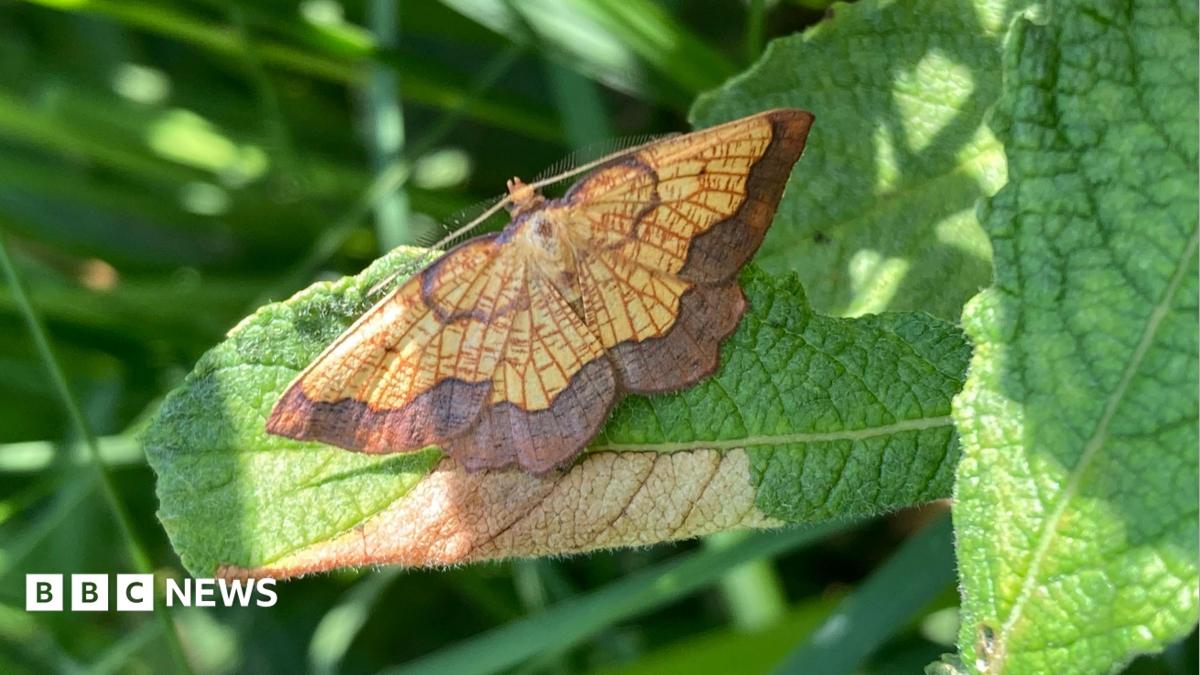
Mr Wainwright has been searching for new colonies of the rare moth across the UK since joining Butterfly Conservation in 2004.
That same year, he visited the National Trust estate at Wallington, but found no evidence of the species.
However, during a recent visit, Mr Wainwright said he located the moth colony “within minutes”.
“I was hoping – I had always hoped – but I definitely wasn’t expecting it,” he said. “I’ve visited so many locations over the years searching for this species that my heart and head were in two very different places.”
“It was one of the highlights of my career.”
“I felt an overwhelming sense of relief that I wasn’t simply fighting a losing battle in another field.”
Butterfly Conservation says the moth’s caterpillars feed on just two types of tree: poplar and willow. This specialised diet makes protecting and expanding the species’ habitat particularly challenging.
Mr Wainwright said Wallington offered a different environment from Strensall, an area previously identified by conservationists as suitable moth habitat. The discovery could create new opportunities for rare moth conservation in the region.
“What has kept me going all these years is the belief that there could be a dark, beautiful place on the border between Northumberland and Cumbria,” he said. “Now I feel there may be other important colonies waiting to be discovered.”
The National Trust, which manages Wallington, said it planned to expand the moth’s potential habitat and support further conservation work.
Follow BBC North East X, external, Facebook, external, TikTok and Instagram, external.
Source: www.bbc.co.uk