


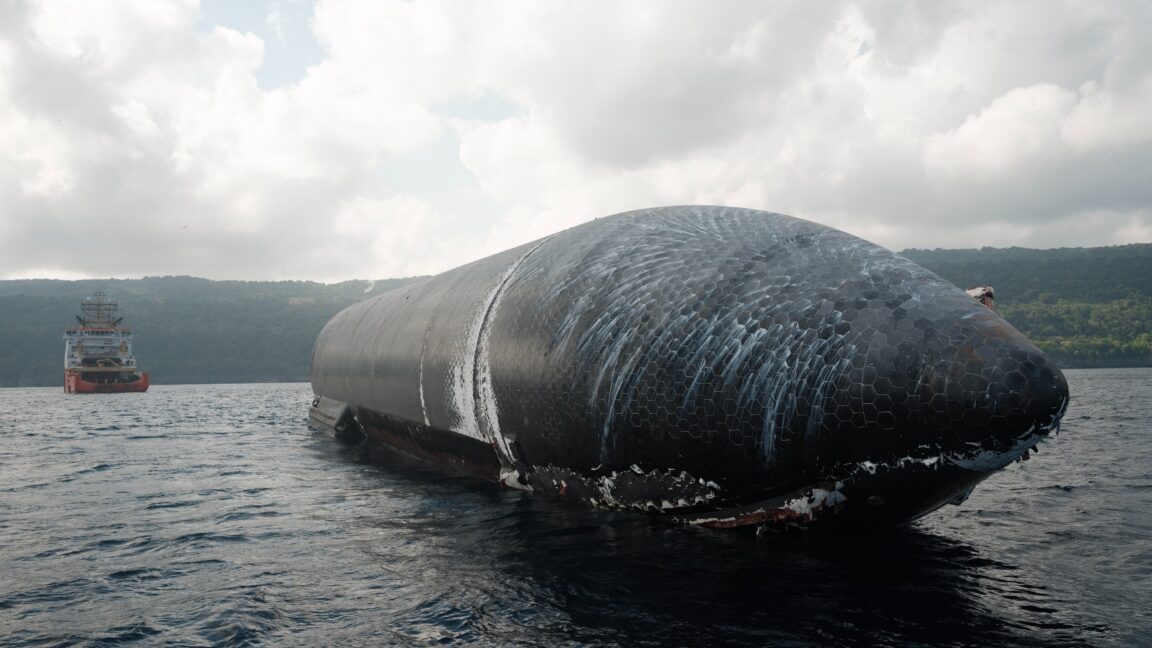
SpaceX’s latest Starship test flight ended on July 24, but the mission is continuing as engineers work to recover and inspect the spacecraft.
The Starship traveled halfway around the world from SpaceX’s launch site in South Texas before landing in the Indian Ocean. Engineers expected the spacecraft to capsize and break apart after splashdown, as previous Starship prototypes have done. Instead, the vehicle flipped over and remained largely intact.
Although a post-flight fire eventually damaged the spacecraft, the unexpected survival of the vehicle created a valuable opportunity for SpaceX. Onboard sensors and cameras, along with buoys and drones positioned near the landing zone, collected critical information about the Starship’s performance, including the condition of its heat shield.
SpaceX now has extensive data from 13 Starship test flights, as well as from the powerful Super Heavy booster rockets. However, physically examining a spacecraft after it returns from space provides insights that remote telemetry cannot match. The company has repeatedly demonstrated its ability to recover and reuse Falcon 9 booster stages, while most Falcon 9 launch failures have involved the expendable upper stage.
Why recovering Starship hardware matters
Recovering the latest Starship prototype could provide SpaceX engineers with an unprecedented look at how the vehicle endured launch, atmospheric reentry, and ocean splashdown. The recovery vessel towed the spacecraft and sailed hundreds of miles across the Indian Ocean to Australia’s Christmas Island.
SpaceX announced Tuesday that the vessel had arrived off the coast of Christmas Island.
“SpaceX’s engineering team is on its way to perform additional analysis in calm waters before returning the spacecraft to the Starbase,” SpaceX wrote on X.
The company has not revealed how it plans to transport the spacecraft back to Starbase, its Starship development and launch facility in South Texas. The vehicle will likely have to travel by sea because it is more than 170 feet (52 meters) long and approximately 30 feet (9 meters) in diameter—far too large to fit inside a conventional aircraft.
Source: arstechnica.com