


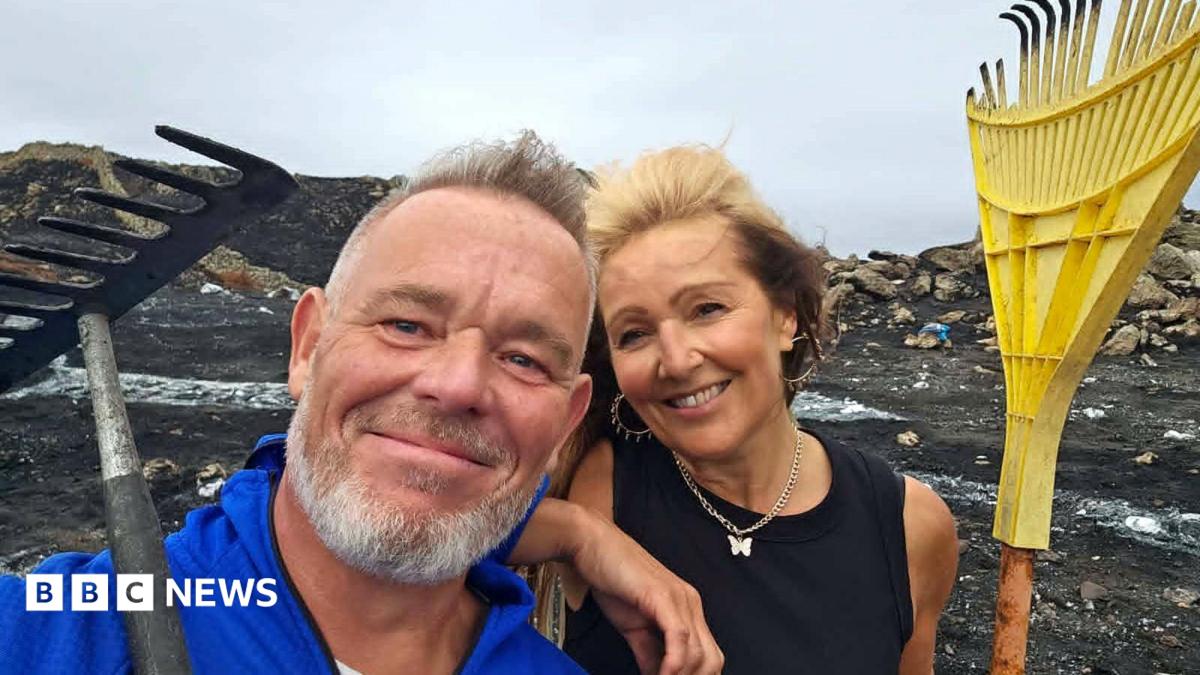
Ward told Greenpeace online that he was “extremely happy” to remove the artwork, saying: “I thought Greenpeace was committed to leaving no trace, yet you have now painted the mountainside.”
Janet Finch-Saunders, Member of the Senedd for Bangor, Conwy and Mont, accused Greenpeace of “environmental vandalism”. She said the fire-damaged hillside should not be used “as a canvas for political protest”.
Areeba Hamid, co-executive director of Greenpeace UK, said the climate protest artwork was not intended to cause disruption. She added that, although the organisation was saddened by the removal, the message was designed to highlight the escalating climate crisis threatening landscapes and communities.
“We took great care to minimise the impact on the land. The artwork was temporary and used water-based paints commonly applied to sports pitches, which are considered safe for grass, plants and soil.
“It was painted only on areas where the wildfire had already destroyed living vegetation, leaving behind rock and ash.”
Hamid said the greatest threat was not “a small application of water-based paint”, but the extreme weather linked to continued fossil fuel use.
She added: “We wanted to challenge the systems responsible for this damage and send an important message to the Prime Minister. Scientific evidence shows that further oil and gas drilling could leave more regions facing the devastating effects of heatwaves, drought and wildfires.”
Source: www.bbc.co.uk