


3D-Printed Corneal Implants Could Help Address the Global Donor Shortage
A laboratory-grown corneal implant made entirely from human cells could mark a major advance in regenerative medicine. The technology, developed by Precise Bio, is designed to create transparent, layered corneal tissue that closely resembles the natural cornea.
A corneal transplant can help restore vision in people with severe corneal scarring, inflammation, eye injuries or complications following eye surgery. During the procedure, damaged corneal tissue is replaced with healthy donor tissue, which is typically recovered from a deceased donor.
Unlike conventional transplantation, Precise Bio’s approach uses cells from a single donor cornea to produce hundreds of potential implants through cell culture, tissue engineering and 3D bioprinting. The company says one donor cornea could provide enough cells to manufacture more than 400 tissue implants.
The technology is being developed by Precise Bio, a regenerative medicine company based in Israel and North Carolina. Early human studies, known as Phase I clinical trials, are assessing the safety and performance of the bioprinted corneal implants.
To learn more about how 3D-printed corneas are made and what comes next, Live Science spoke with Precise Bio co-founders Arie Butt and Dr. Anthony Atala.
How Are Donor Corneas Used Today?
Neelanjana Rai: How are most corneas for transplantation currently sourced and prepared?
Anthony Atala: Corneas are generally recovered from deceased donors within hours of death. The tissue is screened for safety, tested and stored in an eye bank before being matched with a patient who needs a transplant. In many cases, transplantation takes place within several weeks.
NR: What are the main limitations of this system?
AA: The biggest challenge is availability. The number of donor corneas is limited, and there is a substantial worldwide shortage of transplantable tissue. As a result, many people who could benefit from a corneal transplant cannot access one.
Arie Butt: For every corneal transplant performed worldwide, many other patients remain without access to suitable donor tissue. An estimated 12 to 15 million people may need a corneal transplant but do not have a donor cornea available.
AA: The long-term goal is to help eliminate this shortage and make corneal transplantation available to more patients.
How Could 3D Bioprinting Increase the Supply of Corneas?
NR: How does Precise Bio’s technology aim to address the donor shortage?
AB: Our first product is manufactured tissue created from cells taken from a donor cornea. We isolate those cells and use a specialized process to grow and expand them. From one donor tissue sample, we can create a cell bank capable of producing more than 400 corneal implants.
This approach could increase the supply of transplantable tissue while also making the implant easier to handle during surgery. The tissue is designed with specific mechanical properties that may allow surgeons to insert it more efficiently and potentially reduce operating time.
Because the cells are deposited in a controlled pattern, the density of the tissue can also be precisely defined. Conventional donor corneas contain approximately 2,000 to 2,500 cells per square millimeter, while Precise Bio’s printed tissue contains more than 4,000 cells per square millimeter, according to the company.
Editor’s note: Laboratory and animal studies have reported promising findings related to the ease of implanting the tissue and its cellular density. However, human clinical trials are still in progress. It remains too early to determine whether bioprinted corneas will provide better visual outcomes than conventional donor tissue.
Manufacturing may also allow more consistent quality control. Precise Bio says its production process includes testing for viruses, fungi and other potential contaminants. Traditional donor corneas are already subject to extensive screening, including infectious-disease testing and checks for bacterial or fungal contamination. A manufactured-tissue model could add controlled batch testing throughout production.
How Does a Bioprinted Corneal Implant Work?
NR: How does the printing system produce a smooth, transparent corneal implant that allows light to pass through?
AB: The printer is only one part of the overall manufacturing process. The technology combines human cells with extracellular matrix, or ECM, the structural material that supports cells in natural tissues. The goal is to recreate the composition and organization of the human cornea as closely as possible using human cells and natural materials such as collagen.
The process begins with a collagen-based ECM layer. Human cells are then deposited on top of that layer using a bioink. The system works somewhat like a color printer, although the cartridges contain living cells rather than ink. Cells pass through a printhead and are placed in specific locations using precisely controlled pulses.
This arrangement allows the cells to be positioned according to the anatomical structure of the cornea. After printing, the tissue is transferred to an incubator, where it can mature. Precise Bio expects parts of this process to become automated and robotic in the future.
Why Are the Implants Flexible?
NR: The implant can be rolled, loaded into an injector and unfolded inside the eye. Why does this process not damage the tissue?
AA: The implant uses materials found naturally in the cornea, particularly collagen. Its flexibility allows it to be handled and inserted while maintaining the placement of the cells. The printing process also helps position the cells accurately within the tissue.
What Does “Single-Cell Resolution” Mean?
NR: Precise Bio describes its platform as having “single-cell resolution.” Why is that important?
AB: Arranging cells individually allows the tissue to more closely mimic the structure of natural human tissue. Depositing cells one at a time, while maintaining high cell viability, may help recreate the organization that the body requires for normal function.
AA: Nature has already developed highly effective tissue designs through evolution. This technology is intended to reproduce those biological patterns as accurately as possible.
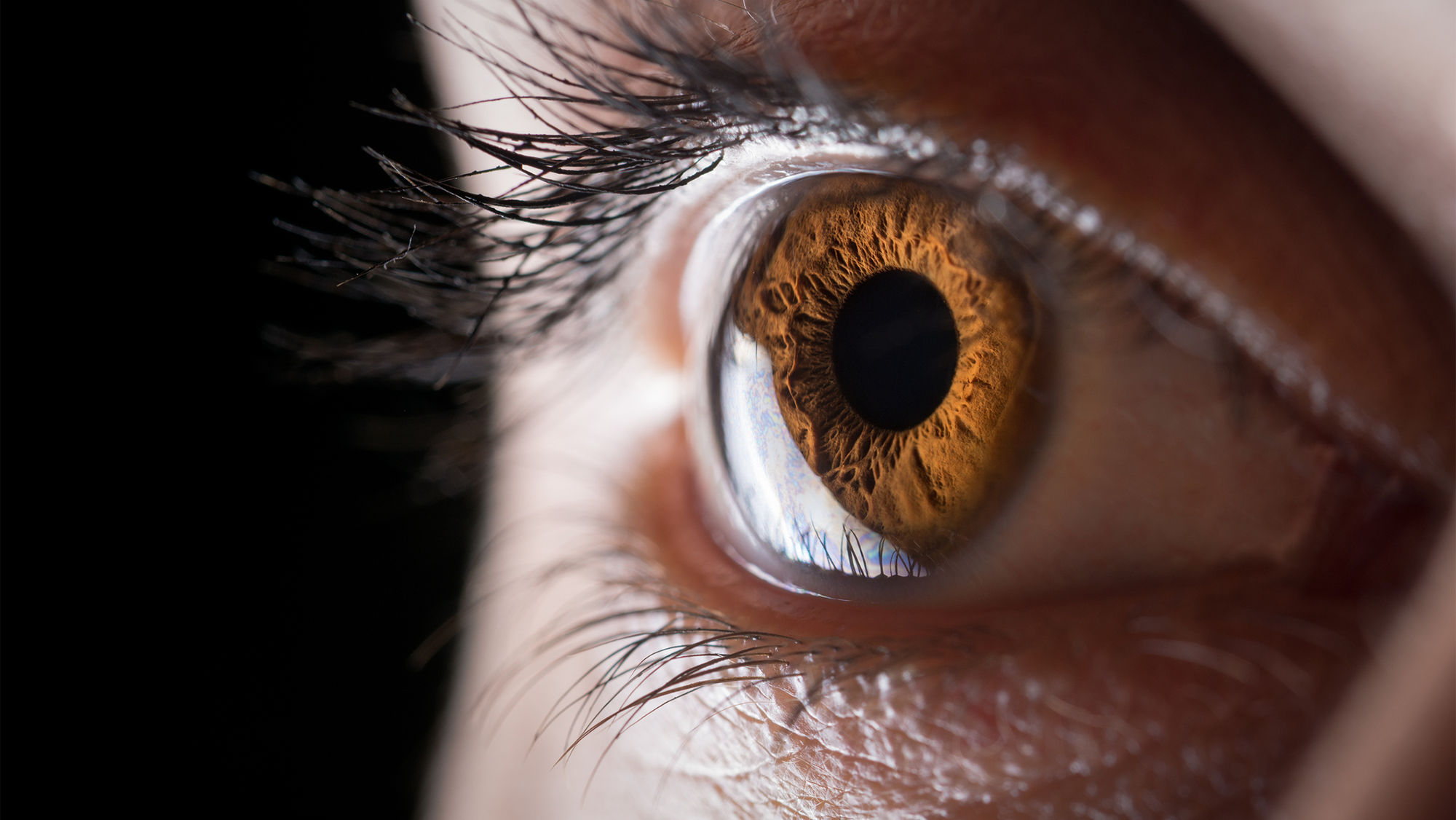
Precise Bio is developing a 3D-bioprinted alternative to conventional corneal transplantation that replaces damaged tissue at the front of the eye.
(Image credit: Mark Garlick/Science Photo Library via Getty Images)
Can Bioprinted Corneas Be Shipped Around the World?
NR: The implants may be frozen and shipped internationally. Has this been tested?
AB: Precise Bio is conducting Phase I clinical trials in Israel and has performed extensive transportation testing as part of product development. The tissue has been shipped between the Middle East and the United States before being returned and transplanted into animals to assess whether it retained its function after international transport.
The company evaluated factors including shipping time, temperature and other conditions encountered during air transportation. It has also developed techniques for cell cryopreservation and tissue preservation.
Long-term preservation could eventually support an on-demand supply of corneal implants. At present, the tissue is transported similarly to conventional donor tissue and has an estimated shelf life of approximately four to five days.
What Happened in the First Human Corneal Implant Procedure?
NR: Precise Bio recently performed the first transplant of this type in a clinical trial. What happened during the procedure?
AA: The first patient had been legally blind in the treated eye for approximately 14 years.
AB: Before surgery, the patient had a severely damaged, nonfunctioning cornea and could not count fingers. The condition was linked to pseudophakic bullous keratopathy, a disorder in which the cornea becomes permanently swollen and develops blisters, sometimes after cataract surgery.
Nearly nine months after the transplant, the patient’s vision had improved. Within several weeks, the patient was reportedly able to read restaurant menus and television subtitles. The company continues to monitor the patient’s progress at scheduled follow-up appointments.
Precise Bio has reported that five patients had received the new implants at the time of the interview. According to the company, their early recovery has been similar to that observed after traditional corneal transplantation. Vision may improve within days or weeks, followed by continued recovery over time.
Is There a Risk of Rejection?
NR: Can a 3D-bioprinted corneal implant be rejected by the immune system?
AA: The cornea has a degree of natural “immune privilege.” It contains no blood vessels or lymphatic vessels, which generally makes the risk of rejection lower than it is for many other transplanted organs.
Nevertheless, rejection remains possible after any corneal transplant, including one involving bioprinted tissue. When identified quickly, many rejection episodes can be treated successfully.
AB: Patients may receive mild steroid medication to help control inflammation and reduce the risk of rejection. Treatment is usually more frequent during the first few weeks and may decrease as healing progresses. The appropriate treatment depends on the patient’s condition and must be determined by an eye specialist.
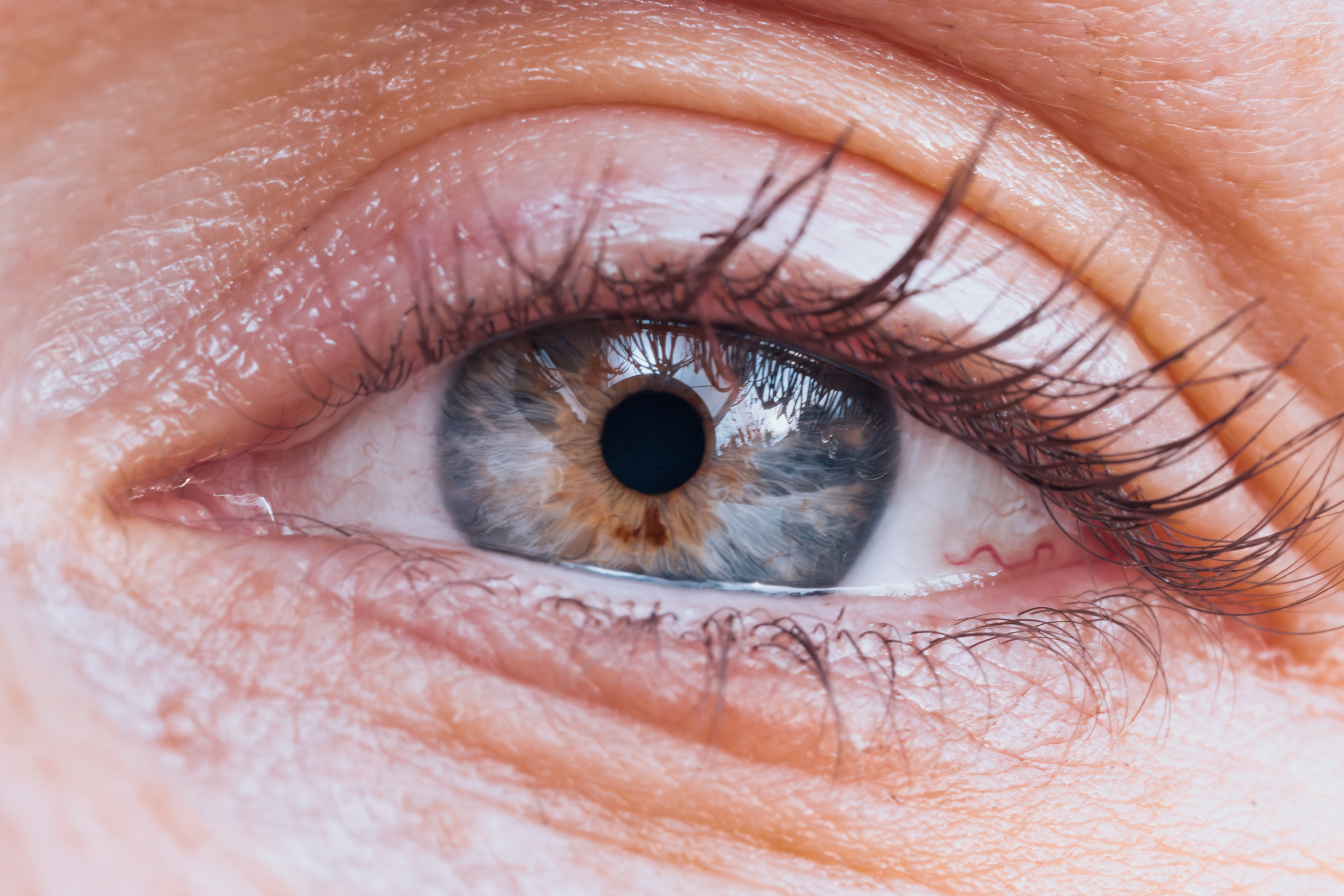
Severe eye disease, swelling, scarring and trauma can damage the cornea and lead to vision loss that may require transplantation.
(Image credit: Francesco Riccardo Iacomino via Getty Images)
What Happens Next for 3D-Printed Corneas?
NR: What are the next steps in developing this treatment?
AB: Precise Bio is working on longer-term tissue cryopreservation while continuing its Phase I clinical trial. The company has stated that it aims to complete additional transplants and follow participants over an extended period before advancing to later-stage studies.
After Phase I, the company plans to seek authorization for more advanced clinical trials through the U.S. Food and Drug Administration. An Investigational New Drug application allows an unapproved biological product or medicine to be evaluated in clinical-trial participants after regulatory review.
Future studies may take place in the United States, Europe and Israel, as well as in regions where the need for corneal transplants is particularly high. Expansion studies could eventually evaluate the technology for additional eye conditions and other medical applications.
NR: When could bioprinted corneas become widely available?
AB: Precise Bio has said it hopes to begin commercial distribution of its corneal implants in the United States by 2030, followed by expansion into Europe and other regions.
AA: The current research is still in its early stages. Researchers must continue monitoring patients and evaluating the implant’s safety, durability and visual performance. If those studies are successful, the technology could eventually provide a more reliable source of tissue for people who need corneal transplantation.
This interview has been edited for length and clarity.
This article is for informational purposes only and does not provide medical advice. Bioprinted corneal implants remain an investigational technology and are not a replacement for advice from a qualified eye-care professional.
Source: www.livescience.com