


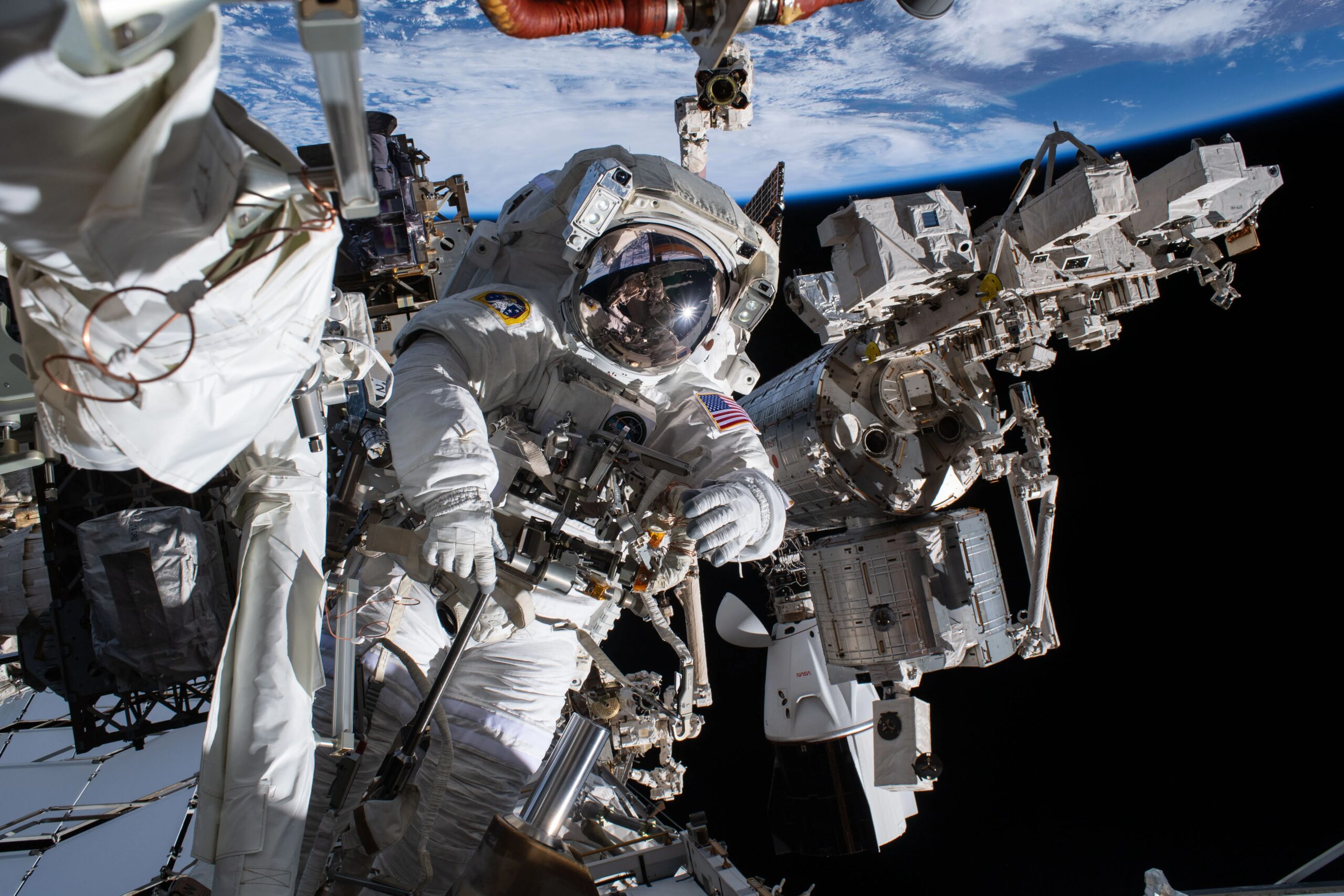
After an incredible eight months aboard the International Space Station (ISS) for his inaugural mission, NASA astronaut Chris Williams is gearing up for his return to Earth. Throughout his mission, Williams has significantly contributed to pioneering research on innovative cancer treatments, enhanced material production for computers and electronics, and conducted two spacewalks, among various other important tasks. His efforts aboard the ISS have not only enriched life on Earth but have also laid the groundwork for future exploratory missions to the Moon and Mars.
Explore key research highlights from his mission below.
NASA astronaut Chris Williams, along with ESA (European Space Agency) astronaut Sophie Adenot, is delving into the processing of DNA-inspired materials that could unlock new cancer treatments for patients on Earth. In the unique microgravity environment of space, these materials form more uniformly, enhancing their efficacy and effectiveness for treatments back home. Current cancer therapies often fall short, particularly against solid tumors, and frequently lead to severe side effects. This groundbreaking research seeks to enable targeted therapies that can penetrate tumors deeper, remain in the body longer, and release therapeutic agents in a controlled manner.
Learn more about DNA Nano Therapeutics-3.
Chris Williams is also pioneering research focused on growing semiconductor crystals in space. The microgravity setting allows for a greater volume of high-quality crystals to be produced than is possible on Earth. Previous studies indicate that space-grown crystals offer enhanced performance, which could drive advances in vital technologies such as high-performance computing, artificial intelligence, and medical devices. This research is pivotal in establishing a foundation for commercial semiconductor manufacturing in space, propelling the semiconductor industry forward.
From the cupola window of the ISS, Chris Williams observes the mesmerizing red auroras above Earth. Since the 1960s, astronauts have captured stunning images of our planet from space, providing scientists with valuable data to monitor changes in Earth’s landscape, natural disasters, and other phenomena over time. Alongside this, they have also documented celestial wonders like comets, the aurora borealis, and the Milky Way.
Utilizing a specialized ultra-cold freezer aboard the ISS, astronaut Chris Williams preserves research samples at frigid temperatures until they can be safely returned to Earth. Throughout each mission, biological samples, including blood and urine, are collected to help scientists understand the impacts of long-duration spaceflight on the human body. By studying these collected samples alongside observing crew members in space, NASA aims to ensure astronaut health for upcoming missions to the Moon, Mars, and beyond.
Astronauts Jack Hathaway and Chris Williams closely monitor Northrop Grumman’s Cygnus XL cargo spacecraft as it approaches the ISS. They played a vital role in capturing this spacecraft, which delivered approximately 11,000 pounds of essential supplies—including fresh food, life support equipment, and scientific materials—during NASA’s Northrop Grumman Commercial Supply Service Mission 24. Such cargo missions are crucial for maintaining the operational functionality of the space station and ensuring astronauts have the necessary resources for research and daily life in orbit.
Chris Williams is also investigating the use of ultraviolet (UV) light as a means to inhibit the formation of microbial colonies known as biofilms. Biofilms pose risks by clogging and contaminating water systems and damaging equipment, while also threatening astronaut health. This innovative research aims to keep surfaces sanitized and protect critical systems during extended space missions, potentially minimizing reliance on chemical disinfectants.
Learn more about Germicidal Ultraviolet Biofilm Inhibition (GULBI).
During his mission, Chris Williams conducted two significant spacewalks. In June, he assisted in repairing Canadarm2, a robotic arm that captures cargo spacecraft and facilitates external research deployments. Earlier in March, he prepared the ISS for the installation of a new solar array to be added in a subsequent spacewalk. The completion of the International Space Station Rollout Solar Arrays (IROSA) will enhance the station’s power generation capabilities by about 30%, providing more energy for scientific research and daily operations. This solar technology was also utilized in NASA’s Double Asteroid Redirection Test and could be pivotal in supporting future Moon and Mars missions.
Learn more about the space station IROSA.
Chris Williams is playing a key role in advancing new cancer and disease treatments by utilizing hardware to examine the growth of pharmaceutical protein crystals in space. The unique conditions aboard the ISS facilitate the formation of higher-quality protein crystals compared to those grown on Earth, enhancing researchers’ ability to target and remedy diseases. This research is focused on developing oral formulations for cancer treatments, paving the way for pharmaceutical companies to create innovative treatments that improve patient outcomes back on Earth.
Learn more about Space Pharmaceutical Research Institute (ADSEP-PIL-10).
Moreover, Chris Williams is engaged with equipment designed to evaluate the performance of small robotic arms in the microgravity environment. Some operations require precise movements, where even minor errors can significantly impact results. Understanding the effects of microgravity on delicate robotic maneuvers is essential for optimizing future automated systems, allowing astronauts to focus on their critical tasks.
Learn more about the Kibo Laboratory Automation System Test Facility (TUSK).
Source: www.nasa.gov