


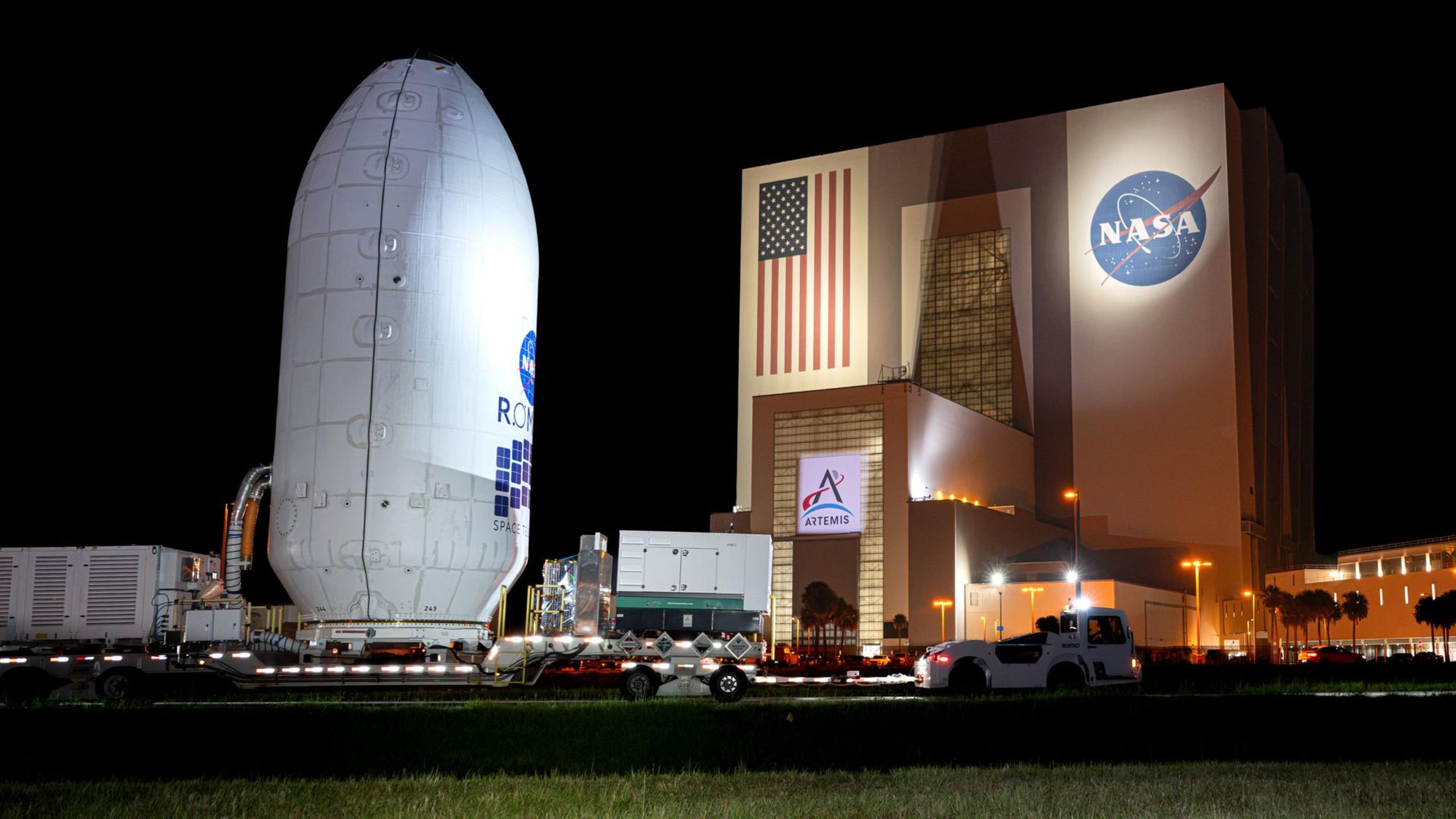
NASA’s Nancy Grace Roman Space Telescope Set to Launch on SpaceX Falcon Heavy
NASA’s next-generation Nancy Grace Roman Space Telescope is scheduled to launch on a potentially 10-year mission to study the distant universe. The powerful space observatory will investigate exoplanets, map the Milky Way and help scientists investigate the nature of dark matter and dark energy.
The Roman Space Telescope is scheduled to launch aboard a SpaceX Falcon Heavy rocket at 7:26 a.m. EDT on Sunday, August 30, from Launch Complex 39A at NASA’s Kennedy Space Center in Florida. A few hours after liftoff, the observatory is expected to separate from the rocket’s upper stage and begin its journey into deep space.
Even if the launch goes according to plan, however, skywatchers will need to wait before seeing Roman’s first scientific images.
Weather could affect the launch schedule. Forecasts issued Thursday, August 27, indicated a 50% chance of thunderstorms at Kennedy Space Center on Sunday. If necessary, NASA and SpaceX have a backup launch opportunity at 7:22 a.m. EDT on Monday, August 31, when the risk of thunderstorms is expected to be lower.
The launch will be broadcast through the SpaceX livestream. Live updates and post-launch coverage will also be available through Space.com’s Roman Space Telescope live blog.
The Roman Space Telescope stands about 42 feet tall and weighs approximately as much as an adult Tyrannosaurus rex. This image was taken on December 4, 2025, after the spacecraft was fully assembled.
(Image credit: NASA/Jolearra Tshiteya)
What Is the Nancy Grace Roman Space Telescope?
The Nancy Grace Roman Space Telescope is NASA’s newest flagship space observatory. It will complement, rather than replace, the James Webb Space Telescope and the Hubble Space Telescope by surveying enormous areas of the sky and studying the universe in infrared light.
The observatory is named after Nancy Grace Roman, NASA’s first chief astronomer. Roman played a major role in establishing the agency’s space astronomy program and is often known as the “mother of Hubble.”
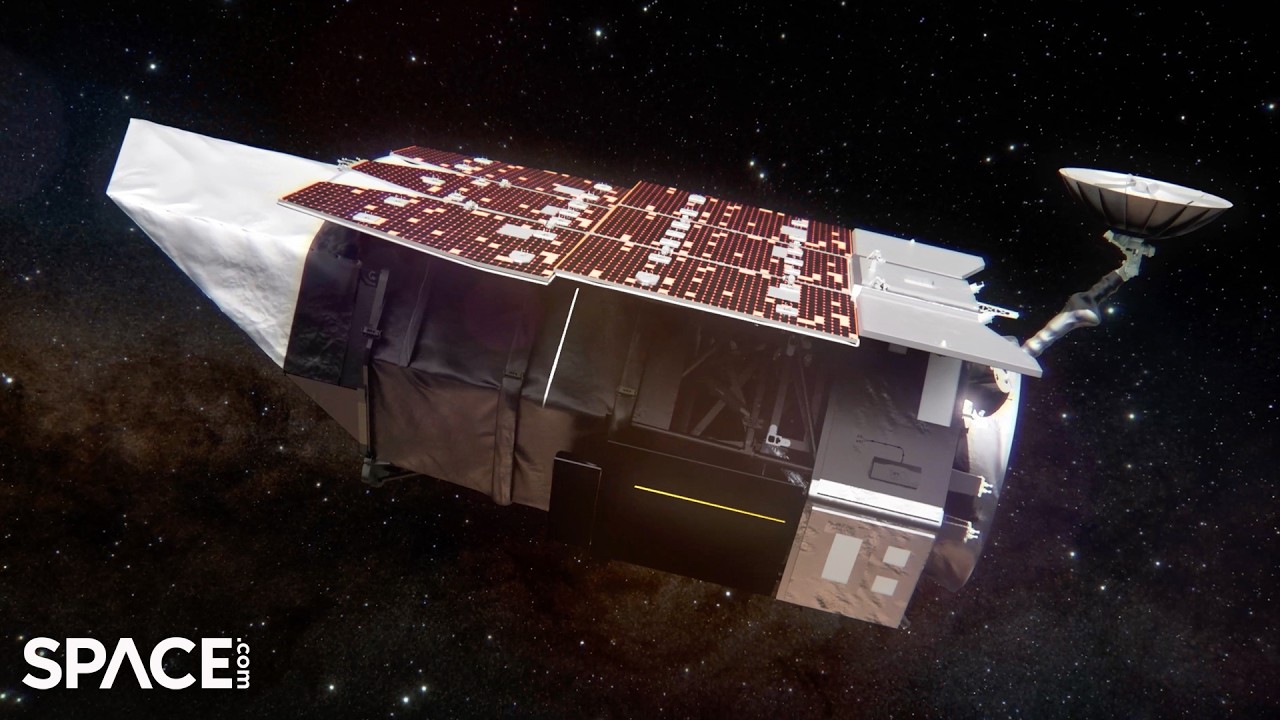
According to a NASA fact sheet, the observatory is approximately 42 feet (12.7 meters) tall, 14 feet (4.4 meters) wide and weighs about 18,000 pounds (8,000 kilograms).
Construction of Roman was completed in December 2025, nearly a decade after development began. NASA says the mission was built within its original $4.3 billion budget—less than half the estimated cost of the James Webb Space Telescope. The spacecraft later traveled more than 900 miles (1,450 kilometers) from NASA’s Goddard Space Flight Center in Maryland to Kennedy Space Center for final launch preparations.
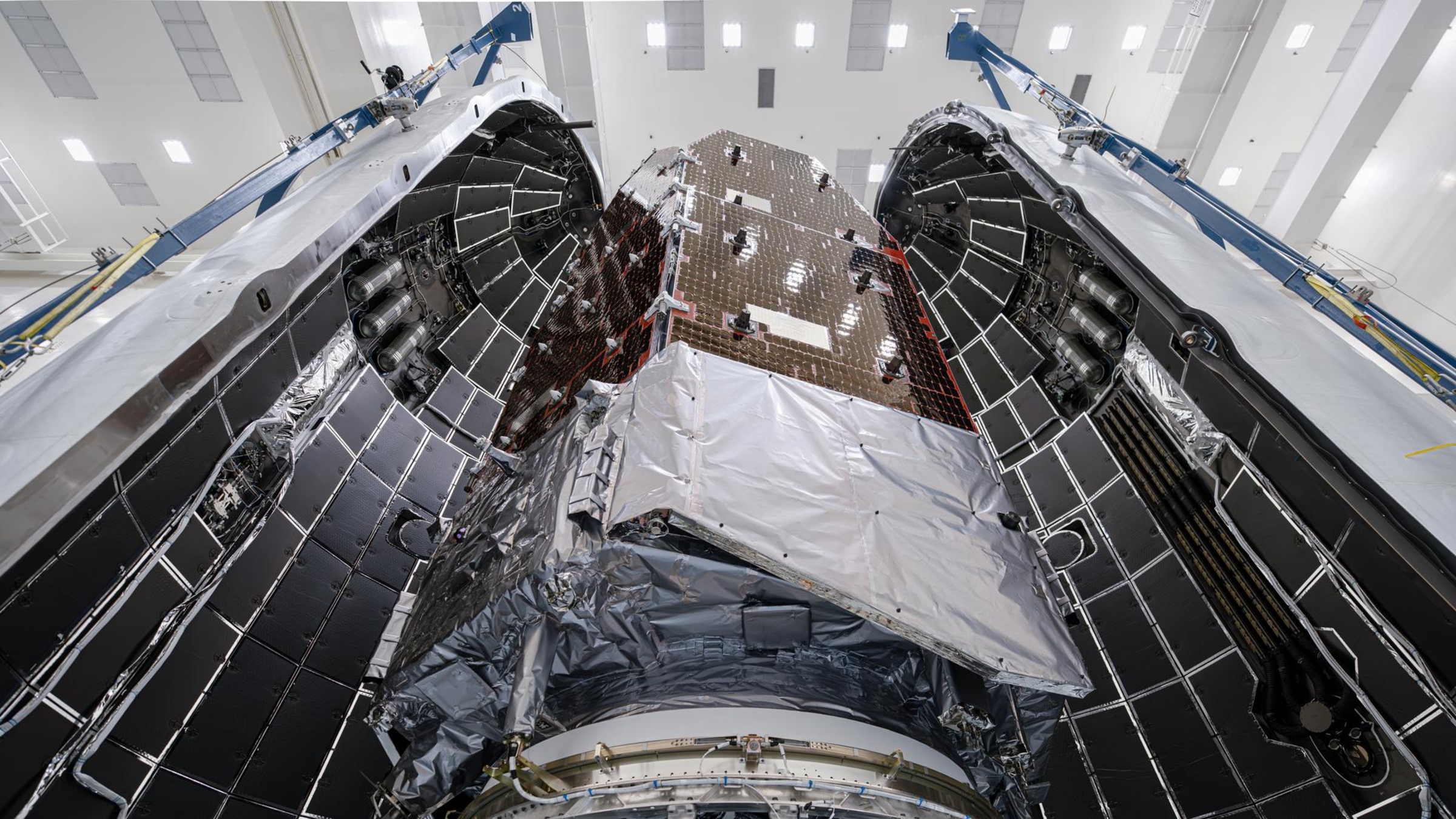
The Roman Space Telescope was enclosed in a protective fairing ahead of its scheduled launch on August 30.
(Image credit: NASA/Sydney Rohde)
Where Will Roman Operate?
After launch, the Roman Space Telescope will travel to a location approximately 1 million miles (1.6 million kilometers) from Earth. The observatory will orbit near the Sun-Earth L2 Lagrange point, where the gravitational forces of the Sun and Earth help create a stable position relative to both bodies.
Roman will join the James Webb Space Telescope near this region of space. Other major observatories, including the European Space Agency’s Gaia and Euclid missions, are also conducting large-scale surveys to improve our understanding of the cosmos.
Roman’s primary mission is planned to last five years, although NASA expects the observatory could continue operating for much longer if it remains healthy. Space telescopes such as Hubble have significantly exceeded their original mission lifetimes.
What Makes the Roman Space Telescope Special?
Roman combines a wide field of view with infrared imaging capabilities. Its Wide Field Instrument contains a 288-megapixel camera and uses a 7.9-foot (2.4-meter) primary mirror. The camera can capture an area of sky roughly 100,000 times larger than Hubble’s field of view in a single observation.
This combination will allow Roman to conduct enormous surveys of distant galaxies, stars and other astronomical objects. While Webb is designed to study selected targets in great detail, Roman will efficiently map vast regions of the sky.
One of Roman’s most important instruments is its coronagraph. The instrument is designed to block the intense glare of distant stars, making it easier for astronomers to detect and directly image much fainter objects orbiting them.
This capability could improve the study of exoplanets—worlds beyond our solar system. Many exoplanets are discovered when they pass in front of their host stars and cause a tiny dip in starlight. Roman’s coronagraph could allow scientists to observe some exoplanets directly during much of their orbital cycles.
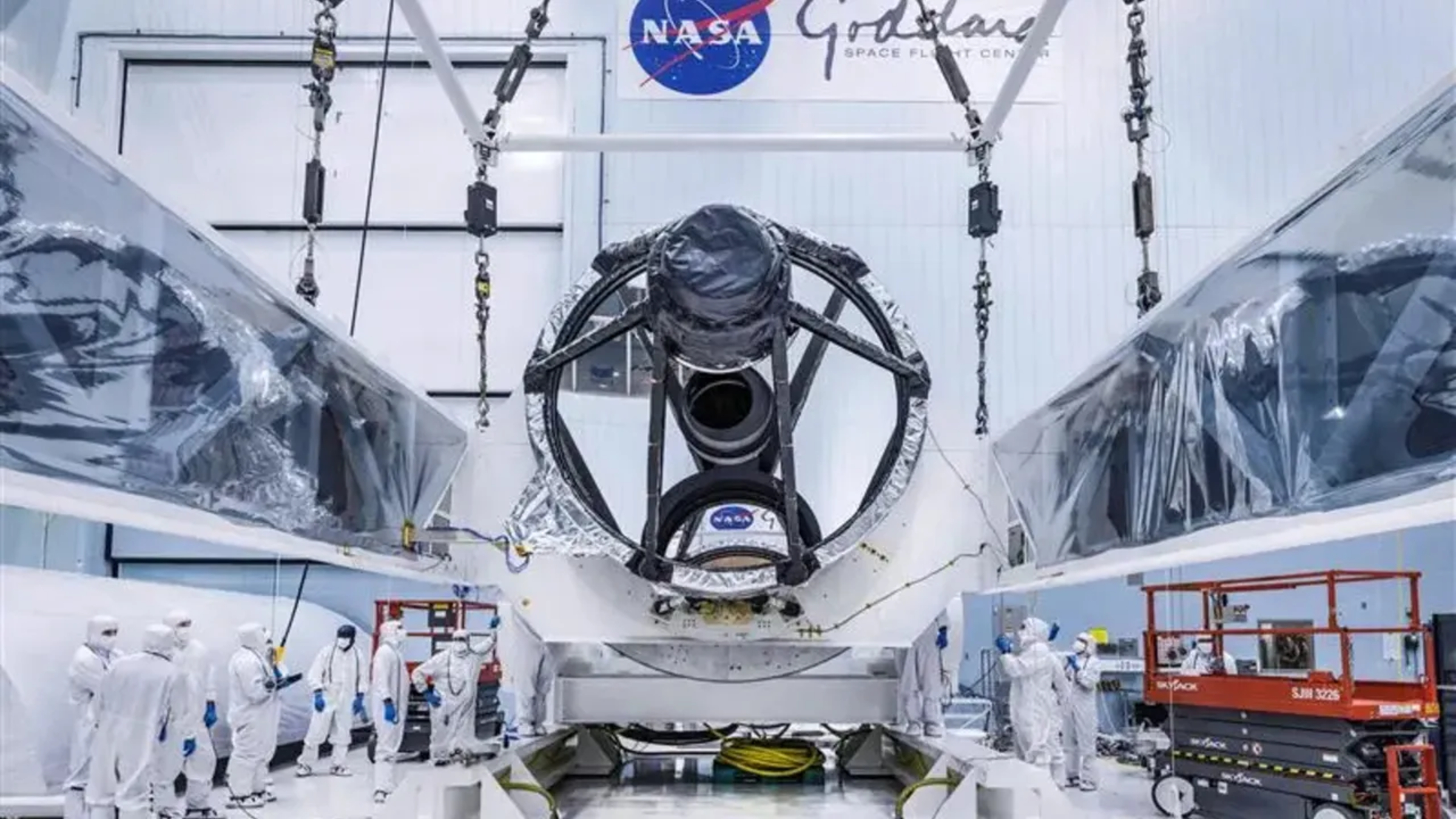
Roman’s Wide Field Instrument will focus infrared light onto a 288-megapixel camera with a field of view about 100,000 times larger than Hubble’s.
(Image credit: NASA/Chris Gunn)
How Many Exoplanets Could Roman Discover?
Researchers estimate that the Roman Space Telescope could identify tens of thousands of exoplanets and may detect up to 100,000 new worlds during its mission. Such discoveries would dramatically expand the number of known planets beyond the solar system, which currently exceeds 6,000.
Roman will also use gravitational microlensing to find planets that are far from their host stars. This technique can reveal small, distant worlds that are difficult to detect using other methods, including planets that orbit much farther from their stars than Earth does from the Sun.
Roman’s Role in Mapping the Milky Way and Studying Dark Energy
In addition to its exoplanet research, Roman will carry out large-scale surveys of the Milky Way and distant galaxies. These observations could help astronomers measure how galaxies formed and evolved over cosmic time.
The mission is also designed to investigate two of the universe’s biggest mysteries: dark matter and dark energy. Dark matter cannot be seen directly, but its gravity influences the motion and distribution of stars and galaxies. Dark energy appears to be driving the accelerating expansion of the universe.
By measuring the shapes and positions of billions of galaxies, Roman could help scientists create more accurate maps of dark matter. Its observations may also provide new clues about the expansion history of the universe and help address ongoing questions in modern cosmology.
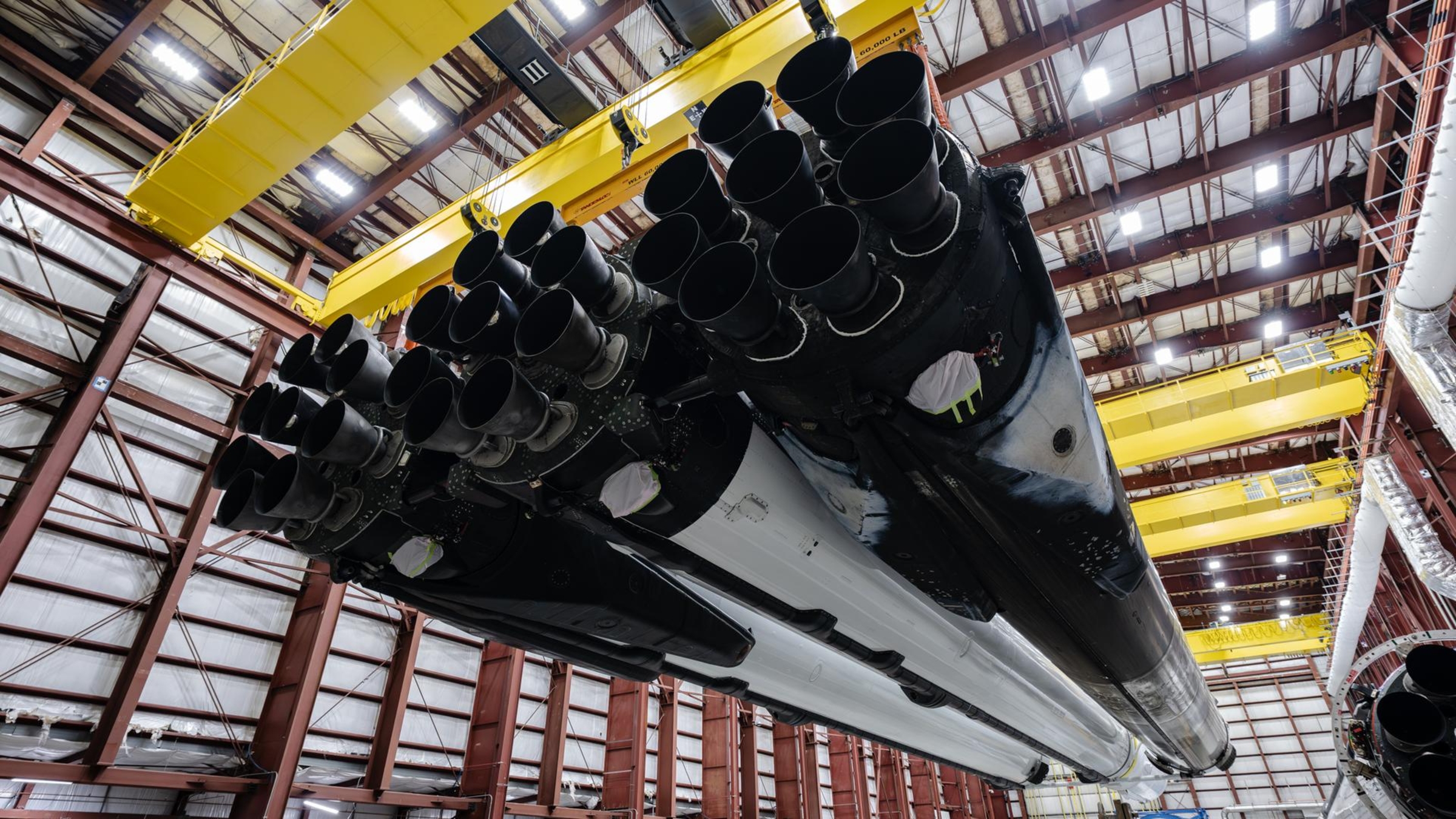
The Roman Space Telescope is scheduled to launch on one of SpaceX’s Falcon Heavy rockets.
(Image credit: SpaceX)
NASA representatives say the mission will give astronomers broad opportunities to study objects throughout the universe, from planets beyond the solar system and exploding stars to distant galaxies and growing black holes.
Roman is expected to transmit approximately 1.4 terabytes of scientific data to Earth each day—around 10 times the storage capacity of an average smartphone.
When Will We See Roman’s First Images?
Roman will not begin taking scientific images immediately after launch. First, the spacecraft must travel to the Sun-Earth L2 Lagrange point, a journey that could take several weeks.
After reaching its destination, Roman will undergo an approximately 90-day commissioning period. During this phase, engineers will power up the instruments, align the telescope and conduct diagnostic tests to ensure that every system is operating correctly.
NASA currently expects Roman to begin photographing stars in early 2027. The first full-color images could arrive later, after the observatory has completed its initial testing and calibration. For comparison, it took approximately seven months for the James Webb Space Telescope to begin returning its first major science results.
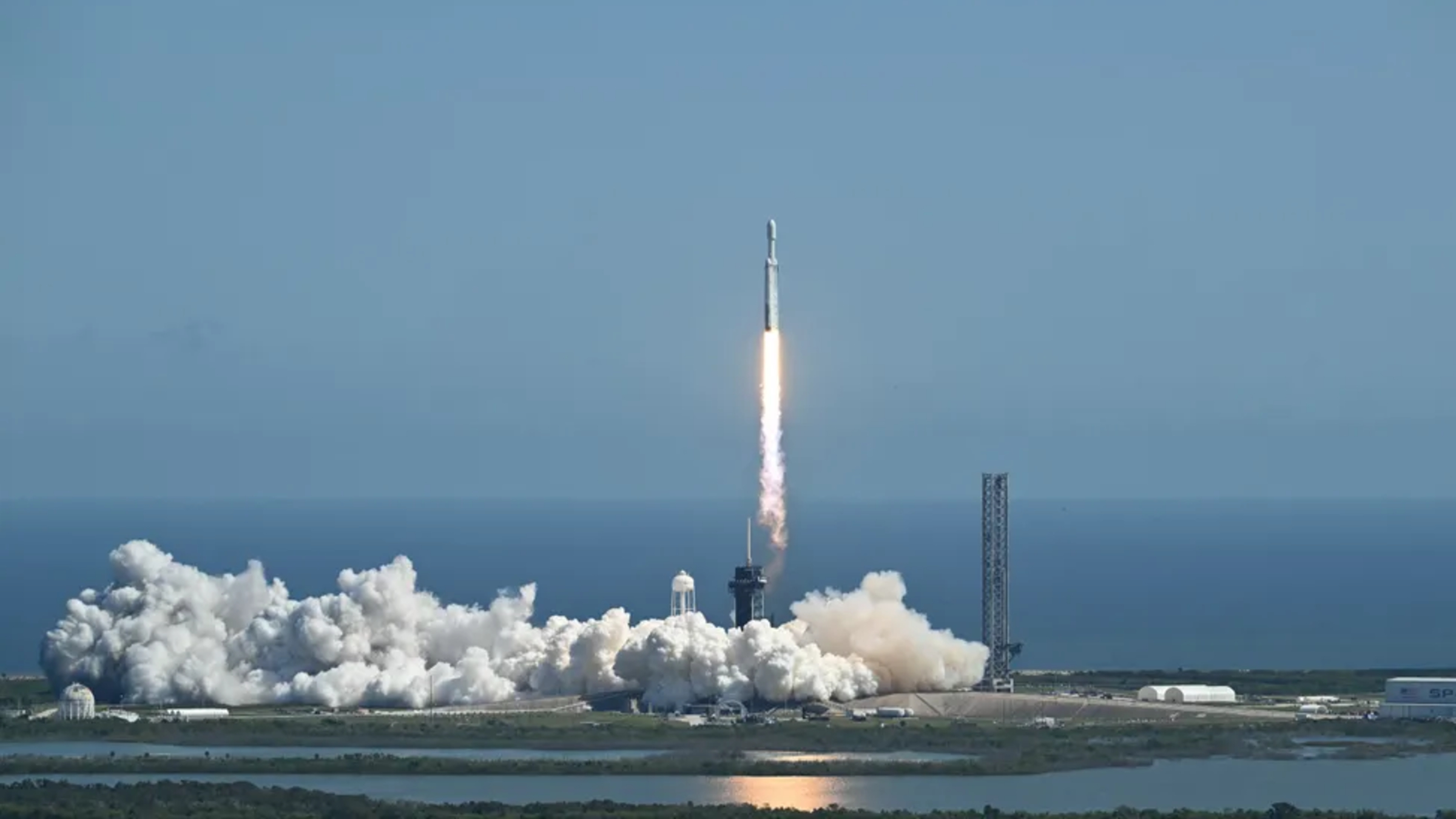
Roman is scheduled to launch from Kennedy Space Center in Florida aboard a SpaceX Falcon Heavy rocket.
(Image credit: Chandan Khanna/AFP via Getty Images)
NASA has stated that Roman’s research data will be made available to the public as soon as it has been processed. That means researchers, educators and the public will be able to explore the observatory’s discoveries without an exclusive-access period.
Source: www.livescience.com