


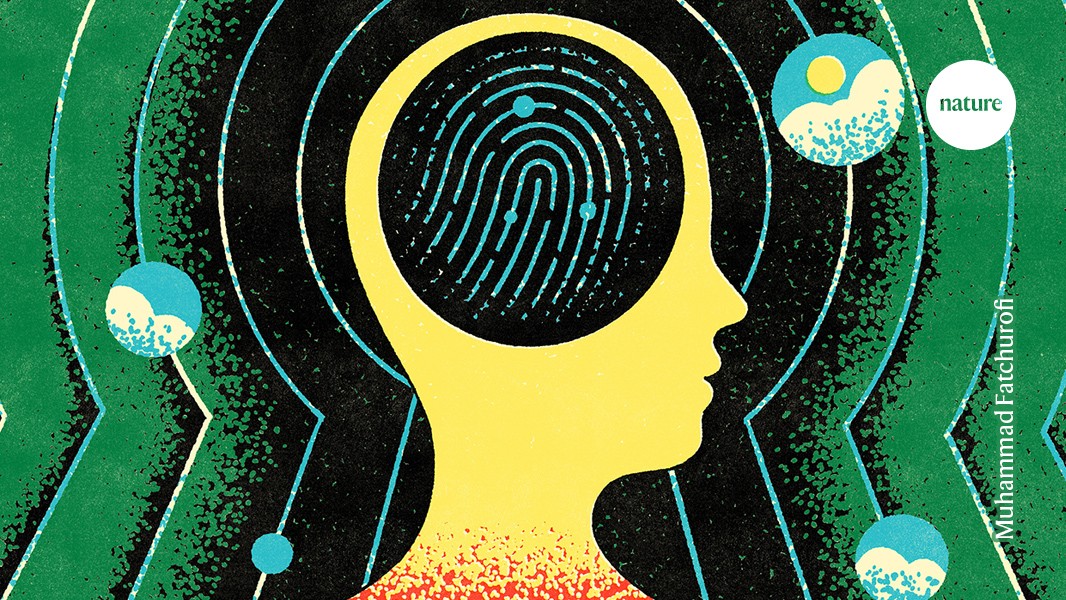
Precision psychiatry envisions a future in which treatment is tailored using information from across a patient’s life and biology, including smartphone data on sleep and speech, blood tests, brain scans and neighborhood pollution levels. Algorithms could compare those measurements with data from thousands of other people to identify which treatments work best for patients with similar profiles. The approach could make psychiatry more precise, but researchers caution that advances in genetics, brain imaging and digital biomarkers have so far fallen short of expectations.
How personalization and psychedelics are reinvigorating psychiatry
Today, psychiatrists generally diagnose and treat patients based on symptoms and medical history. Mental-health diagnoses can be broad and imprecise: a treatment that changes one person’s life may do little for another person with the same diagnosis. As a result, many people repeat treatments and adjust dosages while searching through trial and error for something that works.
Researchers hope that data-driven approaches can break broad diagnoses into more useful subgroups and help tailor treatments to individuals. Some are studying genes and brain circuits, while others are examining information about conversation, sleep and social situations. Psychiatrists working on the Diagnostic and Statistical Manual of Mental Disorders (DSM), the field’s leading classification system, are also considering how socioeconomic, cultural and environmental factors could be incorporated in the future.
Why drug companies bet billions on psychedelics despite setbacks
“I think precision psychiatry is certainly part of the future,” says Tom Insel, a psychiatrist and former director of the National Institute of Mental Health (NIMH) who now co-directs several companies focused on mental health. “From the beginning, this patient needed this treatment and it was the best treatment.”
Some clinicians say that a personalized approach remains unproven. Research continues to show how heterogeneous many mental illnesses are, while advances in genetics, brain imaging and biomarker research have not yet delivered the expected breakthroughs. “There’s a model in psychiatry where a white knight comes over the hill and solves all our problems,” says Kenneth Kendler, a psychiatric geneticist at Virginia Commonwealth University in Richmond. “And we have been disappointed time and time again.”
More accurate classification
Personalized psychiatry is a new name for an old ambition. For decades, psychiatrists have sought to improve the accuracy of diagnosis and treatment. The third edition of the DSM, published in 1980, introduced specific diagnostic criteria for many symptoms to increase reliability. A diagnosis of major depression or schizophrenia was intended to mean roughly the same thing to different psychiatrists.
But the DSM defines conditions through symptoms, and that approach creates complications. A person can receive multiple diagnoses because the same symptoms occur in several disorders. Conversely, two people with the same diagnosis can have very different symptoms.
For example, the DSM criteria for major depressive disorder require a person to experience at least five of nine symptoms within a two-week period. At least one must be depressed mood or a loss of interest or enjoyment. The other criteria include insomnia or excessive sleeping, weight gain or loss, feelings of guilt or worthlessness, and suicidal thoughts.
“Two people can get the same diagnosis even if they don’t share any of the necessary symptoms,” says Vikram Patel, a psychiatrist at Harvard Medical School in Boston, Massachusetts.

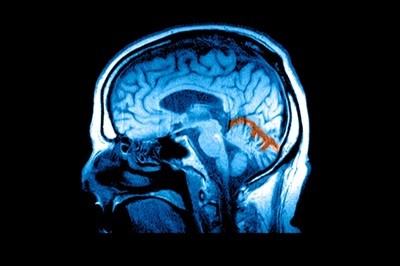
Brain scans could stratify people with disorders such as depression into subtypes and help psychiatrists prescribe targeted treatments. People with untreated depression (top) have less brain activity in certain areas (red and yellow) than treated people.Credit: Welcome Center Human Neuroimaging/SPL
By the late 2000s, researchers had begun questioning whether established disease categories were the best way to classify and treat people.
At NIMH, Insel helped develop the Research Domain Criteria initiative, which sought to study and measure processes such as reward, fear and cognition that cross diagnostic boundaries. The approach encouraged researchers to examine shared behaviors and brain functions across different conditions. Although it helped shift research towards the mechanisms underlying disease, it was not intended to replace symptom-based diagnostic systems or provide individuals with a reliable way to choose treatments.
Another way to improve accuracy is to measure symptoms and behavior more closely. A psychiatrist evaluating psychosis, for example, listens to a patient’s account and assesses qualities such as coherence, paranoia and grandiosity. This process relies on clinical expertise but is also subject to human judgment.
Insel envisions machine-learning systems listening to the same conversations and assigning measurements that are more objective and repeatable. “The paranoia score here is 6.1,” he suggests. “The coherence level is 2.2.”
John Torous, a psychiatrist at Beth Israel Deaconess Medical Center in Boston and Harvard Medical School, is working on a related approach known as digital phenotyping. It uses information from smartphones and wearable sensors to study behavior. The term emerged about a decade ago, when researchers proposed that sensors already built into smartphones could provide continuous measurements of behaviors such as movement and communication and could aid diagnosis.1
Can GLP-1 heal the brain? Obesity drugs turn into addiction and depression
A subsequent small study found a link between activity levels and depressive and manic symptoms in bipolar disorder.2 Another found a relationship between location data and symptom severity in schizophrenia.3
The challenge is turning these measurements into clinically useful information. Torous says medical training generally does not teach clinicians how to interpret such data, and researchers have not yet developed standards or protocols for using it. “We are still in the early stages in that sense.”
Artificial intelligence could help by analyzing multiple data streams and combining them into information that is useful in clinical practice, he suggests.
The approach also raises privacy concerns. Information about a person’s location, movement, sleep and communication can be highly sensitive and may identify them. In addition, a systematic review published this year found wide variation among digital-phenotyping studies in the devices and analytical methods used.4 That variation could limit the reproducibility of the research and its potential clinical use.
Biomarkers and biology
Looking more deeply into biology could offer another route to greater accuracy. As genetics and neuroscience advance, some researchers hope that biological information will help divide a wide range of psychiatric syndromes into distinct diseases with different underlying mechanisms and, ultimately, different treatments.
That has not happened yet, and some researchers argue that it may be an unrealistic goal. Biological insights helped researchers classify diabetes into two types about a century ago, but “psychiatry had never approached this,” Kendler says. Mental-health conditions can be “highly heterogeneous.”
Genetics has nevertheless produced one of psychiatry’s more promising potential biomarkers. By analyzing the genomes of thousands of people with schizophrenia in genome-wide association studies, researchers have identified genetic variants associated with risk.
For most health conditions, the small effects of many genetic mutations combine to increase susceptibility. Geneticists refer to this combined estimate as a polygenic risk score. People at the top of the polygenic-risk distribution for schizophrenia may have about a 10-fold increased risk, Kendler says, although the relative size of the increase varies between studies. Published estimates, for example, have placed the risk for people in the top 1% at about six times that of everyone else.5 But the scores alone cannot predict who will develop symptoms.
“Are we at that point now where we can take that score and immediately change what we’re doing diagnostically? No,” Kendler says.

Hidden relationships between mental disorders
In five or 10 years, he says, a score that distinguishes schizophrenia from bipolar disorder could be useful in difficult cases where the distinction affects treatment.
Researchers are also investigating hormone and metabolite levels as potential psychiatric biomarkers. But Kendler says such measures “almost always” turn out to be nonspecific. It is difficult to translate average biological differences between groups into tests that show what is wrong with a particular person or which treatment should be offered.
Brain imaging presents a similar problem. Magnetic resonance imaging (MRI) studies have reported many associations between brain characteristics and psychiatric symptoms, but several of those findings have been difficult to reproduce.
A 2022 analysis involving about 50,000 people found that associations between behavioral and mental-health traits and differences in brain structure and function were generally much smaller than previous studies had suggested.6
Helen Mayberg, a neurologist at the Icahn School of Medicine at Mount Sinai in New York City, says scans can still provide clinically useful information when researchers ask sufficiently specific questions.
Prozac use for childhood depression was distorted by a single flawed medical trial
Mayberg has spent decades mapping brain circuits involved in depression, focusing on a region of the cortex called the subcallosal cingulate. It lies beneath the corpus callosum, a dense bundle of fibers connecting the two sides of the brain.
In one study, researchers used functional MRI to scan the brains of 122 people with depression.7 The participants were then randomly assigned to one of two treatment groups. One received 12 weeks of cognitive behavioral therapy, while the other received antidepressants for the same period.
The researchers found that connections between the subcallosal cingulate and three other brain regions differed according to treatment outcome. People who responded to psychotherapy and those who responded to drug therapy generally showed different connectivity patterns from people who had the opposite response.
In other words, the connectivity pattern could serve as a biomarker for assigning treatments. “The scans done at baseline can actually help make that decision,” Mayberg says.
However, there is still a considerable distance between potential biomarkers and routine clinical tests. Mayberg says she was told many times that “no one would do a scan to determine how to treat a human being” because it would be too expensive and time-consuming.
Source: www.nature.com