


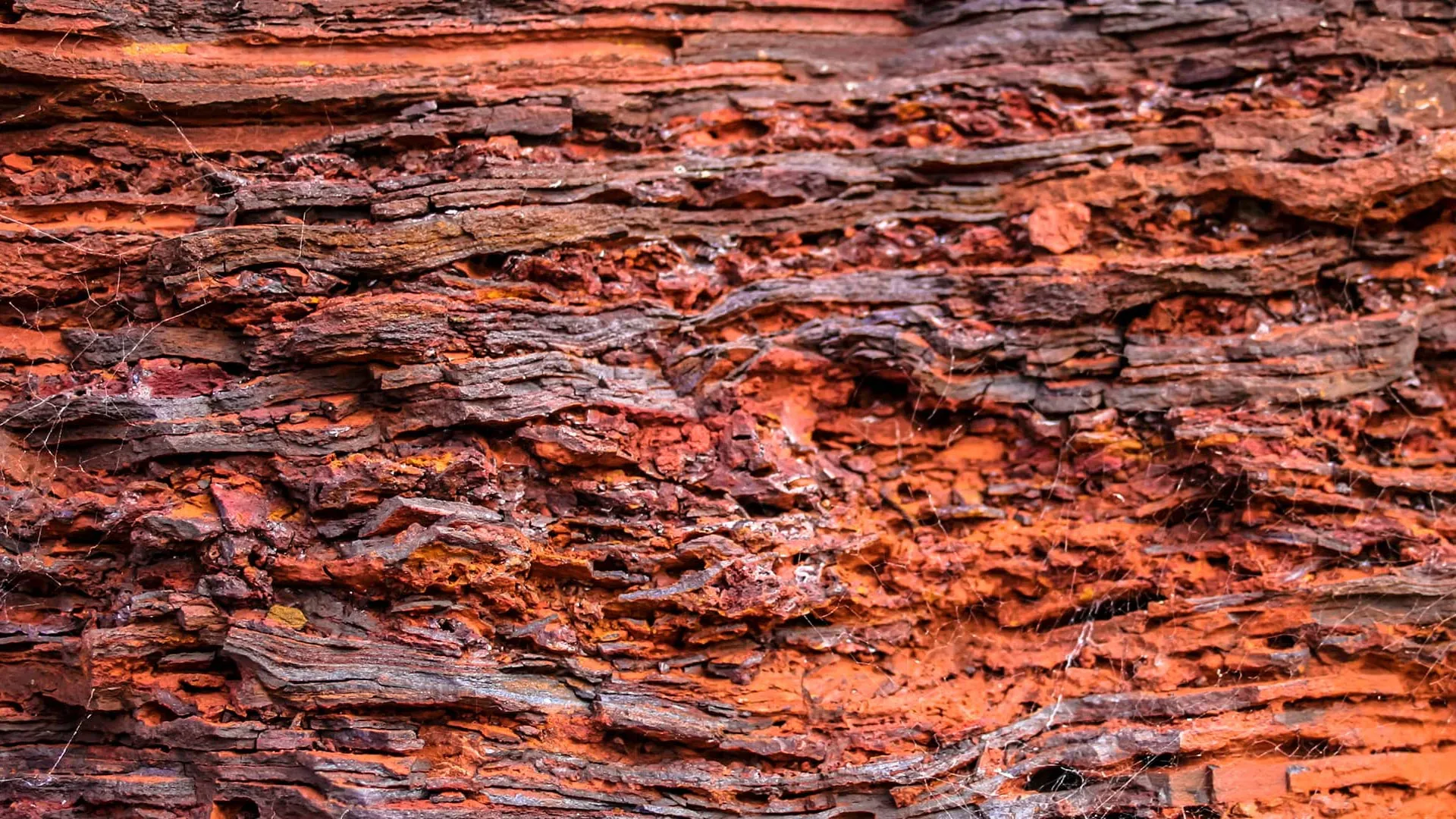
Researchers at Edith Cowan University (ECU) have identified a potentially major source of low-emissions energy beneath Western Australia. Vast iron-rich geological formations in the Pilbara region may be capable of producing natural hydrogen underground.
The discovery suggests Western Australia’s unique geology could support new domestic energy supplies and, if developed at scale, help establish a major natural hydrogen export industry.
Magnetite could generate natural hydrogen underground
The ECU research focuses on magnetite, an iron-rich mineral found in abundance throughout Western Australia’s extensive iron ore deposits.
Scientists from ECU’s School of Engineering discovered that magnetite can release hydrogen gas when it reacts with hot water under conditions similar to those deep beneath Earth’s surface.
The researchers also identified a potential way to increase the process. By injecting a solution into banded iron formations, they were able to stimulate hydrogen production. This raises the possibility that naturally occurring hydrogen could eventually be enriched underground.
Associate Professor Alireza Keshavars said: “Australia may have huge untapped energy reserves, and the potential is enormous.”
“Australia has enough hydrogen to benefit us for generations and potentially enough to become a major exporter of clean energy to the rest of the world.”
Laboratory experiments recreate deep underground conditions
To study how natural hydrogen forms, researchers placed magnetite samples in water heated to 200 degrees Celsius under high pressure for 60 days. The experiment was designed to replicate the hot, pressurised conditions found deep underground.
The results provided new insight into how hydrogen is naturally generated in rocks and which geological conditions may allow production to continue over long periods.
The discovery could be especially important for Western Australia, which is home to some of the world’s largest banded iron formations.
“Western Australia is home to one of the world’s largest banded iron formations, and unlocking this resource at scale could transform our energy future,” said lead author Kaveh Moganirahimi.
“We also see the potential for Western Australia to improve its energy independence during times of crisis by harnessing naturally produced hydrogen.”
Moving from laboratory research to natural hydrogen exploration
Professor Stefan Iglauer from ECU’s School of Engineering said the findings bring scientists closer to understanding how natural hydrogen production occurs in real underground rock formations, rather than only in controlled laboratory settings.
“This study helps bridge the gap between laboratory experiments and real geological systems,” Professor Iglauer said.
The research found that the quantity of magnetite is not the only factor determining how much hydrogen is produced. The structure and permeability of the rock are also important, particularly whether water can flow through the formation and reach fresh mineral surfaces.
“Our findings show that hydrogen production depends not only on the amount of magnetite present, but also on how easily water can access fresh mineral surfaces through cracks, pores and percolation channels.”
This indicates that fractures, pores and other pathways within rocks could play a crucial role in determining whether natural hydrogen can be produced efficiently enough to become a practical low-emissions energy resource.
The research, titled “Geometrical Control of Hydrothermal Natural Hydrogen Production from Magnetite Minerals,” was published in the International Journal of Hydrogen Energy.
Source: www.sciencedaily.com