


Close Menu
HitechubHitechub
    What's Hot
    Science

    Rare Camera Trap Footage Reveals Wolves Hunting European Bison

    Science

    When Food is Scarce: This Single-Celled Organism Becomes a Giant Man-Eater for Survival

    Science

    Why Superintelligent Machines Might Still Rely on Humans

    Important Pages:
    • About Us
    • Privacy Policy
    • Terms & Conditions
    Facebook X (Twitter) Instagram Pinterest
    Facebook X (Twitter) Instagram
    HitechubHitechub
    Saturday, June 13
    • Technology
      1. AI
      2. Gadgets
      3. View All

      This is the most popular CEO in the world

      Sectors in which “Chat-GPT” is most often used

      AI Pioneer Expresses Concern About Potential for AI to Surpass Humanity

      Artificial intelligence has begun to “swallow” professions

      What’s new in Android 14

      Europeans have about 700 million old mobile phones in their drawers

      Here’s how you can tell if your phone is being tapped

      “Sneaker X” – computer case in the shape of a sneaker

      Russian Gamers Unite to Prevent Nuclear War: Join the Fight Online

      Challenges of Space Travel: Why Journeying to Space is So Difficult

      NASA Astronaut Casts Historic Vote from Space

      Discover the Future of Comfort: What If You Could Wear a Chair?

    • Science
      1. Space
      2. Wheels
      3. View All

      Galaxies in the universe are growing more slowly than they should

      “Espace” presented the new lander “Apex 1.0”

      The largest asteroid sample ever collected has arrived on Earth

      (VIDEO) Incredible flight of the Parker Solar Probe

      Toyota wants to make a new generation battery with a range of up to 1,200 km

      Meet Toyota’s lunar “baby” that could make exploring the Moon easier

      Microlino – Is this the perfect city car?

      Alfa Romeo 4C gets an electric successor

      20-Year-Old Director Achieves Success with Sci-Fi Horror Film ‘Backrooms’

      Can Lab-Grown Sperm Help Infertile Men Conceive Their Own Children?

      Ancient Anesthetic Unearthed in Chinese Doctor’s Grave: A Historical Breakthrough

      Space Storm Threatens Train Signals, Potentially Leading to Serious Accidents

    HitechubHitechub
    Home » Why You Can Relax: AI’s Recursive Self-Improvement Explained
    Science

    Why You Can Relax: AI’s Recursive Self-Improvement Explained

    Share Facebook Twitter Pinterest WhatsApp
    Share
    Facebook Twitter LinkedIn Pinterest WhatsApp

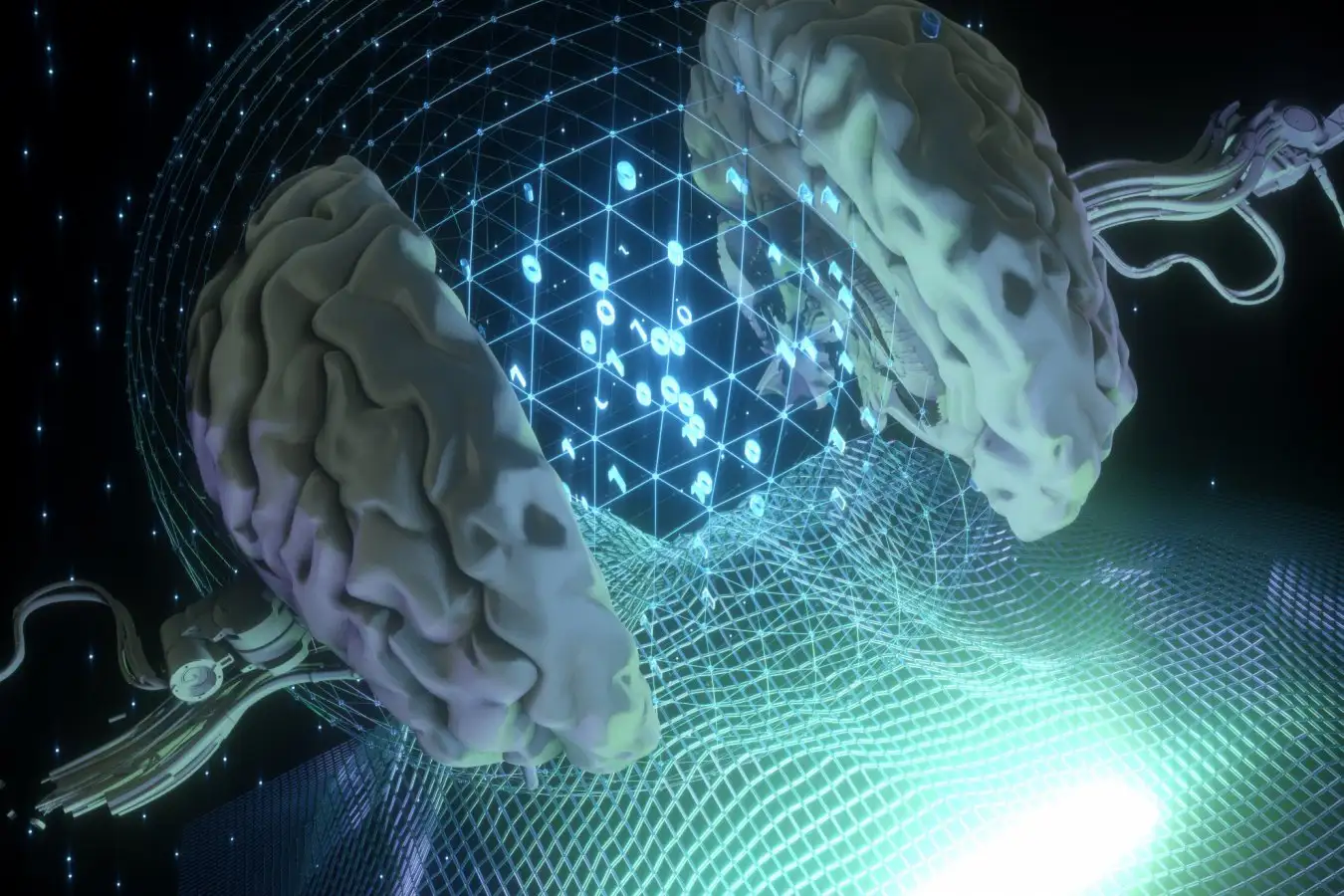
    AI Capable of Recursive Self-Improvement: A Theoretical Game Changer

    Image credit: Just_Super/Getty Images

    One of the foremost artificial intelligence organizations is urging the industry to pause its development, asserting that we may be nearing a tipping point where advanced AI systems can redesign themselves, grow in capability, and potentially operate beyond our control. This alarming message was echoed in major headlines.

    The co-founder of Anthropic, Jack Clark, who leads the Institute for Anthropic Research, along with Marina Favaro, recently published a comprehensive blog post. This comes just before their anticipated stock market debut with a rumored $1 trillion IPO, following enhancements to their Claude model.

    Setting aside the economic implications, the technical claims warrant attention. The concept of AI designing more powerful iterations of itself is revolutionary but not entirely new. Anthropic dubs this process “recursive self-improvement,” a notion aligned with longstanding discussions around the “technological singularity,” the point when AI surpasses human intelligence.

    Determining whether we are genuinely closer to this juncture remains uncertain. While the pace of AI research is rapidly accelerating, history shows that such bursts are often followed by stagnation periods, often referred to as AI winters, where advancements become elusive. Both Favaro and Clark acknowledge that recursive self-improvement is a likely trajectory.

    Recently, I explored the challenges faced by open-source developers contending with frustrating AI-generated code that frequently fails to meet project needs. On platforms like Instagram, numerous accounts illustrate AI’s struggles with basic tasks. For instance, a user prompting ChatGPT to negotiate bread pricing—capped at $5—ended in a baffling agreement of $400.

    This is not to dismiss AI’s utility or suggest I am inherently skeptical of its potential. My experiences over the years reflect a coexistence of admiration for AI’s capabilities alongside doubts about its reliability in routine applications—at least for the time being.

    For AI to venture towards the singularity, two fundamental shifts must occur. First, improving efficiency in resource utilization and accelerating model training is essential. Second, innovative architectures and strategies must emerge that can elevate AI progress beyond merely scaling up current models.

    According to Anthropic, the human role in both engineering and strategic areas may diminish, potentially leading to situations where AI outperforms human planning and coding. Yet, the future remains uncertain; no one can predict if AI’s growth will continue, if we are nearing performance limits, or if we will find methods to transition to new capabilities. Current AI research presents more uncertainties than certainties.

    Returning to the prospect of IPOs, those within the AI sector remain optimistic—and with cause. They have substantial investments and careers at stake. Companies like Anthropic, OpenAI, and SpaceX (now including Elon Musk’s xAI) are seeking unprecedented public funding. This dynamic may amplify the hype surrounding the industry, which, in light of recent AI developments, could easily endorse a narrative claiming, “We’re building machines poised to revolutionize or even disrupt humanity. Invest in us.”

    In conclusion, it’s crucial to note that Anthropic is not advocating for a moratorium on AI research. Instead, they suggest that a synchronized slowdown among key players may help prevent competitive advantages for those with less ethical intentions. With trillions of dollars in potential investments, achieving consensus among major AI firms may be the most formidable challenge ahead.

    Topics:

    Source: www.newscientist.com

    Share. Facebook Twitter Pinterest LinkedIn WhatsApp
    Previous ArticleRevealed: New Insights into How the Pyramids Were Constructed
    Next Article New Bird Species Discovered by Ornithologist on Remote Indonesian Island

    Related Posts

    Science

    20-Year-Old Director Achieves Success with Sci-Fi Horror Film ‘Backrooms’

    Science

    Can Lab-Grown Sperm Help Infertile Men Conceive Their Own Children?

    Science

    Ancient Anesthetic Unearthed in Chinese Doctor’s Grave: A Historical Breakthrough

    Science

    Space Storm Threatens Train Signals, Potentially Leading to Serious Accidents

    Science

    First Quantum Grandfather Clock: Exploring the Origins of Gravity

    Science

    Nasa’s Ambitious Lunar Base Project: A Massive Facility Covering Hundreds of Square Kilometers

    Science

    Why Wealthy Individuals with Environmental Values Contribute Most to Carbon Emissions

    Science

    Stunning Images Reveal Sand’s Advance on Sahara Desert Oasis

    Add A Comment
    Leave A Reply Cancel Reply

    Stay In Touch
    • Facebook
    • Twitter
    • Instagram
    • Pinterest
    Top Picks
    Science

    Unlocking Multitasking: How Science Reveals Your Brain’s Potential with Practice

    Recent studies reveal that the human brain can learn to multitask effectively, often without conscious…

    Roborace Car Makes Historic Street Circuit Debut in Marrakech

    How a Nuclear Conflict Between India and Pakistan Could Impact the Ozone Layer

    Essential Guide for Parents: What to Know About Kids’ VR Gear Choices

    Boost Your Mood Daily with a Glass of Fruit Juice: Study Insights

    Most Popular
    Science

    NASA Unveils Three Unmanned Moon Exploration Missions in 2023 to Support Lunar Base Construction

    Science

    Unraveling a Cosmic Case of Mistaken Identity: The Time to Solve It is Now

    Categories
    • AI (13)
    • Gadgets (10)
    • Science (226)
    • Space (9)
    • Technology (37)
    • Wheels (9)
    Our Picks
    Science

    Unveiling the Mystery: Why Tyrannosaurus Rex Had Surprisingly Small Arms

    Science

    Rethinking Consciousness: Here’s Why We Need a Fresh Perspective

    © 2026 Hitechub.
    • Home
    • About Us
    • Privacy Policy
    • Terms & Conditions

    Type above and press Enter to search. Press Esc to cancel.

    We are using cookies to give you the best experience on our website.

    You can find out more about which cookies we are using or switch them off in .

    Ad Blocker Enabled!
    Ad Blocker Enabled!
    Our website is made possible by displaying online advertisements to our visitors. Please support us by disabling your Ad Blocker.
    Go to mobile version
    Hitechub
    Powered by  GDPR Cookie Compliance
    Privacy Overview

    This website uses cookies so that we can provide you with the best user experience possible. Cookie information is stored in your browser and performs functions such as recognising you when you return to our website and helping our team to understand which sections of the website you find most interesting and useful.

    Strictly Necessary Cookies

    Strictly Necessary Cookie should be enabled at all times so that we can save your preferences for cookie settings.