


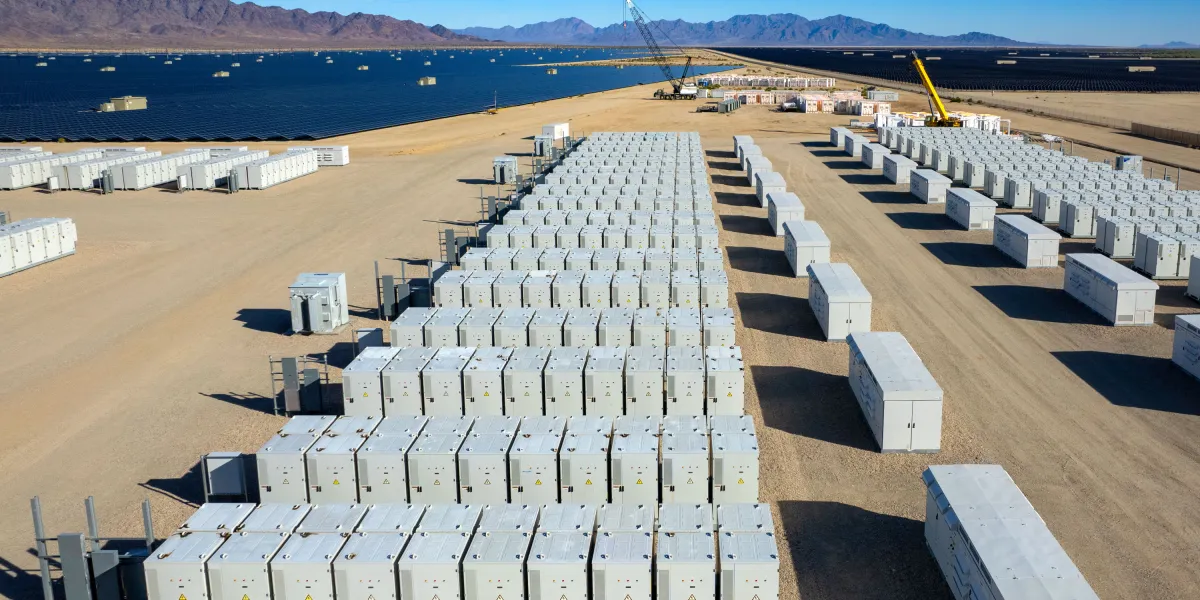
Utility-scale battery storage systems are driving record growth in the U.S. energy storage market. According to a report from Benchmark Mineral Intelligence and the Solar Energy Industries Association, seven new gigascale battery projects—each with more than 1 gigawatt-hour of capacity—became operational during a single three-month period.
“At the end of the day, it was some big projects,” said Shan Tomuk, head of energy storage and energy at Benchmark Mineral Intelligence.
The behind-the-meter battery storage segment, which includes residential, commercial, and industrial energy storage systems, is also expanding. Unlike utility-scale facilities, these smaller projects are generally owned and operated by homeowners, businesses, and other private organizations instead of utilities or power providers.
Data centers led growth in the commercial behind-the-meter market, accounting for approximately three-quarters of newly installed commercial battery capacity. However, demand for residential energy storage has slowed significantly. Home battery systems are commonly used to store electricity generated by solar panels or provide backup power during outages. The report projects that residential battery installations will decline by 16% in 2026 compared with the previous year.
Tomuk said the decline is largely linked to the expiration of tax credits that supported home battery storage installations in 2025. He expects the residential market to recover over time, while tax incentives for non-residential battery storage projects are expected to remain largely intact.
Overall, battery storage remains one of the strongest segments of the U.S. energy industry. “This is one of the strongest sectors in the United States,” said Kazuhide Kikuma, an energy storage analyst at BloombergNEF.
As the U.S. battery storage market continues to expand, the transition toward American-made energy storage technology will be an important trend to watch. Nearly all battery systems entering service today use cells manufactured in China, although some are assembled in the United States as complete energy storage systems.
Tariffs are already encouraging greater domestic production of battery storage equipment. Beginning this year, energy storage tax credits will also require projects to limit their reliance on battery imports from China. New manufacturing capacity is coming online across the United States, but Tomuk said domestic factories may not be able to meet demand until at least 2030. The supply constraints could lead to higher battery storage costs.
Source: www.technologyreview.com