


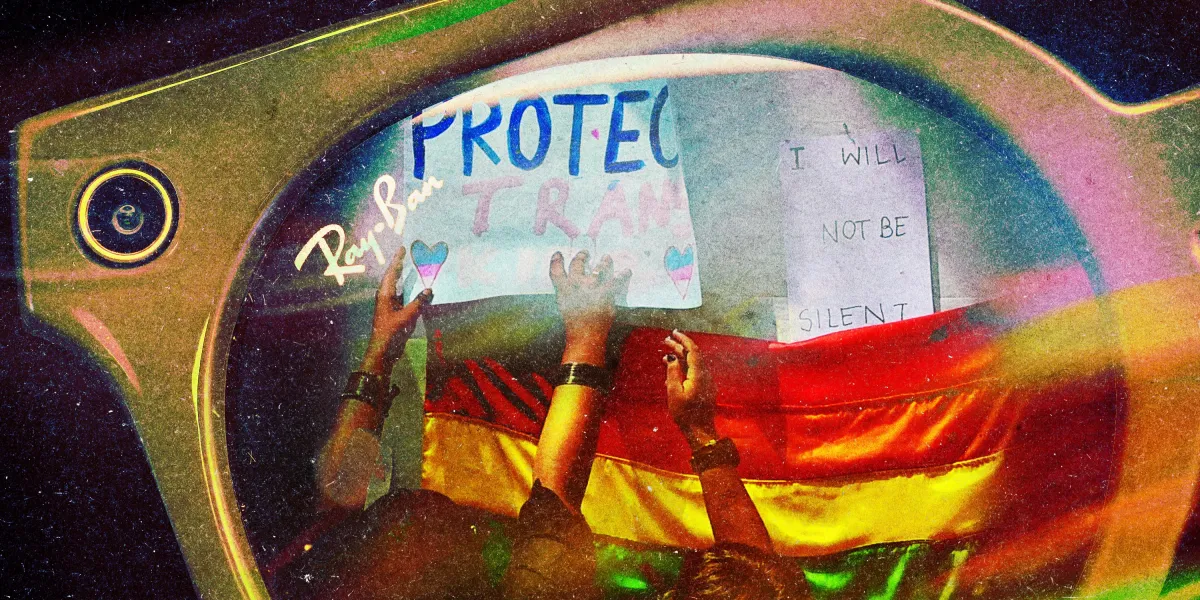
Invisible Cameras and Smart Glasses Raise New Consent Concerns in India
Hardware is improving, but weak public understanding of consent in India leaves more room for invisible cameras to cause harm, experts say. Simply being in a public place is often treated as implicit consent to be photographed or recorded. A helpline has reported an increase in incidents involving secret recordings and non-consensual footage.
Secret recordings leave vulnerable people exposed
“Violations of this access have increased significantly and are expected to increase further in India,” he says. People are recorded in medical settings, during private contacts and in public spaces. Those with less power to object are especially vulnerable, he added.
“Either they’re trolling, or they’re pranking and recording,” he says. Abusers “target people who are a bit ignorant or susceptible to how the harms facilitated by this technology work.”
Indian law offers limited protection for public-space filming
Indian law is not equipped to deal with this emerging type of harm, says Apal Gupta, a lawyer and founder and director of the Internet Freedom Foundation. India’s laws against voyeurism and the sharing of intimate images are primarily designed around more recognizable forms of abuse, he said, such as secretly filming someone who is undressed, using the toilet or engaging in sexual activity.
“The laws provide limited protection if someone is secretly filmed in a normal public place and the footage is used to humiliate them,” he says.
Social media takedowns may come too late
Social media platforms’ rules provide another way to remove harmful content captured with smart glasses, but they are not an immediate remedy. “Current rules in India give platforms up to 36 hours to address a particular complaint. This could be enough time for the video to be downloaded, copied and circulated elsewhere,” he says.
AI features could make bystanders harder to protect
The problem of filming without consent is likely to continue to grow. According to the Financial Times, some internal prototypes of new Meta glasses include an AI feature that continuously takes and listens to photos and audio from the wearer’s surroundings. This would allow the glasses to later recall what they see and hear.
These features do not activate external recording indicators, meaning bystanders may not be able to tell when information is being collected about them.
Meta said it intends to keep the LEDs used for active capture, such as taking photos and recording videos, but not for AI functions that interpret the wearer’s surroundings. The argument is that constantly flashing lights may eventually become so commonplace that people stop noticing them.
Technology may move faster than society can respond
That logic risks leaving society in a perpetual game of catch-up, said Woodrow Hartzog, a law professor at Boston University. “Technology companies have an incredible ability to get these tools out there faster than society can meaningfully adapt to the threat,” he says. “By the time society catches up, we will already have some normalcy.”
For Shubnam, the danger is not only that people become accustomed to being recorded. It is also about becoming used to seeing a version of themselves that they never chose to put into the world.
“When I’m understood according to a narrative I didn’t create or agree with, having that perception imposed on me makes me feel powerless over how people know me,” they say.
Source: www.technologyreview.com