


NASA’s Curiosity Rover Has Seen More Than 5,000 Sunrises and Sunsets on Mars
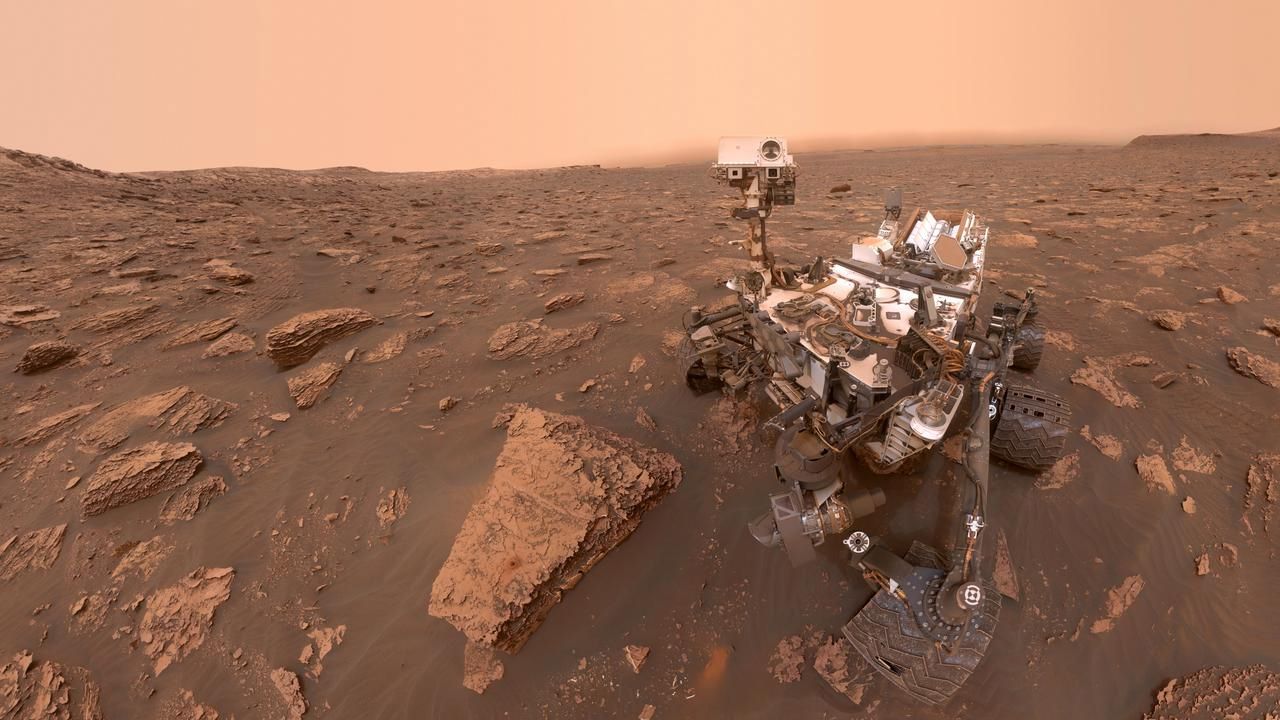
As of August 30, 2026, NASA’s Curiosity rover has watched the Sun rise and set over Mars more than 5,000 times. Originally designed to operate for only two years, the rover is still exploring the Red Planet more than 14 years after landing in August 2012.
Curiosity has survived a global dust storm, climbed more than 3,200 feet (1,000 meters) of Mount Sharp and continued operating despite tire wear. Its 17 cameras have captured hundreds of images every Martian day, or sol, sending more than 780,000 photos back to Earth for scientists to study.
To celebrate Curiosity’s 5,000th day on Mars, here are 10 of the rover’s most iconic photographs—from blue Martian sunsets and unusual clouds to meteorites, sulfur crystals and a rock formation that looked like an alien doorway.
1. Mount Sharp on the Horizon
Curiosity took this photograph about a year and a half after landing on Mars. Scientists hoped the rover would eventually reach the base of the 3.4-mile-tall (5.5-kilometer-tall) mountain and study terrain never before seen from the surface.
Curiosity went on to exceed its original goals, traveling more than 38.6 miles (62 kilometers) from its landing site while conducting science along the way.
2. A Blue Sunset on Mars
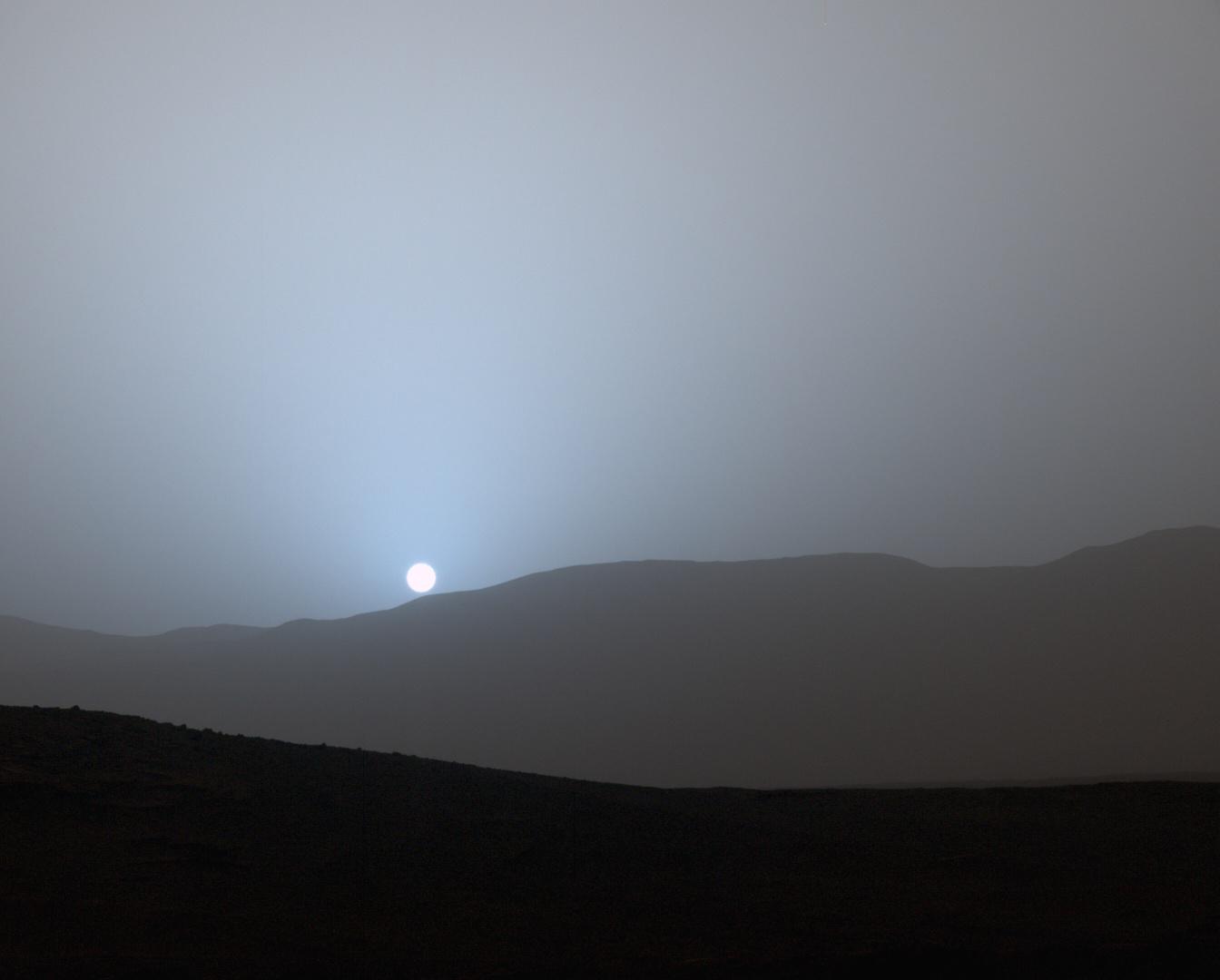
Curiosity’s first color photograph of a Martian sunset showed a striking blue sky above distant mountains. According to NASA, the Martian sky typically appears yellow or orange because fine dust scatters red and yellow light through the atmosphere.
Near the setting Sun, however, some blue light can pass through the dust. The effect becomes more noticeable when the Sun is low on the horizon, creating the unusual blue sunsets seen in Curiosity’s images.
3. Curiosity’s Selfie at the Namib Dunes
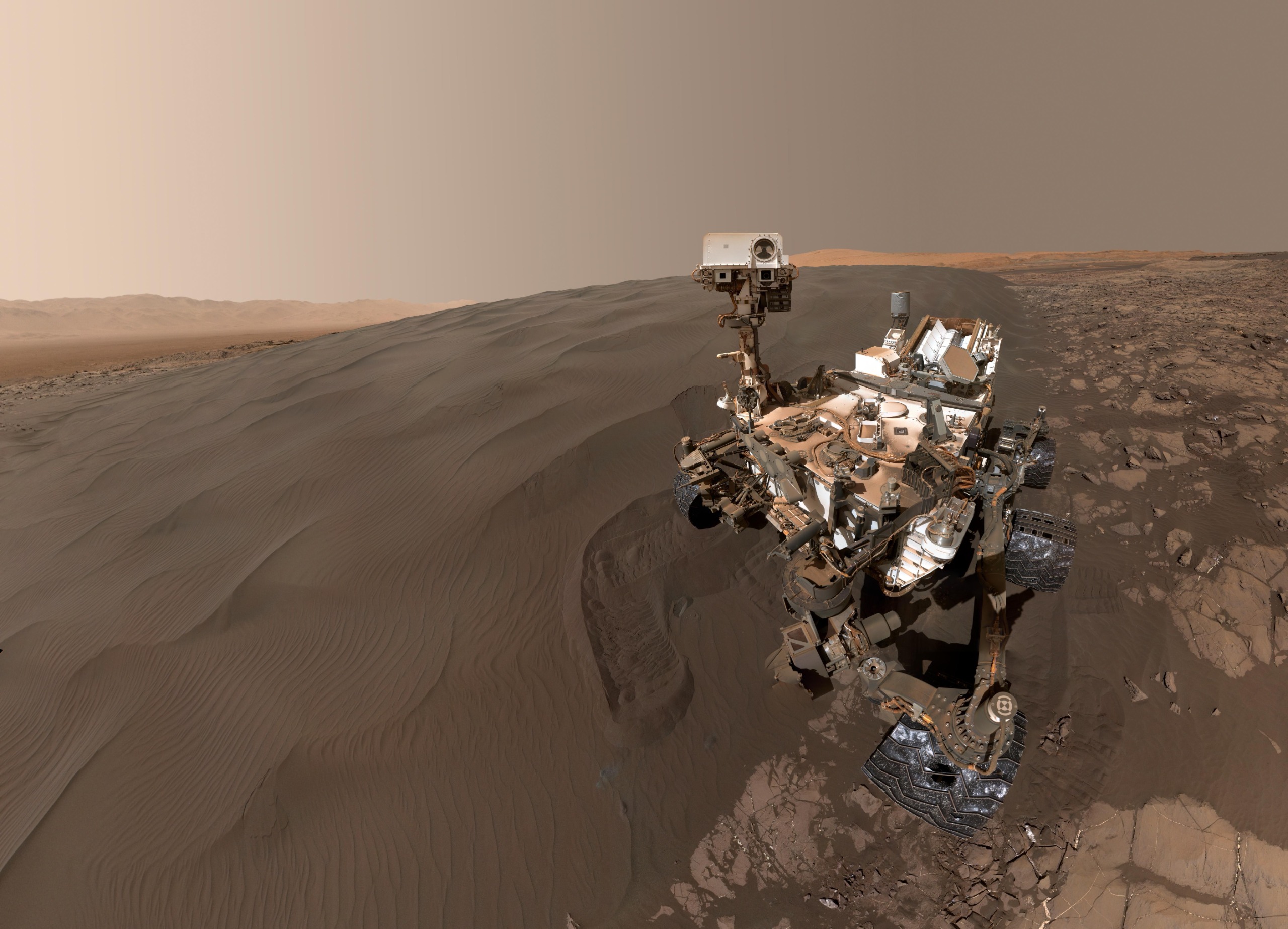
Curiosity has taken many selfies during its mission, but the process is more complicated than simply holding up a camera. This image was assembled from 57 photographs taken on January 19, 2016, using a camera mounted on the rover’s robotic arm.
The rover is shown beside the Namib sand dunes, part of the Bagnold Dunes field near Mount Sharp. Curiosity sampled the sand and scraped the dunes with its wheels so scientists could study how the material moved.
4. A “Thumbprint” in the Martian Dust
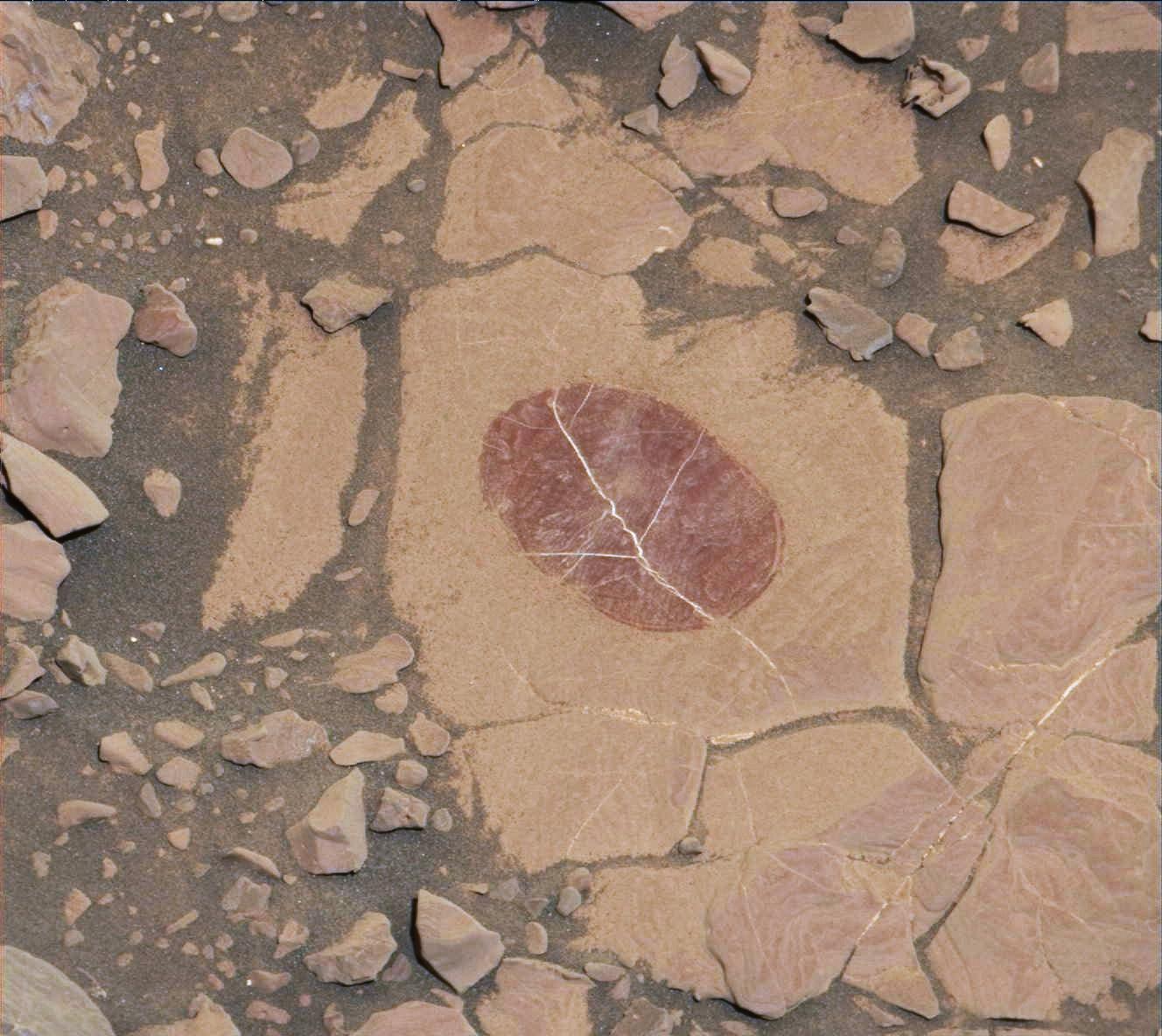
Mars is an extremely dusty world. On September 17, 2017, Curiosity brushed dust from the rocky surface of Vera Rubin Ridge and photographed the exposed material for comparison with rocks on Earth.
Geologists believe the reddish-purple rock contains fine-grained hematite and fractures filled with calcium sulfate minerals. The discovery suggested that Mars may be far more colorful beneath its dusty surface. Scientists later found ruby-like material embedded in Martian rocks.
5. The “Doorway” That Wasn’t for Aliens
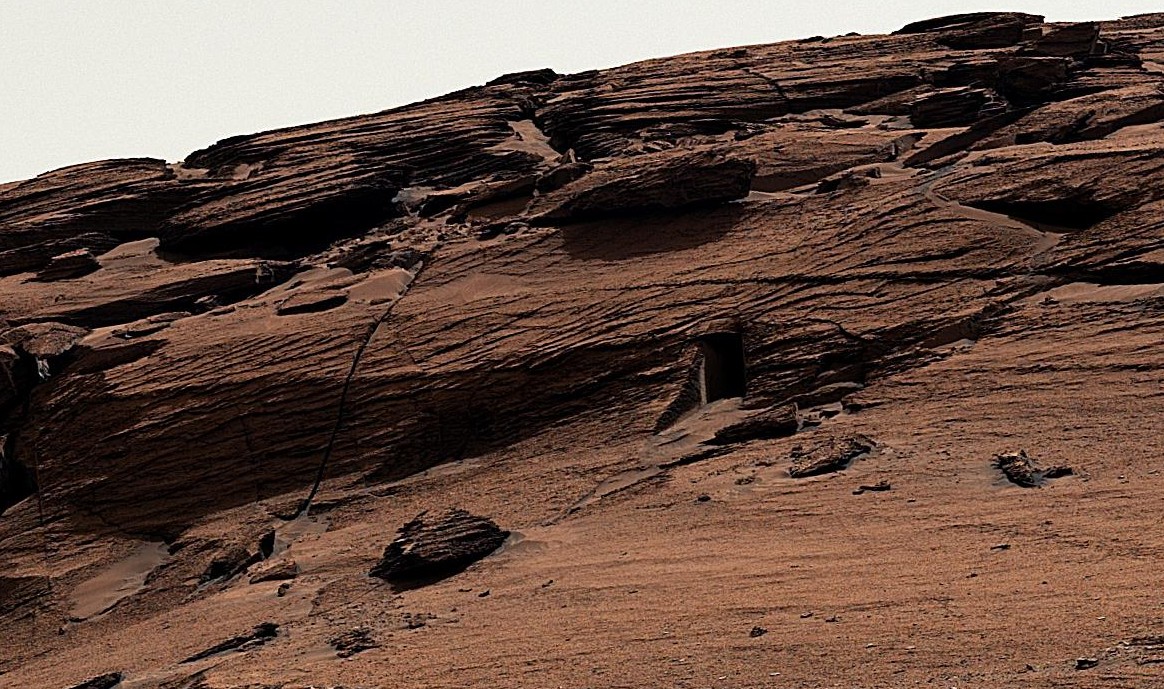
On May 7, 2022, Curiosity sent back a photograph that appeared to show a small door carved into the face of a cliff. The unusual image quickly inspired speculation about an alien entrance, but the explanation is geological.
The opening is about 3 feet tall, and its boxy shape was caused by vertical cracks intersecting horizontal layers of rock. NASA noted that the cliff is heavily fractured, with large pieces of rock visible nearby. The feature is not a Martian entrance or exit.
6. Iridescent Clouds in the Martian Sky
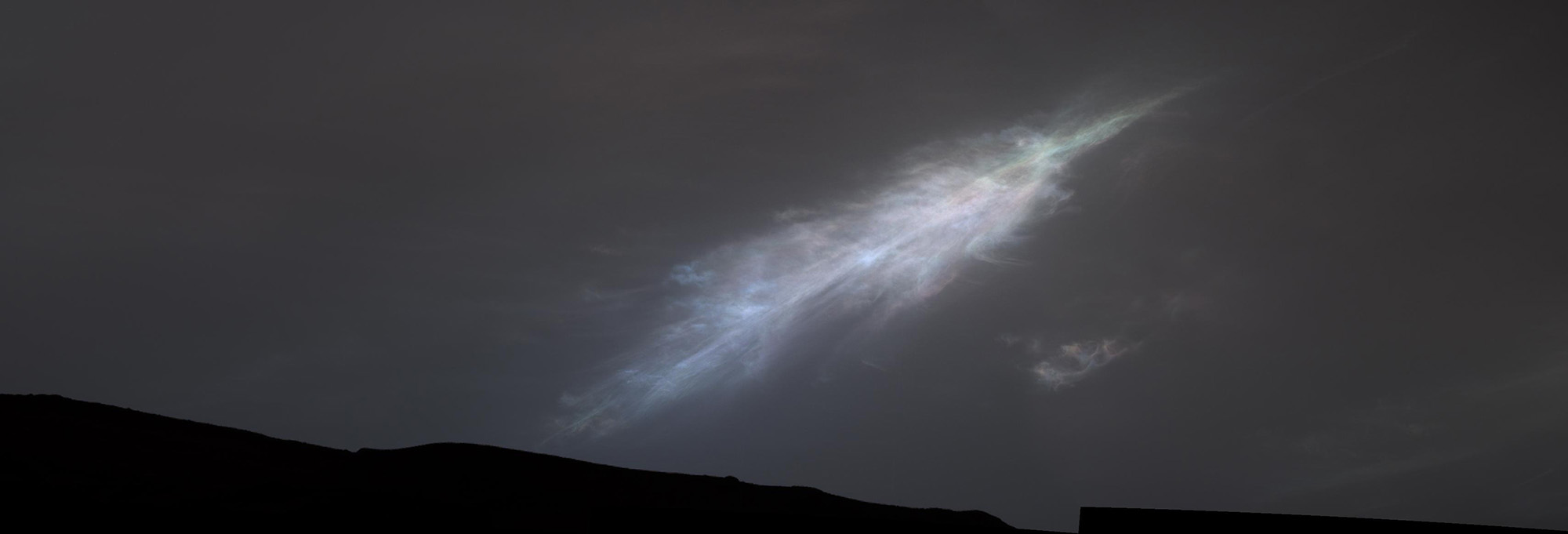
Curiosity captured this image just after sunset on January 27, 2023. The cloud formed high in the Martian atmosphere, where temperatures are much lower than near the surface.
Clouds are rare on Mars, and scientists think this high-altitude cloud may be made of carbon dioxide ice rather than water ice. Its iridescent colors indicate that the ice particles are similar in size, suggesting the cloud may have formed shortly before the photograph was taken.
7. The “Cacao” Iron-Nickel Meteorite
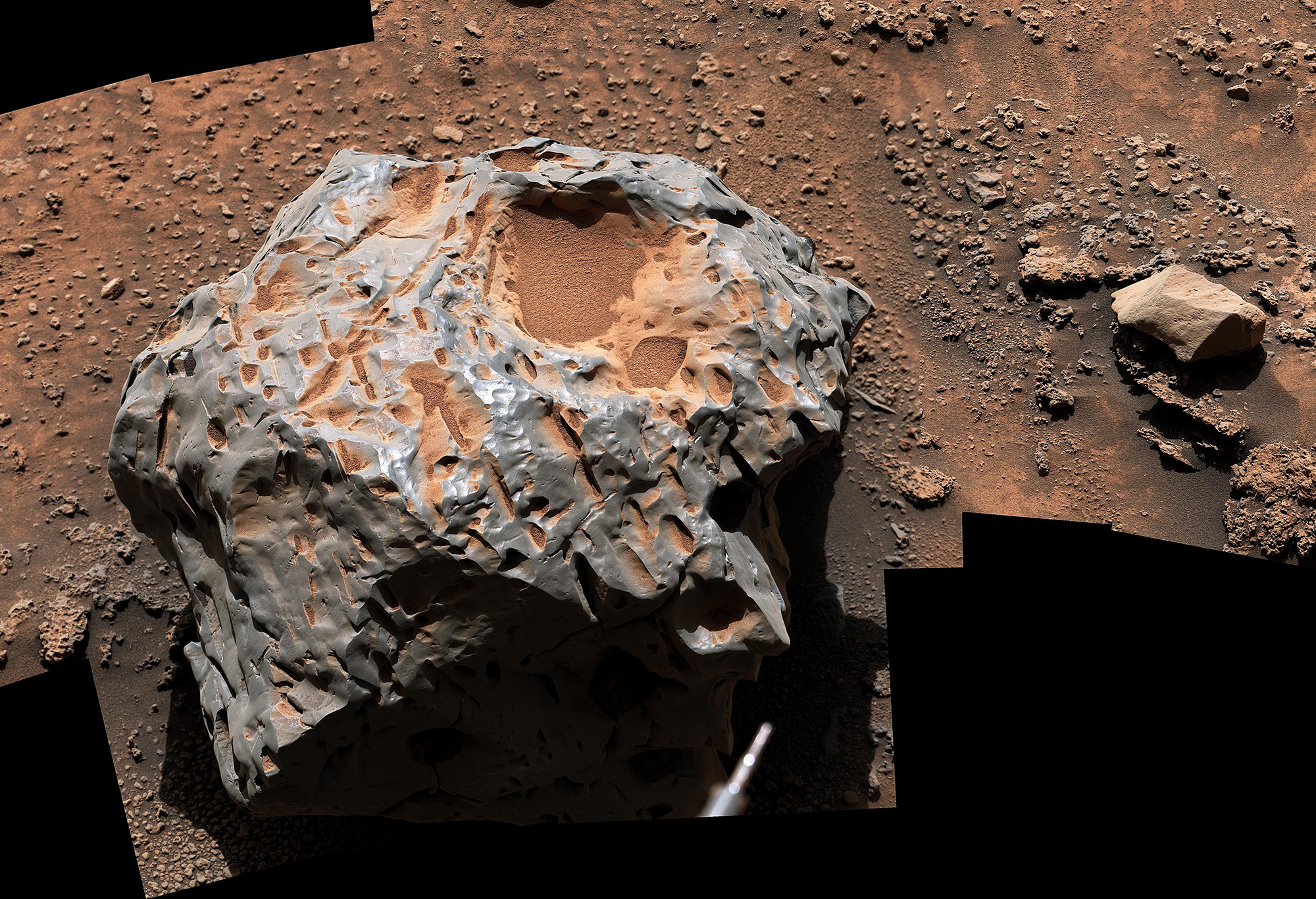
On January 28, 2023, the day after photographing the high-altitude cloud, Curiosity discovered an iron-nickel meteorite about 1 foot in diameter. Nicknamed “Cacao,” it is one of several meteorites the rover has photographed on Mars.
Curiosity used a laser to vaporize part of the meteorite and analyzed the released material to determine its composition. Because Mars is colder and drier than Earth, meteorites can remain on its surface for much longer, preserving clues about how the planet’s atmosphere has changed over time.
Large iron meteorites found on Mars also suggest that the planet once had a denser atmosphere than it does today.
8. Pure Sulfur Crystals Beneath a Crushed Rock
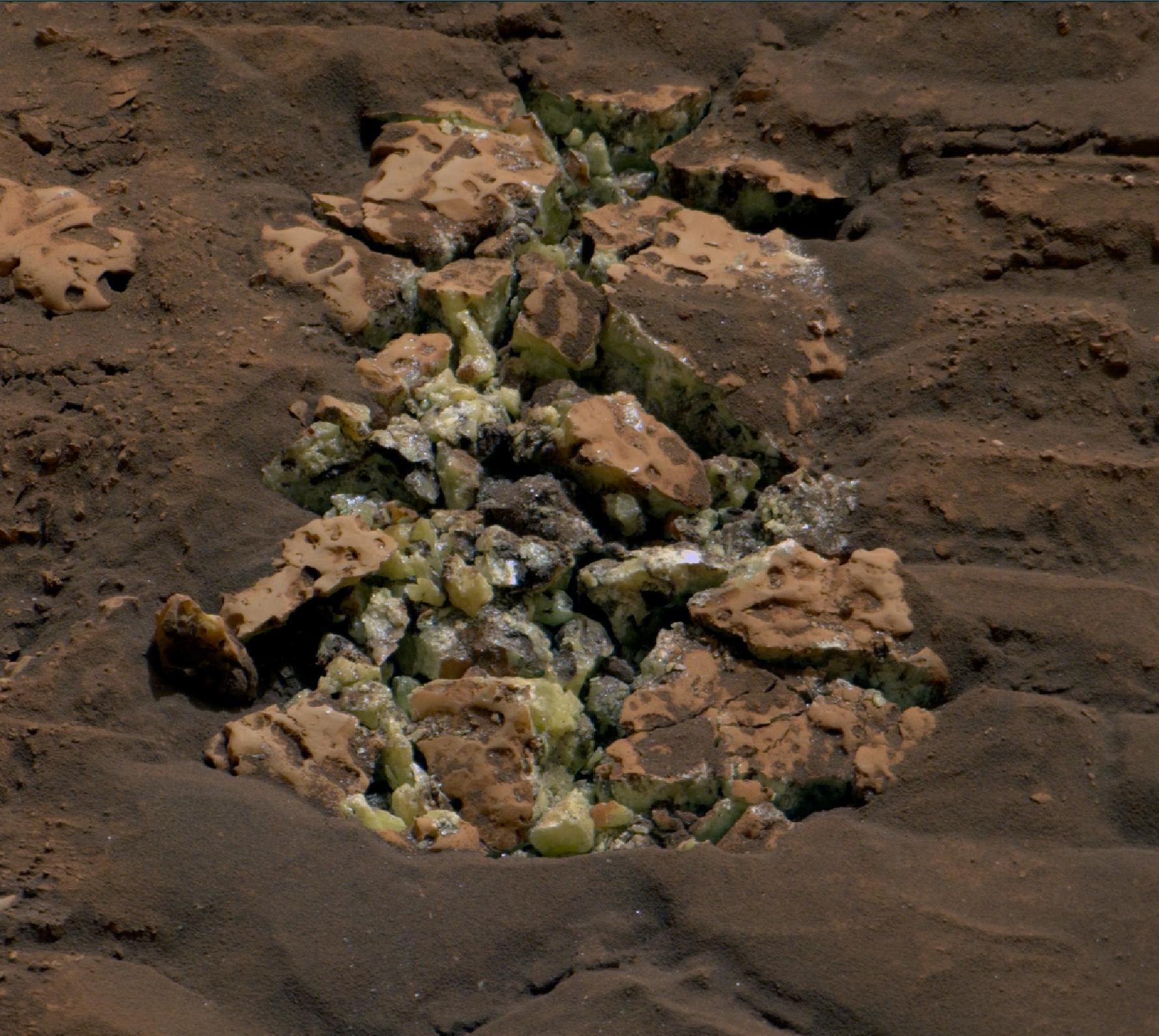
In June 2024, Curiosity accidentally revealed a bright yellow surprise after driving over and breaking a rock. Beneath the surface were rare crystals of elemental sulfur.
Mars contains many sulfur-bearing minerals, including sulfates, but this was the first discovery of pure sulfur on the planet. The crystal fragments were approximately 5 inches (12.7 centimeters) across. Scientists are still unsure how the elemental sulfur formed on Mars.
9. Curiosity’s 42 Drill Samples
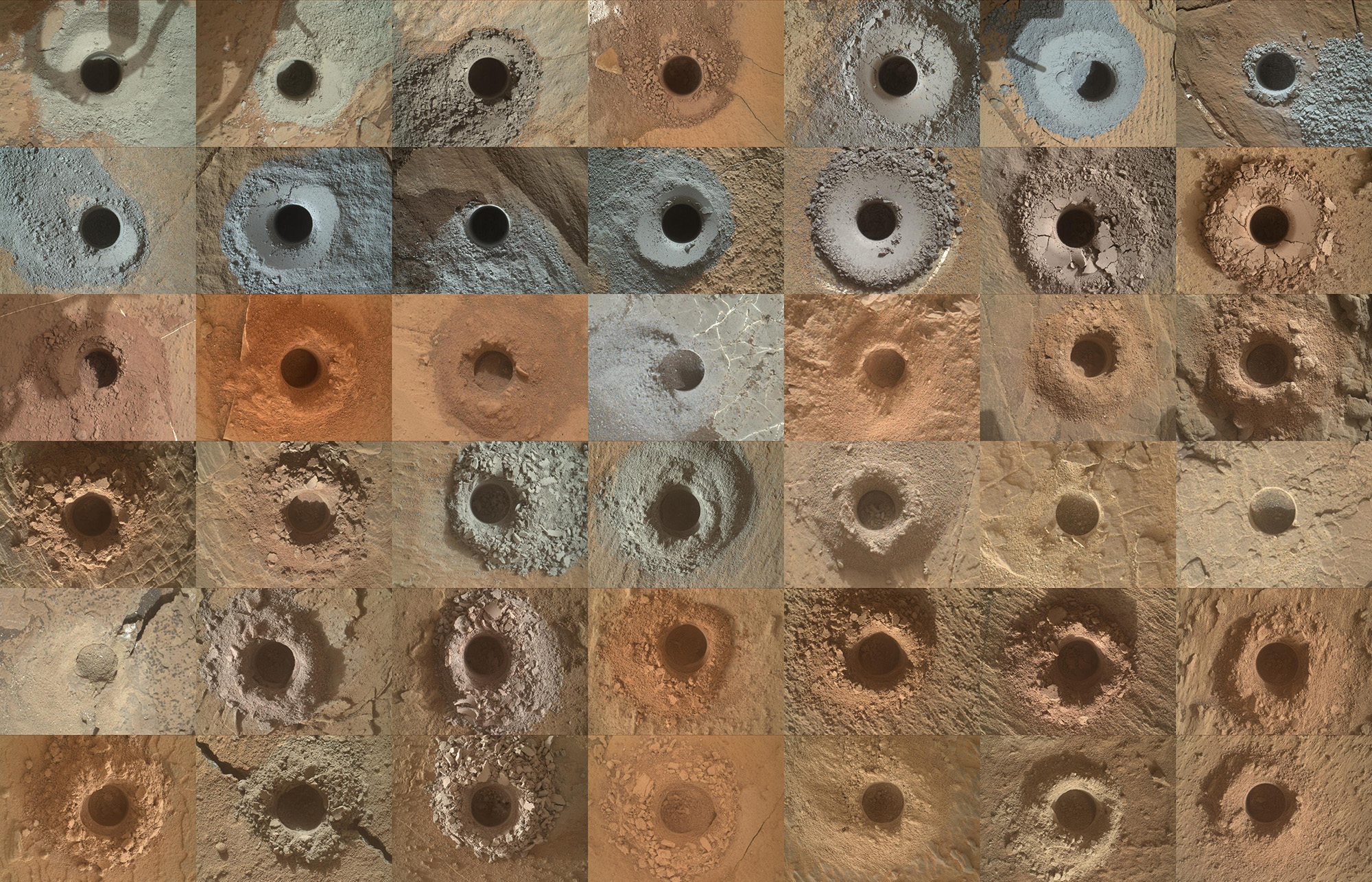
Curiosity has collected and analyzed 42 rock samples using a small drill attached to its robotic arm. The drill pulverizes rock and delivers the sample to the rover’s scientific instruments, which measure its chemical composition.
Each drilling location is carefully selected because Curiosity can perform only a limited number of analyses before its sample cup is used up. Together, the drill sites reveal the remarkable variety of materials found across the Martian surface.
10. Mars’ “Spiderweb” Geological Structures
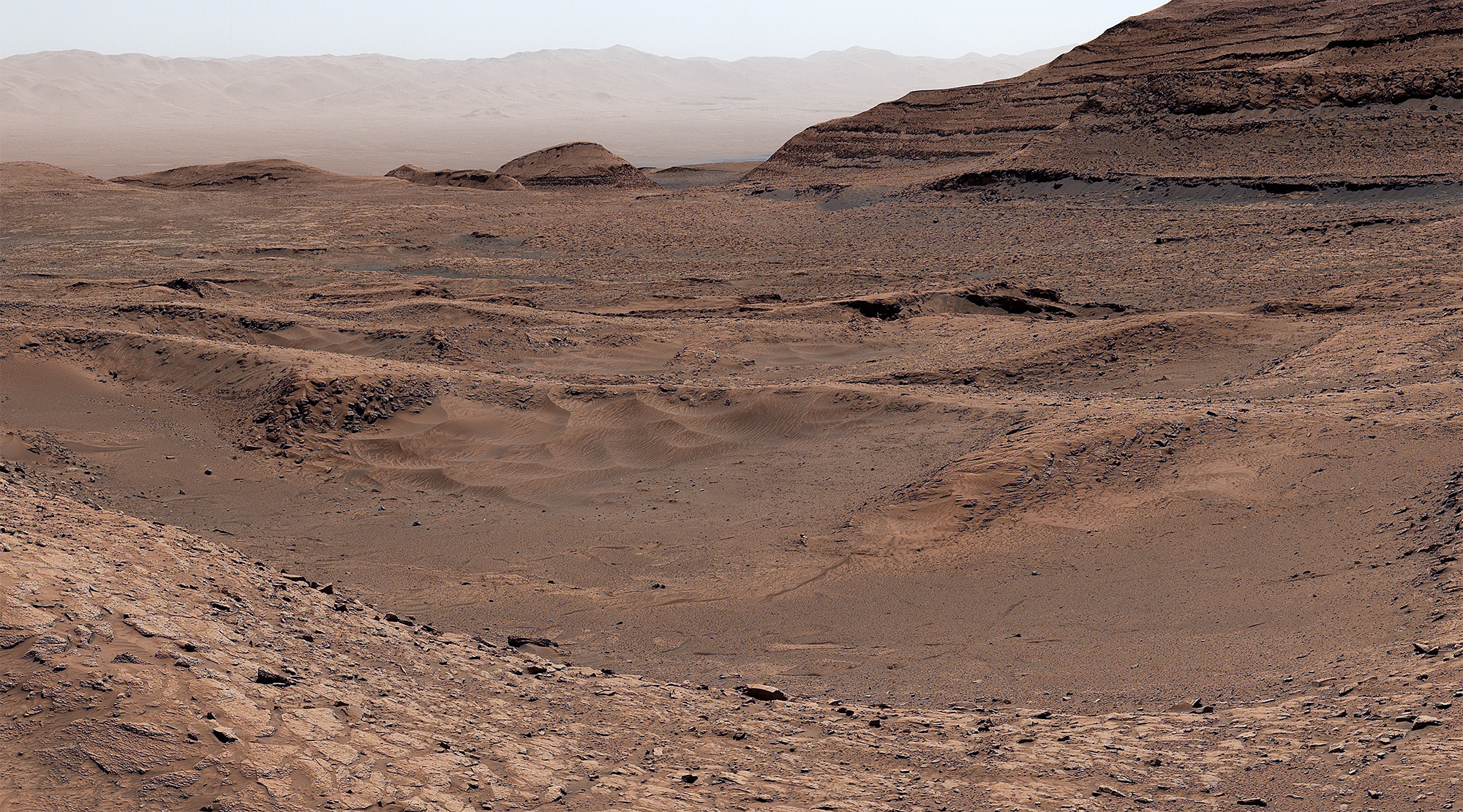
Researchers are studying large geological structures on Mars that resemble stone spiderwebs. Spacecraft had previously observed these formations from orbit, but Curiosity was able to examine them from the ground.
The low ridges and cavities are known as boxwork. They formed when water seeped into cracks in rock, depositing hardened minerals. Billions of years of erosion then removed the surrounding softer rock, leaving the mineralized ridges behind.
Curiosity’s Mission Continues
Curiosity’s journey across Mars is still underway. The rover continues photographing and analyzing the landscape while searching for evidence of the planet’s ancient environment.
Scientists believe Mars once had water and the chemistry needed to support ancient microorganisms. Every image, drill sample and geological discovery helps researchers understand whether the Red Planet was ever habitable—and whether life may once have existed there.
How well do you know the Red Planet? Test your knowledge with our Mars quiz.
Source: www.livescience.com