


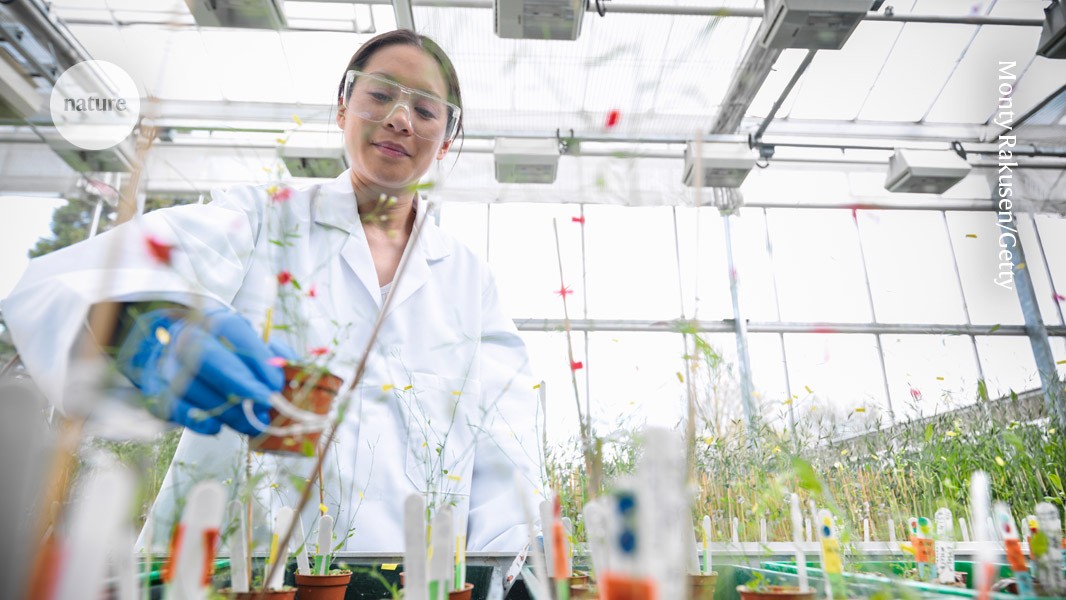
Many academics transition from laboratory research to management roles, creating an opportunity to accelerate the development of the next generation of scientists.
Credit: Monty Luxen/Getty
How Winning Major Research Grants Changed My Job as a Scientist
In April 2021, after six months of intensive writing, revising and reshaping ideas I had developed over several years, I submitted a proposal for my first European Research Council grant. The grant is part of Horizon Europe, a funding scheme focused on researcher-led science.
After another six months of anxious waiting, I was invited to an interview. Because I knew I would be eligible to resubmit if I missed out, I began preparing for failure. After my interview in January 2022, I rewrote the entire proposal for resubmission.
I turned off message notifications, closed my email and stopped checking my phone so that I could concentrate on the proposal. The only time I lost focus was when I received a call from the institute director in March. I had won the grant.
I had thought winning the grant would be the peak of my career. Instead, it marked the beginning of a dramatic change in my work.
From laboratory research to leading a team
The grant provided approximately €2 million (US$2.3 million) over five years, immediately transforming the work of my research group. With this support, we began developing a new generation of living coatings for buildings: fungal-biofilm-based materials designed to self-heal and protect against ultraviolet radiation.
What I did not expect was how quickly my role at the InnoRenew Center of Excellence in Izola, Slovenia, would change. Like many researchers, I had spent years learning how to design experiments, analyse data, write papers and compete for funding. Academic training taught me how to be a scientist. It did not prepare me to lead a growing team, manage people, navigate organizational structures or make decisions affecting the careers of colleagues and friends.

New peer review trial now allows grant applicants to evaluate each other’s proposals
Before receiving the grant, my questions were mainly scientific, such as how to quantify the biorepair capacity of fungal biofilms. They quickly became questions about leadership: where were our skills gaps, and who could fill them?
Hiring researchers is not simply about selecting the strongest candidates. Every appointment shapes a laboratory’s expertise, culture and future direction. Decisions about collaboration, funding allocation and project priorities have similar consequences. They affect not only the science, but also the opportunities available to people within the team.
When research must move beyond academia
Two years later, in 2024, I experienced a second major change when I secured a €3 million Pathfinder grant. The scheme is supported by the European Innovation Council, the European Union’s main institution for funding cutting-edge research. It also provides business-acceleration services aimed at commercializing innovative science and technology.
Our group’s ideas had previously existed mainly as carefully written grant proposals for other academics. Now they had to be assessed not only for their scientific promise, but also for their technical feasibility, scalability, value and relevance beyond academia.
Strategic questions that once felt distant became urgent. Who will use this technology? What problems will it solve? How can it be manufactured? Which partnerships will be needed to bring it to the world?
As the European Research Council project grew, so did the team around it. New researchers joined, and problems emerged that required expertise unavailable at my institution. My group, now made up of 16 scientists, found answers through collaboration with researchers at six institutions in Slovenia, Austria, Slovakia and the Netherlands. Together, we founded a consortium that I now lead.
A different way to do science
Before winning the grant, I spent most days designing experiments, analysing results and writing manuscripts. Progress depended primarily on my own scientific decisions and productivity.
Now, my job as a researcher is very different. The most obvious change is that I spend less time in the laboratory. I used to be immersed in experimental work, but now I may only visit in the morning to make sure that projects are progressing as planned.
The rest of my day can include revising documents and deliverables, preparing project proposals, answering telephone calls, attending meetings, interviewing candidates, writing reports for funding agencies and discussing ongoing work with consortium partners across Europe. I often finish the day approving budgets or meeting with university administrators.
Source: www.nature.com