


How NASA Technology Helps Breweries Capture and Reuse Carbon Dioxide
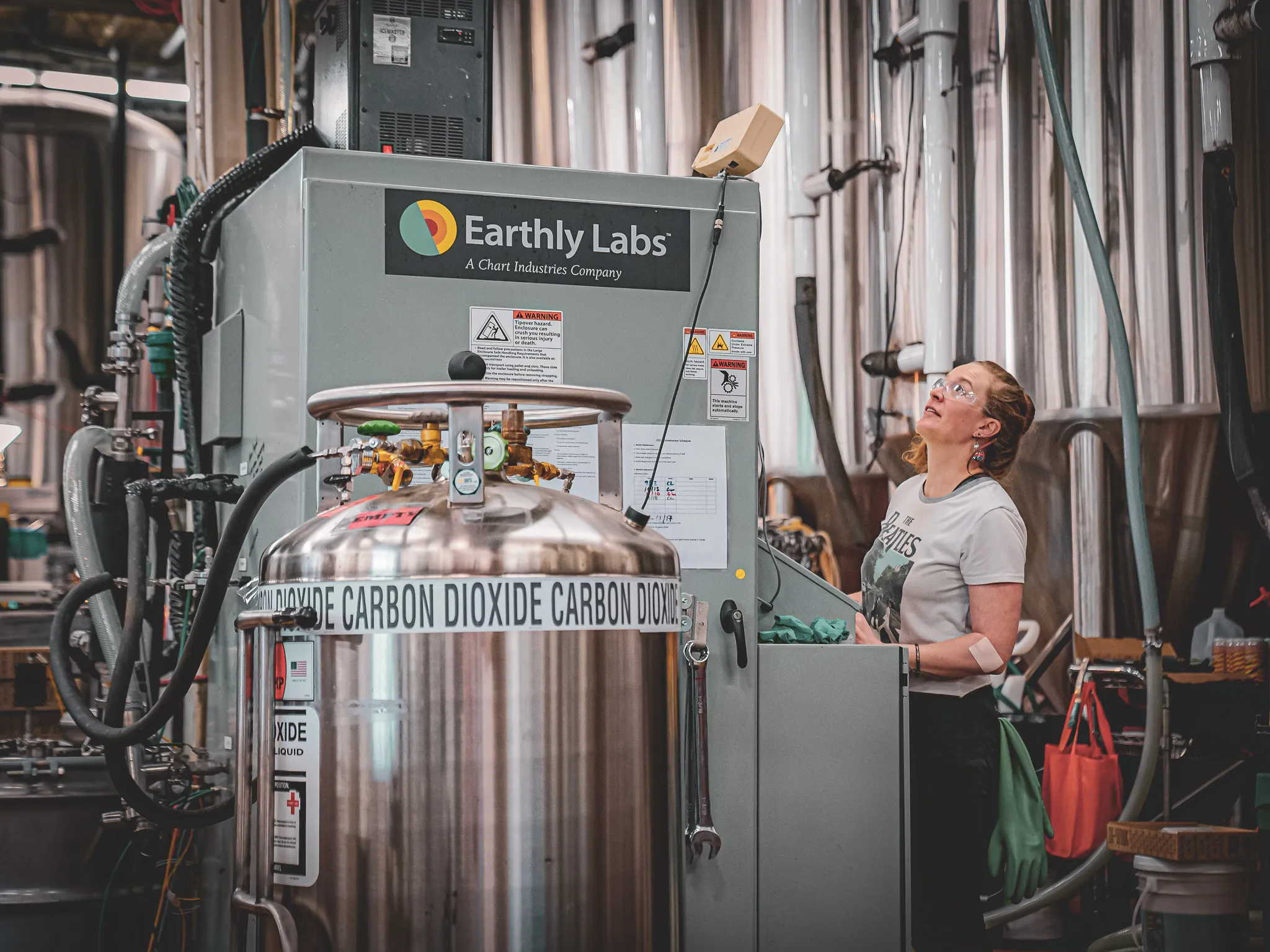
When Maine Beer Company’s carbon dioxide supplier ran out of CO2 in 2021, the brewery faced a serious production risk.
“Our beer could have gone stale in the tank,” said Dave Love, the brewery’s sustainability manager. Carbon dioxide is essential for operations including bottling, kegging and centrifugation.
From Mars exploration to brewery carbon capture
The solution Maine Beer Company adopted has roots in NASA’s plans to extract resources from Mars. Today, the technology helps wineries, distilleries, energy companies, helium producers and other businesses save money while reducing emissions.
In the early 1990s, Pioneer Astronautics won multiple Small Business Innovation Research (SBIR) contracts from NASA’s Johnson Space Center in Houston. The company developed systems designed to generate resources on Mars, including technologies that could capture carbon dioxide from the Martian atmosphere and combine it with hydrogen to produce water for life support or methane for rocket fuel.
Although similar capabilities already existed, Pioneer Astronautics’ system was compact, efficient and automated.
NASA technology becomes an industrial solution
Pioneer Astronautics founder Robert Zubrin later founded Pioneer Energy and reorganized the subsystems for use in the oil and gas industry. The technology is described in NASA’s 2015 and 2020 Spinoff reports.
Zubrin soon realized that the system used to capture and refine carbon dioxide on Mars could also be adapted for breweries. Breweries could recover the CO2 produced during fermentation and reuse it for carbonation and other production processes.
By 2015, the craft brewery recovery system was operational, as documented in NASA’s 2016 Spinoff report. The company ultimately licensed the technology.
Earthly Labs expands brewery CO2 recovery
Amy George founded Earthly Labs in Austin, Texas, in 2016 to develop small-scale carbon capture technology. She discovered and exclusively licensed the Craft Brewery Recovery System.
George said the continuing scarcity and instability of carbon dioxide became a major driver of interest in the technology after the pandemic reduced its availability.
Carbon recovery is not limited to breweries. After expanding into wineries and distilleries, Earthly Labs began exploring additional markets. Energy companies often produce carbon dioxide as a byproduct, and capturing it can create a product that they can sell. Some energy companies are now customers.
Carbon capture for helium production
Helium production is another growing application. Helium is used to manufacture products such as microchips and fiber-optic cables. However, underground helium deposits are often mixed with gases including methane and carbon dioxide, which must be separated.
Scaling the technology for larger facilities
In 2021, Chart Industries Inc. acquired Earthly Labs. Chart specializes in cryogenic equipment engineering and has helped scale the carbon-capture technology for applications including power plants.
What began as a NASA-backed effort to use Martian resources has evolved into a practical way for industries on Earth to recover, reuse and sell carbon dioxide.
Source: www.nasa.gov