


More Than 1,000 Hidden Microproteins Identified in the Alzheimer’s Disease Brain
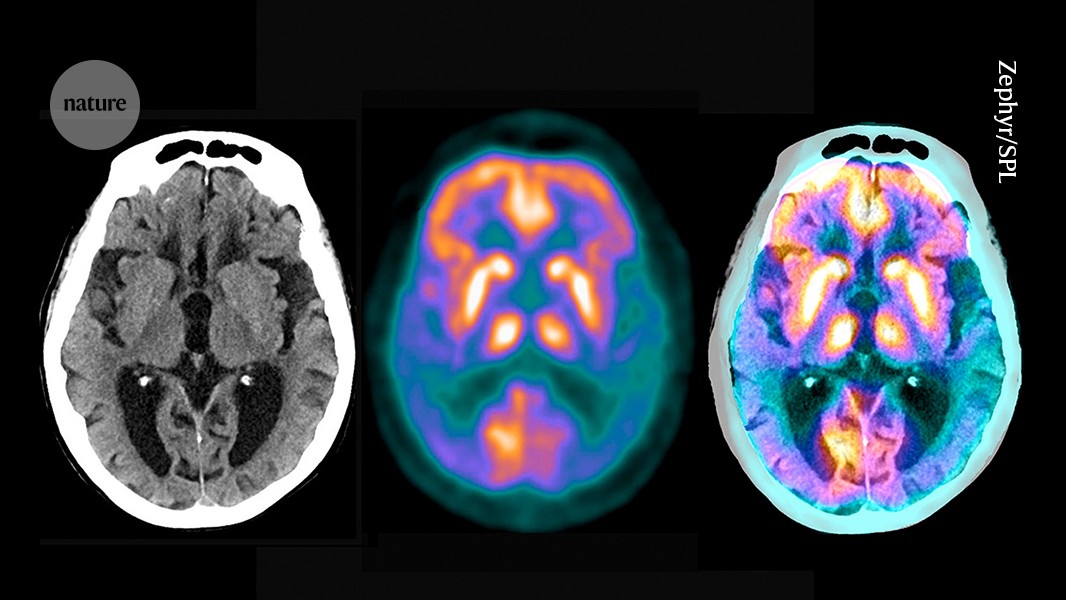
Mapping tiny proteins in the brain could help researchers understand and treat Alzheimer’s disease.
Credit: Zephyr/SPL
Researchers have discovered more than 1,000 previously overlooked microproteins in human brain tissue, creating the most comprehensive database yet of these hidden molecules in the brain. Dozens of the small proteins showed altered expression in people with Alzheimer’s disease, potentially revealing new mechanisms involved in aging and neurodegeneration.
Microproteins contain fewer than 150 amino acids and are notoriously difficult to detect with standard gene- and protein-sequencing techniques. In a study published in Nature Aging on September 141, researchers combined several methods to identify microproteins in postmortem samples from the dorsolateral prefrontal cortex, a brain region involved in cognitive control. The samples came from people with and without Alzheimer’s disease.
The team identified 4,321 microproteins, making the work the largest atlas of Alzheimer’s disease-associated microproteins created to date.
“By overlooking these tiny proteins, we may actually be missing an entire layer of biology,” says Bahareh Ajami, a neuroimmunologist at Cedars-Sinai Medical Center in Los Angeles, California.
“Alzheimer’s disease is a protein disease,” says study co-author Brendan Miller, a neuroscientist at the Salk Institute for Biological Studies in San Diego, California. “Part of this pathology is due to proteins misfolding or accumulating and causing toxic responses.” He adds that there should be “some urgency to understanding the complete proteome, including microproteins.”
Why microproteins are difficult to detect
Microproteins are sometimes called the “dark matter of the genome,” Miller says. Because they are so short, standard mass spectrometry methods used to determine a cell’s protein content can fail to detect them.
Some microproteins are produced by regions of the genome that were previously considered noncoding and unable to produce proteins. Others come from coding genes that also produce known, larger proteins. These characteristics make microproteins difficult to identify using traditional RNA sequencing alone.

‘Dark proteins’ hidden in our cells may hold clues to cancer and other diseases
Combining mass spectrometry, RNA sequencing and ribosome profiling
To overcome these challenges, Miller and his colleagues combined mass spectrometry, RNA sequencing and ribosome profiling. Ribosome profiling captures the ribosomes in each cell—the molecular machinery that builds proteins from RNA—and sequences the messenger RNA strands attached to them.
Using this approach, the researchers analyzed 608 postmortem brain samples from people with and without Alzheimer’s disease. They identified 4,321 microproteins, including 3,217 that had not previously been characterized in UniProtKB/Swiss-Prot, the standard catalog of human proteins.
The researchers then used a deep-learning model to analyze 3,001 of the microproteins. The model ranked them according to how confidently they had been identified using mass spectrometry data and classified 1,067 as high-confidence detections.
A public atlas for future Alzheimer’s research
The atlas does not establish the biological functions of these microproteins, Miller and his colleagues note. However, the team has made the microprotein dataset publicly available so that other researchers can investigate the sequences and design experiments to test their roles.
“Different labs can come in and download all of our sequences” and design experiments to study them, Miller says. The dataset is available online.
Source: www.nature.com