



Two scientists at the Rocky Mountain Research Institute in Hamilton, Montana, have been charged with bringing biological materials into the U.S. unlawfully.
Credit: PBH Images/Alamy
Two prominent virologists from the National Institutes of Health (NIH) are facing legal issues due to smuggling charges related to biological samples, specifically concerning the non-infectious monkeypox virus (MPXV).
The charges focus on samples handled by NIH researchers Vincent Munster and Claude Kwe upon their arrival in Detroit, Michigan, after conducting research in the Republic of Congo. The U.S. Federal Bureau of Investigation reported that the samples, tested as of May 29th, contained MPXV DNA, according to a criminal complaint, although none were infectious. While these samples do not require an import permit, they must be declared to federal authorities.
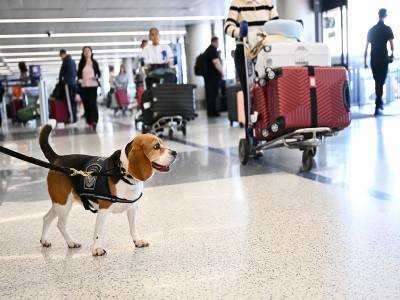
Arrest of scientists over smuggled samples heightens fears at the U.S. border
Munster and Kwe allegedly failed to declare these samples and misled authorities regarding their nature, according to the complaint from the U.S. Department of Justice. Both scientists have pleaded not guilty. Federal District Attorney Benton Martin, representing Mr. Kwe during his initial hearing last month, stated that his client is “presumed innocent and will await further proceedings.” Mr. Munster’s lawyer is scheduled for a hearing on July 22 but has not responded to comment requests.
This incident is one of several cases where researchers have been charged with smuggling biological samples, resulting in increased scrutiny of the NIH’s Rocky Mountain Laboratory (RML) in Hamilton, Montana, as well as its importation procedures for pathogens. RML opted not to comment, and a spokesperson for the Department of Health and Human Services, which manages NIH operations, declined to provide further details due to the ongoing investigation.
In response to this situation, lawmakers are calling for a thorough investigation into the NIH. Recently bills were introduced to impose heavy penalties for the smuggling of biological agents. “Illegally introducing a hazardous virus into our country poses serious health risks for all Americans,” stated Senator Tom Cotton, R-Arkansas.

Monkeypox virus (artificially colored green) causes a disease known as mpox.
Credit: NIAID/National Institutes of Health/Scientific Photo Library
Defending the researchers, some scientists argue that their actions posed no true danger. Angela Rasmussen, a virologist at the University of Saskatchewan, explained that strong chemicals can inactivate the virus. “You wouldn’t be at risk if you consume it,” she noted in a blog post.
Other researchers share the sentiment, acknowledging the logistical challenges of moving samples, yet emphasized the importance of adhering to regulations. “The virology community does not tolerate shortcuts,” remarked Melanie Ott, a virologist and director at the Gladstone Institute in San Francisco.
Virus Tracker
Munster, director of the Division of Viral Ecology at the National Institute of Allergy and Infectious Diseases (NIAID), is a renowned figure in virology, having tracked viruses like Ebola for decades.1 Recently, a new MPXV strain has emerged.2 Notably, in 2020, Munster along with RML virologist Emmy de Wit was awarded the Golden Goose Award for their pivotal study on coronaviruses in camels,3 which ultimately contributed to antiviral research for COVID-19.
In January, Munster and Kwe spent nine days conducting research in Congo. Upon their attempt to re-enter the U.S., Munster “categorically denied possessing any biological material,” asserting they were only carrying diagnostic supplies. The federal complaint highlights that while inactivated MPXV is classified as biological material for import laws, such samples are typically utilized for diagnostic purposes.
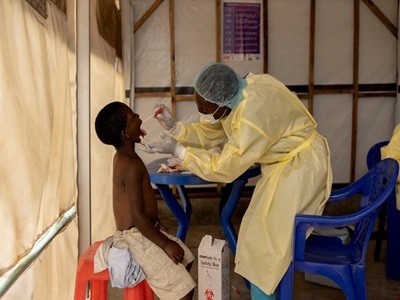
WHO declares global health emergency due to the mpox outbreak
The FBI complaint confirms that the package in question contained “inactivated monkeypox virus.” It also asserts that “Munster and Kwe did not disclose the biological materials in their possession and lacked the essential certifications.” Instead, they purported that the samples were simply diagnostics. Inactivated virus samples require a certificate of inactivation, and Munster was responsible for developing the protocol to accomplish this.4 Munster allegedly informed border control that the necessary documents were on his laptop, although the complaint does not clarify if this claim was valid.
Email Cache
On June 5, Republican Senator Rand Paul of Kentucky stated: published numerous pages of emails detailing discussions between Munster and other scientists regarding the management of biological samples. Senator Paul has been vocal in his criticisms of former NIAID Director Anthony Fauci and other virologists, asserting that these communications illustrate a pattern of violations by Munster. An email from 2011 suggested that Munster may have “hand-carried” virus samples on commercial flights, although it did not confirm any such actions.
Jean-Paul Gonzalez, a virologist and biosecurity expert at Georgetown University, remarked that even collecting inactivated samples on commercial airplanes is risky. “We did it 20 years ago. I wouldn’t do that again,” he stated.
Source: www.nature.com