


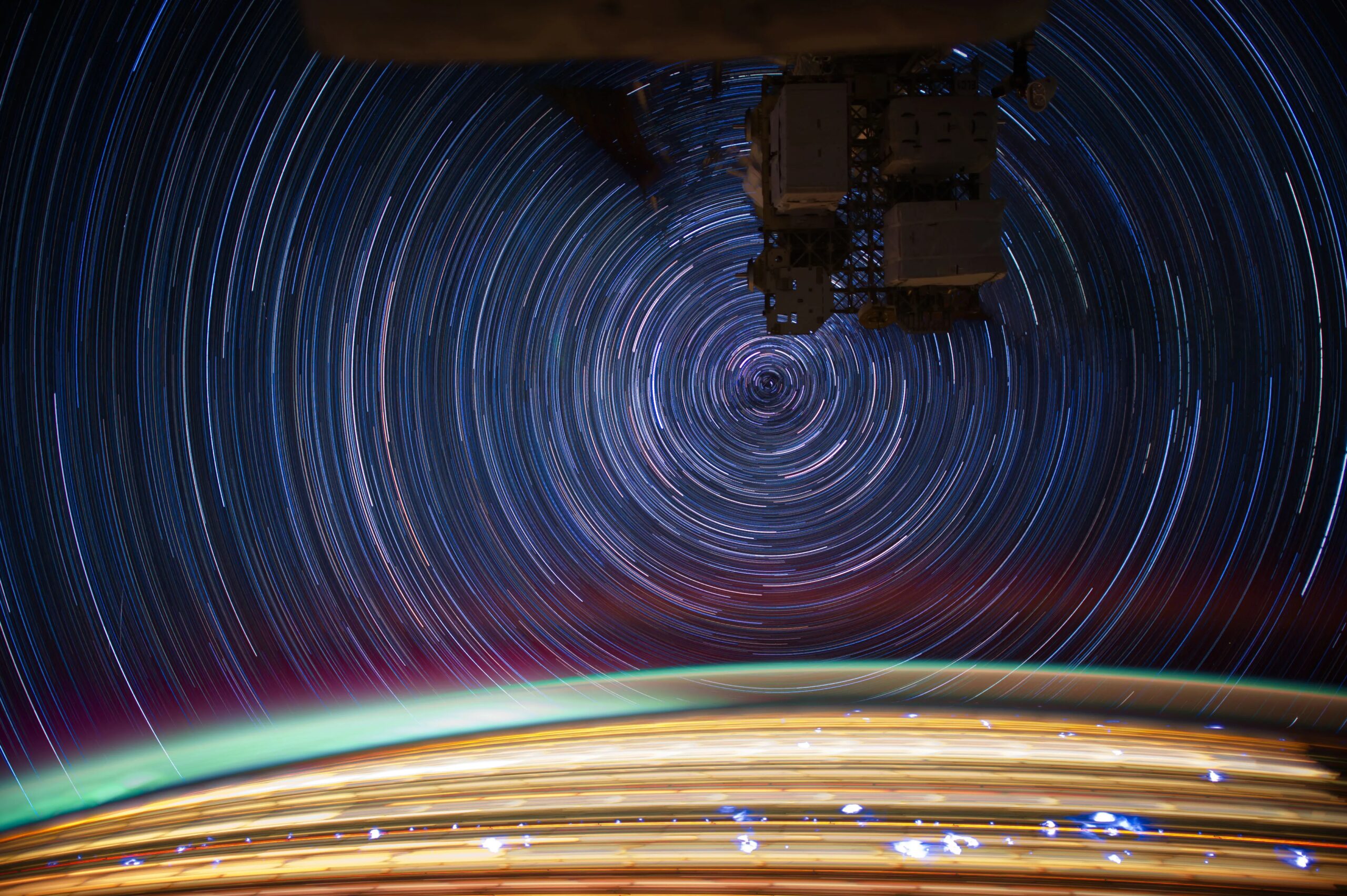
NSTGRO Homepage: Space Technology Research Projects
Explore NSTGRO researchers and their projects in spacecraft systems, lunar exploration, autonomous robotics, space propulsion, thermal management, navigation, communications and off-world resource utilization.
NSTGRO Researchers and Project Titles
- Omar Alyosev
University of Memphis
Origami-inspired polycatenate structural material (PAM) for space docking ports - Cade Armstrong
University of Texas at Austin
Intelligent multi-agent constellations for cooperative star operations - Laurel Burnett
Harvard University
Photonic SNSPD readout and feedforward system improves optical communication capabilities - Katie Barkak
William Marsh Rice University
Compact magnetic heat switch for thermal management on long-duration, low-power exploration missions - Austin Bodine
University of Colorado Boulder
Fast and robust trajectory design with motion funnels for multibody systems - William Bodner
North Carolina State University
Near-field thermal solar power generation for extraterrestrial surface power generation - Diana Bolanos
University of California, Berkeley
Origami-inspired lattice architecture for robotic assembly and reconfiguration of modular spatial structures - Annalize Cabra
University of Colorado Boulder
Development of RF hydrogen plasma for ion-assisted metal processing of lunar regolith - William Callahan Eshlman
University of Illinois at Urbana-Champaign
Plume-surface interaction experiments for physics-based ejecta modeling - Alexander Chin
University of Washington
Adaptive wire bend compliant installation aid for small satellite docking and ISAM applications - Eric Comstock
Georgia Tech
Vlasov simulation method for air-breathing electric propulsion - Rachel Constantine
University of Tennessee
High-speed tomography background-oriented Schlieren for supersonic retropropulsion characterization - Andrew Dean
University of Central Florida
Determining the power and mass of a scalable molten salt-powered lunar outpost - Lars Eriksson
University of Minnesota
Built-in standard form algorithms for low-cost lunar sphere navigation - Elsa Forburger
University of Southern California
Capability-aware planning and control of multi-robot teams for resilient lunar cargo transportation - Abigail Glover
Colorado School of Mines
Standardization of regolith terramechanical properties through multimodal characterization for rover risk-aware navigation - Emily Gokey
University of Colorado Boulder
Low SWaP timing system for distributed orbital and planetary surface platforms - Elan Graup
University of Minnesota
Model-driven navigation for robust spacecraft atmospheric entry and descent - Nicky Hart
William Marsh Rice University
Lifetime planning adaptation of robot operation starting from an example - Elizabeth Hoover
Georgia Tech
High-precision landing using visual-inertial odometry - Theodore Hauser
University of Chicago
ECLiPSe: Electrochemical liquid propellant synthesis - Hannah Hutton
University of Michigan
RESIST: Structural improvement of space materials using radiation - Joseph Fan
Purdue University
Experimental and computational study of spray cooling for propellant tank thermal management - John Rance
North Carolina State University
Predicting RDRE heat loads and performance with accurate explosion modeling - Madison Lynn
University of Colorado Boulder
Detection and replanning of autonomous orbit anomalies in solar system space - Breno Macareñas Pontes
University of Colorado Boulder
Development of a compact, wide-field X-ray navigation sensor for simultaneous tracking of multiple pulsars - Emilia Mann
William Marsh Rice University
Advanced 3D knit autonomous reconfigurable soft robot for sustainable planetary surface logistics - Alanis Matias Perez
Colorado School of Mines
Relationship between thermophysical properties and electrochemical behavior in molten regolith electrolysis - Conor McReary
Yale University
Ultrafast high-temperature sintering of mechanically robust and spectrally selective coatings for cryogenic propellant storage - Eleni Morley
University of Michigan
Multiphysics simulation of steam reactor reactors using MHD power conversion - Dillon Mulroney
University of Illinois at Urbana-Champaign
Internal pressure of pyrolytic ablator for atmospheric entry - Robert Muldrow
University of Florida
Enabling autonomous SmallSat robot docking via new electrical and data interfaces - Ari Nadelson
University of Illinois at Urbana-Champaign
Solid state battery and electrolyte design for low temperature applications - Carl Pederson
University of Minnesota
Lightweight metamaterial smart windows for human space exploration - Abby Piatt Price
Columbia University
Process enhancement of H2 recycling and in-situ resource production using protic solid oxide electrochemical cells - Rithvik Ramesh
California Institute of Technology
Integrated optoelectronic mode-locked laser for space applications - Alexander Roush
Colorado School of Mines
Adaptive autonomy of lunar regolith construction with graph-based planning and physics-based surrogate modeling - Samuel Russell
Johns Hopkins University
Particle concentration and surface topography during plume-surface interactions - Jamie Santos
Oregon State University
Dynamic multi-objective prioritization for autonomous robot teams on the Moon and Mars - Liam Smego
Georgia Tech
Differential geometry approach to autonomous navigation - Truman Stoller
University of Nebraska-Lincoln
Proposing an advanced heat pipe, an innovative pumpless flow boiling device - Tetiana Tymoszewska
University of Michigan
Droplet radiator realized by electrospray array - James Wall
Massachusetts Institute of Technology
New model of cavitation in rocket engine turbo pump inducer - Adam Jen
Texas A&M University
Thermal structural coupling design of self-deployable reflectors for solar energy distribution to lunar assets - Albert Zhou
California Institute of Technology
A low-order model based on the master equation for nonequilibrium thermochemistry of the air during planetary entry - Eleanor Zimmerman
Michigan Technological University
Radiation Passive Processing Technology for Offworld Resource Separation (RaPPTORS)
Source: www.nasa.gov