


Drug-Resistant Tuberculosis Threatens a Faster, Cheaper Treatment
Bedaquiline-based treatment has improved care for drug-resistant tuberculosis, but growing resistance could force patients back to longer, more complex regimens.
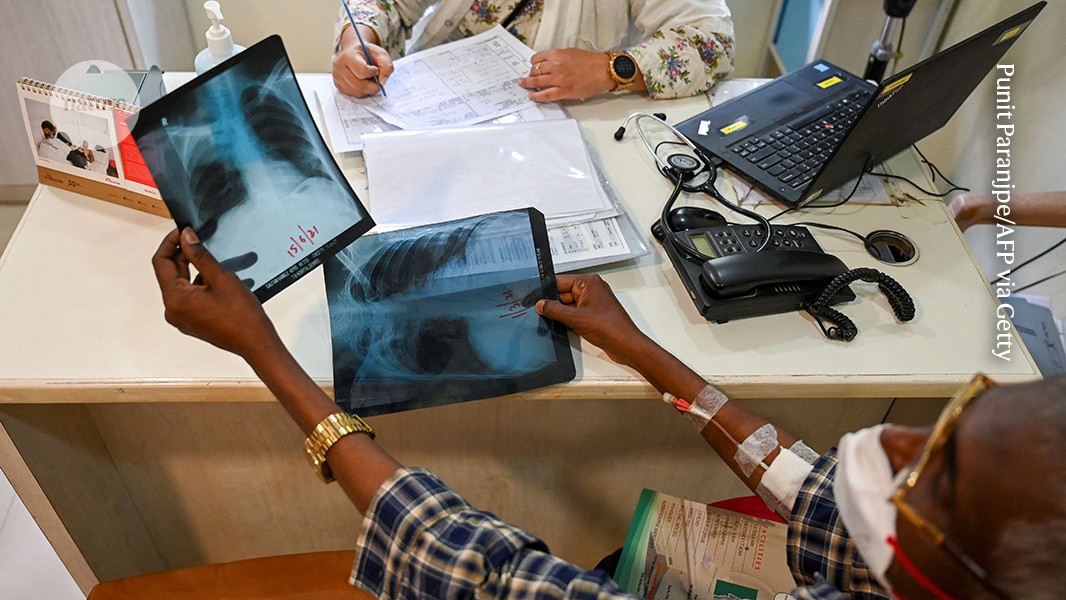
Many people in India are suffering from drug-resistant tuberculosis.
Credit: Punit Paranjpe/AFP via Getty
A six-month TB treatment is already under threat
In 2022, the World Health Organization changed its recommended tuberculosis treatment. The report advised using antibiotic tablets containing bedaquiline for six months.
This regimen is more effective, cheaper and faster than older treatments, which required injections of drugs for up to 20 months and could cause side effects such as hearing loss.
But drug resistance has already been observed. The world risks reverting to longer, more complex and expensive tuberculosis treatments. Researchers still have limited understanding of how and why this resistance develops.
Tuberculosis remains the world’s leading infectious disease killer, with 1.23 million deaths expected in 2024. When the bacteria that cause TB are exposed to new drugs, they can rapidly evolve to evade them. Every newly introduced drug starts the clock ticking in the race to keep pace with drug-resistant strains and understand how resistance emerges.
TB research must protect existing medicines
Researchers need to view antimicrobial research and development not only as a pipeline for new drugs, but also as a way to preserve existing treatments before resistant bacteria render them useless.
Even drug regimens that show promising results in clinical trials or are highly effective at the population level can fail if researchers do not understand which drug combinations, bacterial genetic changes and treatment conditions enable resistance to emerge.
Science must show us how to use drugs more effectively, how resistant bacteria emerge or have already emerged, who faces the greatest risk and how quickly policies need to change to prevent the spread of further resistance. This evidence must be generated as part of the innovation process, not afterward.
For new TB drugs to have a lasting impact, research and development must include surveillance, genomics, diagnostics, clinical evidence on patient outcomes and implementation studies alongside drug discovery. Research into how existing medicines are used, monitored, optimized and stored deserves as much support as drug development.
Better surveillance and genome sequencing are essential
It is difficult to fully quantify the prevalence of drug-resistant tuberculosis, including resistance to bedaquiline-based regimens, because surveillance and drug-susceptibility data remain limited. Without these data, researchers cannot easily identify trends and patterns in drug resistance.
Genome sequencing is another important tool for understanding how resistance develops. As treatments advance, researchers need to keep pace by studying how a bacterium’s genetic makeup affects its response to specific drugs and what that means for patient outcomes. This technology also needs to be available and accessible in countries with a high disease burden.
Treating tuberculosis can be a stab in the dark: clinicians may try several drug combinations and wait to see whether they work for an individual patient. This can allow resistance to spread undetected before clinicians realize that treatment is ineffective.
If researchers can identify resistance early and determine which drug combinations are most effective against human infections, clinicians can stop using medicines that bacteria can already evade.
Source: www.nature.com