


Anthropocene Debate Reignites Over 2024 Geological Epoch Vote
Two years later, researchers are revisiting a contentious debate over whether Earth has officially entered a geological epoch defined by human influence: the Anthropocene.
In 2024, the International Union of Geological Sciences (IUGS) upheld a decision to reject a proposal to establish the current era of human-driven planetary change as a new epoch in the geological record. Some scholars now say unpublished documents show that the rejection was unjustified and that the reasoning behind the decision was not adequately explained.
Abolishing the ‘Anthropocene’: Why ecologists say the term still matters
“This was a very historic decision,” says Jürgen Wren, a historian of science at the Max Planck Institute for Geoanthropology in Jena, Germany. “It should be clear to the world. It should be transparent,” Wren, a co-author of the paper, said in the future of the earth1, which lays out the accusations.
Wren and his co-authors are calling on the IUGS to release important documents related to the vote. They also want an independent review of the process to maintain “public confidence in our ability to understand and respond to global change.”
Researchers involved in the vote, however, insist that the process was fair. Adele Bertini, a geologist at the University of Florence in Italy who co-chaired the voting subcommittee, said she was open to scrutinizing the documents if doing so would help confirm the legacy of the “amazing science” behind the proposal. She also co-authored a comment in Nature Reviews Earth & Environment that provided a technical explanation for rejecting the proposal.2
An intense debate over the Anthropocene
Wren and his co-authors’ claims are the latest development in a heated debate among geologists over whether the Anthropocene should be formally recognized in the stratigraphic record. Earth is currently in the Holocene, which began at the end of the last Ice Age around 11,700 years ago. In 2009, a team of researchers known as the Anthropocene Working Group began gathering evidence that human industrialization marked the beginning of a new geological epoch.

The end: despite protests over voting, the Anthropocene is not the era
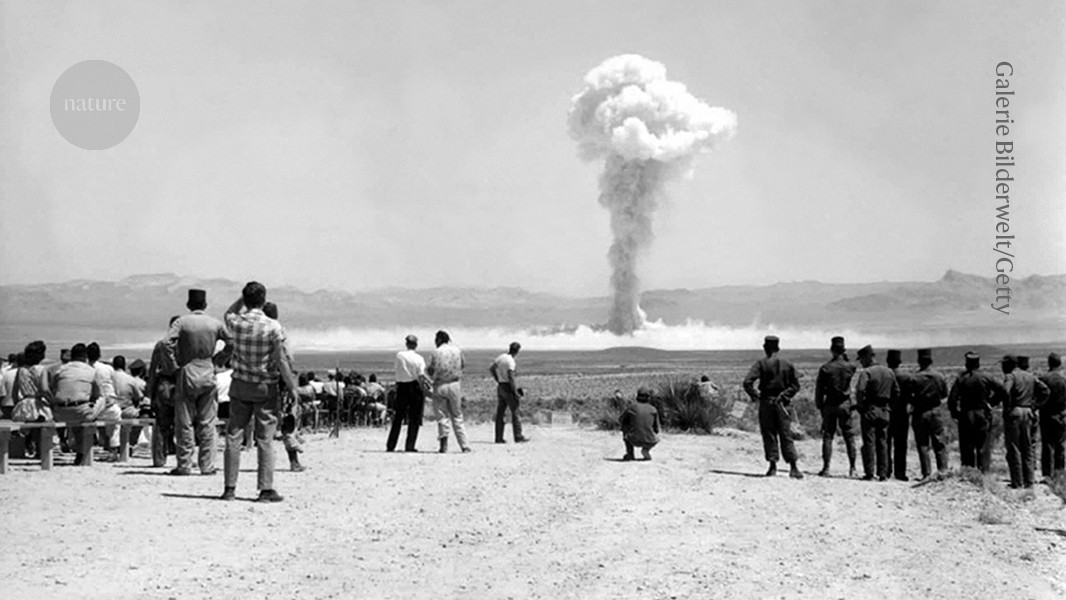
The effort culminated in a proposal to establish that the Anthropocene began in 1952, when a layer of plutonium from nuclear weapons testing appeared in Earth’s strata. This physical marker coincided with other major human-induced changes, including sharp increases in atmospheric carbon dioxide and methane concentrations. Another paper published last month in Nature Reviews Earth & Environment detailed the evidence collected to support this view.3
“The case for the Anthropocene remains strong,” says geologist Jan Zalasiewicz of the University of Leicester, UK, who led much of the working group’s efforts and co-authored the review.
The proposal was put to a vote in 2024 by a subcommittee of stratigraphers, but it was rejected by 12 votes to 4, with two members abstaining. “I was born in 1949, and I don’t remember seeing any geological boundaries in that time,” says Phil Gibbard, a geologist at the University of Cambridge who voted against the proposal.
Since then, Gibbard and others have argued for a more flexible definition, describing the Anthropocene as an “event” rather than an epoch. Geological events include significant episodes of planetary change, such as the Great Oxidation Event, when Earth’s atmosphere first became rich in oxygen.
Geoethical issues in the Anthropocene debate
Source: www.nature.com