


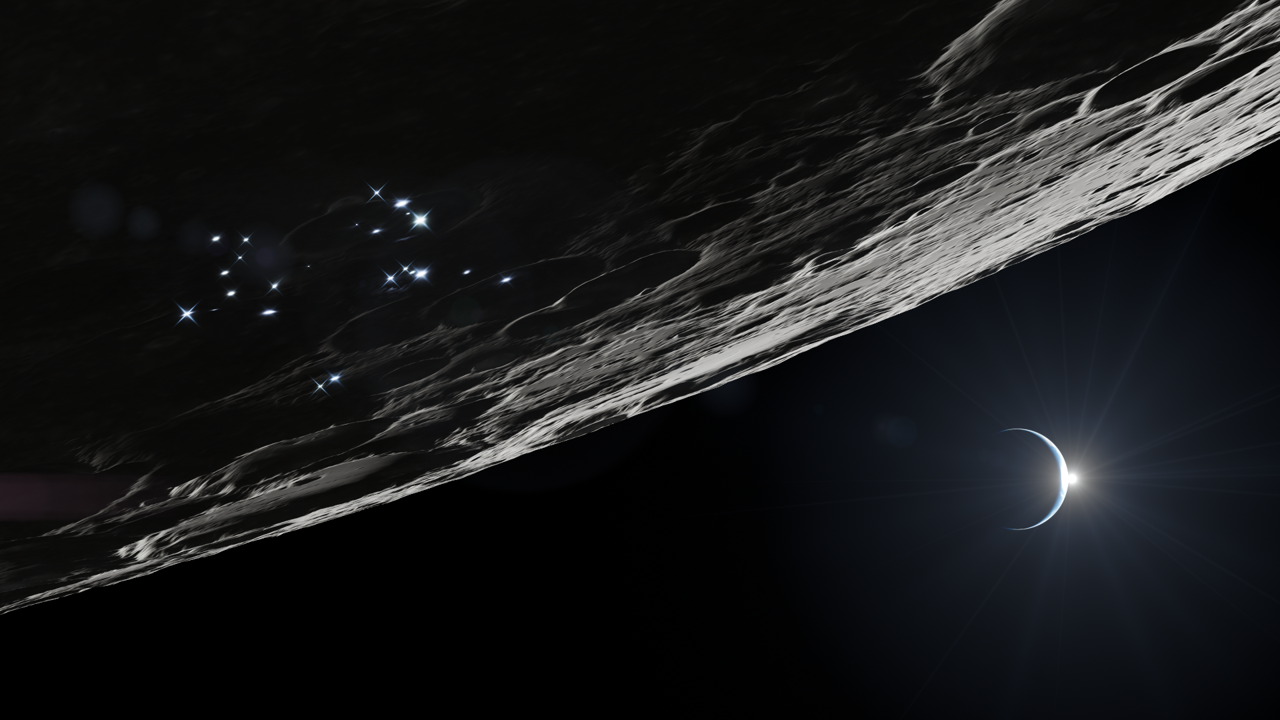
NASA Lunar Grounding Challenge Seeks Solutions to Prevent Space Suit Electrostatic Discharge
NASA is seeking innovative ways to protect astronauts from dangerous electrostatic discharge when they return to a lunar lander after working near the Moon’s south pole.
Why Lunar Space Suits Can Become Electrically Charged
When astronauts walk across the lunar surface, their space suits can develop an electric charge through frictional charging and interaction with the surrounding plasma. The risk becomes greater when astronauts enter the Moon’s shadow or a permanently shadowed region (PSR).
In these dark areas, a space suit can build up a significant negative electrical potential. This occurs because there is less surrounding ion flux and no photoelectron emission to balance the collection of electrons by the suit.
The Risk of Electrostatic Discharge at the Lander
The danger arises when astronauts return to the spacecraft. Because the lunar surface lacks natural environmental mechanisms to release the stored charge, astronauts could effectively become walking, high-voltage capacitors.
In sunlit areas, the geostationary lander maintains a slightly positive electrical potential. If a highly negatively charged astronaut approaches the spacecraft, the extreme voltage difference at physical contact could trigger an electrostatic discharge (ESD)—a momentary electric arc, or spark.
A rapid electrical discharge from an astronaut to the lander could degrade critical suit layers, damage sensitive suit electronics, threaten the oxygen-rich environment inside the suit and expose the crew to a dangerous electric shock.
NASA’s Lunar Grounding Challenge
Through the Lunar Grounding Challenge, NASA is exploring design and operational solutions that could bring the Moon environment and astronauts to electrical equilibrium. The goal is to safely discharge astronauts before they interact directly with the lander after lunar extravehicular activities near the south pole.
The challenge focuses on electrostatic discharge mitigation concepts that can safely and promptly reduce the extreme charge differential before astronauts reach the spacecraft.
Challenge Details
- Award: Prizes up to $150,000
- Challenge opening date: October 5, 2026
- Submission deadline: January 15, 2027
Source: www.nasa.gov