


Giant Fossil Turtle Reached Nearly 85 Centimeters in Length in the Miocene Amazon
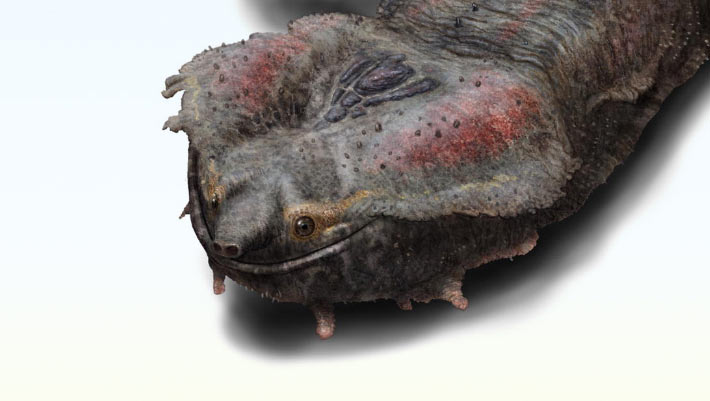
Newly discovered fossil shells from the Peruvian Amazon suggest that Chelus colombiana, a freshwater turtle that lived approximately 10 to 15 million years ago, grew to gigantic sizes.
A giant relative of the modern matamata turtle
First described in 1976, Chelus colombiana belonged to the genus Chelus, a group of freshwater turtles in the family Chelidae.
Modern members of this genus inhabit slow-flowing rivers, swamps, and other aquatic environments in northern South America. Its best-known living member is the matamata turtle (Chelus fimbriata), which is recognized by its flat, rough, highly camouflaged shell and unusual, knobby head and neck.
These turtles are highly adapted to aquatic life. They can ambush prey by rapidly expanding their throats, creating suction that draws water and prey into their mouths.
“The family Chelidae is the most diverse group of extant pleurodiran, or side-necked, turtles, containing at least 60 species,” said researcher Edwin Alberto Cadena, Ph.D., of the University of Rosario, the Smithsonian Tropical Research Institute, and the Field Museum of Natural History, along with his colleagues.
Members of the family are distributed across Australia, New Guinea, Indonesia, and South America.
The largest living member of the genus is the matamata turtle, Chelus fimbriata. Females are generally larger than males and can reach a straight carapace length of up to 52.6 centimeters (1.7 feet), although the average carapace length of an adult female is approximately 29.5 centimeters (1 foot).
Fossil shells reveal the turtle’s enormous size
For the new study, Dr. Cadena and his co-authors examined two fossil shells attributed to Chelus colombiana.
The larger specimen, cataloged as MUSM-920, measures 84.6 centimeters (2.8 feet) along its longest side. Researchers estimate that the animal weighed approximately 65 kilograms (143 pounds).
MUSM-920 was discovered in 2005 along the edge of the Inuya River in the Fitzcarraldo Arch region of Peru. The second specimen, MUSM-5003, was found in 2010 in a lignite deposit near Iquitos in northern Peru.
Both specimens are held at the Natural History Museum of the National University of San Marcos in Lima.
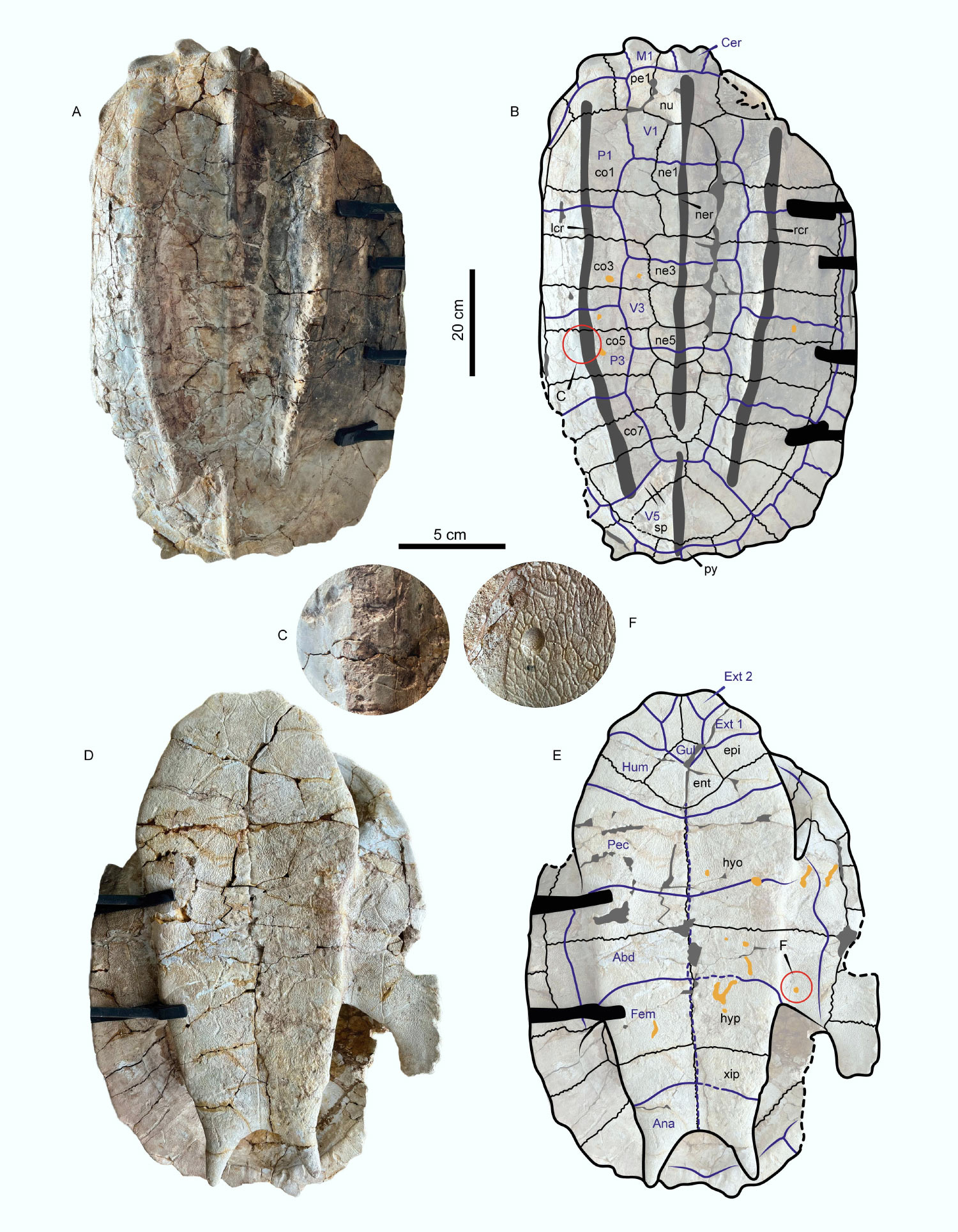
MUSM-920, a mid-Miocene specimen of Chelus colombiana from Fitzcarraldo Arch, Peru. Image credit: Cadena et al., doi: 10.1016/j.palwor.2026.201135.
“The MUSM-920 specimen is the largest fully preserved shell of this genus and species ever recorded,” the scientists said.
Its size is comparable to a partially preserved specimen from Brazil that was estimated to have reached approximately 90 centimeters (3 feet) in length. Based on the scale provided in the original study, that specimen had an estimated total length of 77.4 centimeters (2.5 feet).
“Together, these specimens make this the largest known turtle on record,” the researchers said.
Miocene wetlands supported giant turtles
The discovery expands the known range of Chelus colombiana, which had previously been recorded in Colombia and Brazil. The Peruvian fossils were found along the southwestern edge of the Pebas system, a vast network of lakes, marshes, and rivers that dominated the western Amazon during the Miocene.
The fossils also contribute to a broader pattern of Miocene turtle gigantism in northern South America. The researchers suggest that the turtles’ large size may have been linked to the scale and connectivity of the region’s wetland systems rather than to climate alone.
“Fossil localities in Venezuela, Colombia, Brazil, and newly identified fossil localities in Peru continue to hold great potential for complete skeletons that may finally resolve taxonomic disputes over the fossil record of Chelus,” the authors said.
The findings were published in the October 2026 issue of the journal Palaeoworld.
_____
Edwin Alberto Cadena et al. 2026. New fossil material of Chelus (Testudines: Chelidae) from the middle Miocene of Peru. Palaeoworld 35 (5): 201135. doi: 10.1016/j.palwor.2026.201135.
Source: www.sci.news