


Neanderthal Wooden Tools Reveal Everyday Craftsmanship 40,000 Years Ago
The Stone Age gets its name from the tools that survived into modern times. But early humans probably worked with wood far more often than stone because it was easier to shape. Unfortunately, wood rarely survives the archaeological record: it usually rots before it can be studied.
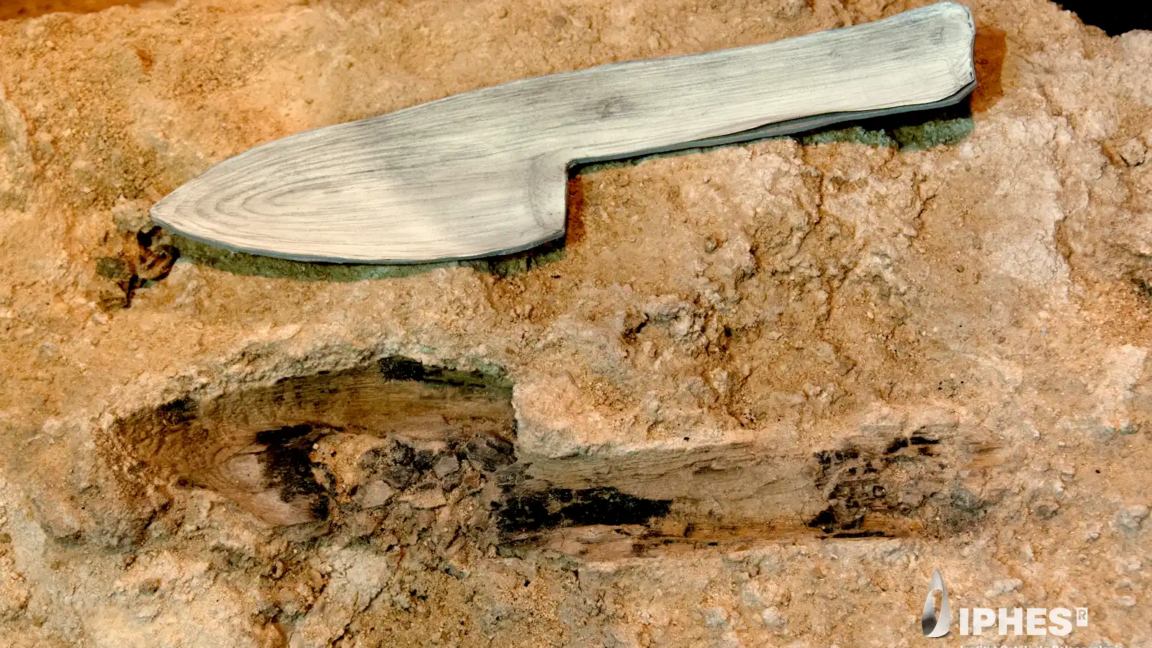
At Abric Romani, a rock shelter in Capellades, west of Barcelona, mineral-rich water helped preserve evidence of Neanderthal woodworking. The water coated wooden tools in a limestone-like crust. As the wood decayed, it left hollow molds that faithfully recorded the objects’ shapes.
In a recent study published in Science Advances, Spanish archaeologists cataloged 597 wooden remains from Neanderthal settlements dating from 62,000 to 40,000 years ago. The collection includes spears, drilling sticks, bark trays, part of a shelter and an unusual club. Together, the finds suggest that Neanderthals used wood for much more than hunting.
A Neanderthal site filled with wooden tools
Most of the oldest wooden artifacts known to archaeologists are weapons. They include a spear discovered in Schöningen, Germany; a spear tip found at Clacton-on-Sea in England; and a spear recovered beside an elephant skeleton in Rehringen, Germany. Many were preserved in waterlogged sediments, where a lack of oxygen slowed decomposition.
These spears primarily reveal how Neanderthals hunted. Abric Romani offers a broader view because it was a long-term settlement where Neanderthals lived, slept, cooked and made tools for roughly 20,000 years.
“We have samples of wooden tools that can be used not only for hunting, but also for various subsistence activities,” says M. Gema Chacón, an archaeologist at the Catalan Institute of Human Paleoecology and Social Evolution (IPHES-CERCA) and co-author of the study.
Woodworking was part of daily Neanderthal life
The presence of wooden remains across the site’s layers indicates that woodworking was a regular part of Neanderthal life rather than an occasional activity. The tools and structural remains provide evidence of practical skills used for hunting, food-related tasks, construction and other everyday activities.
Because wooden objects are rarely preserved, the Abric Romani discoveries offer an unusually detailed look at Neanderthal technology—and challenge the outdated idea that Neanderthals were merely less capable relatives of Homo sapiens.
Source: arstechnica.com