


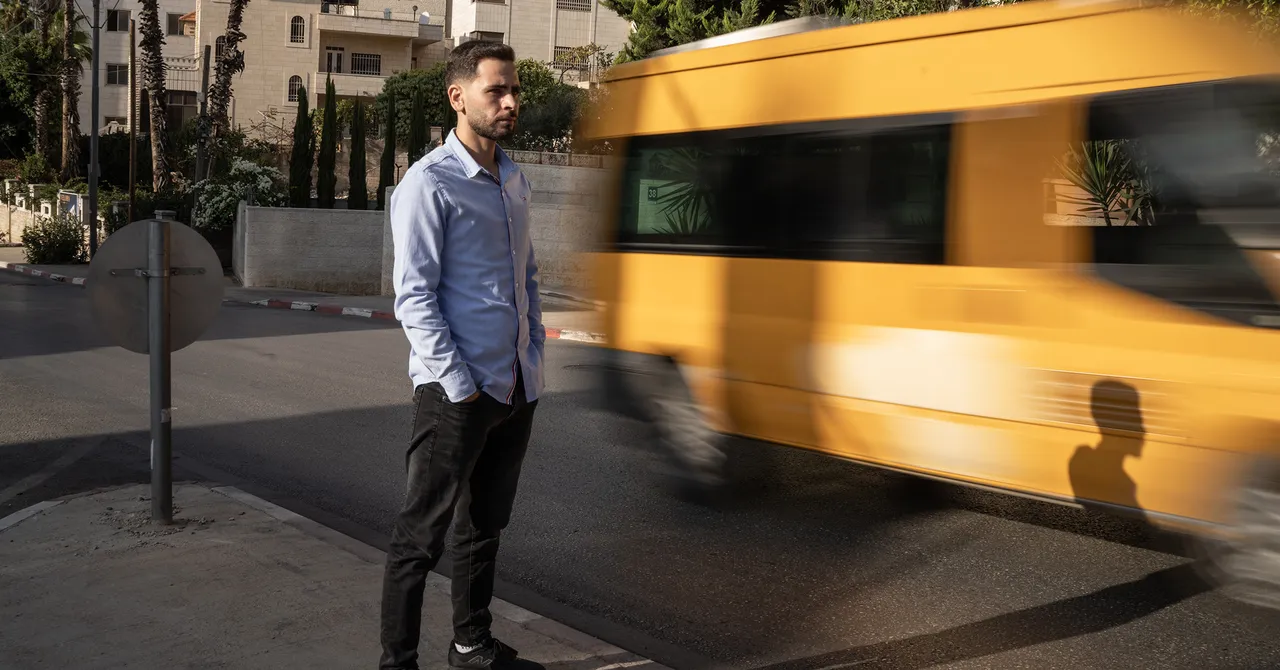
How a Telegram Group Helps Palestinians Navigate West Bank Checkpoints
Walking uncertain roads every night was exhausting for Khattab. He knew he was not alone. “People were afraid to leave their province,” he says. At the heart of that fear was an information vacuum, so he began developing a way to help himself and Palestinians across the West Bank stay informed.
‘Road Conditions’ Shares Real-Time Checkpoint Updates
Seven years ago, Khattab created a Telegram group called “Road Conditions.” The goal was to help people share information about checkpoint traffic, delays, closures, settlers, military presence and violence. He posted the link in a local newsgroup and waited. Participation grew slowly at first, then surged in 2022 as the number of checkpoints increased and delays worsened.
As more people joined Road Conditions, the pressure on Khattab grew. When major cities were locked down by checkpoints, the number of users sometimes climbed into the thousands. When dozens of commuters asked about the same checkpoint, answers arrived all at once: “Clear,” “Open” or “Closed.” All three could be accurate within the same hour. “Ten minutes is a long time,” Khattab says. “Things can change in an instant.” Thousands of messages reached him each day. “In the beginning, I could barely sleep,” he says.
Driving Hundreds of Thousands of Kilometers to Verify Reports
When Khattab began checking road conditions, his odometer showed 70,000 kilometers. Within four years, it had reached 274,000 kilometers, despite the West Bank stretching only about 130 kilometers from tip to tip. That is equivalent to driving more than five times around the globe without leaving the West Bank.
Volunteers Verify Road and Checkpoint Reports
What began as a crowdsourcing tool for people helping one another in the occupied West Bank has become an essential utility. To protect Road Conditions’ credibility, Khattab shut down the public chat shortly after launching the group in 2019 and invited its most active contributors to become moderators. Today, about a dozen volunteers run the feed. Drivers across the West Bank submit reports, usually with photos and videos. Moderators verify the updates by contacting people in the field, cross-checking other local pages and driving the roads themselves.
Source: www.wired.com