


Neanderthal Birch Tar May Have Been an Ancient Antibacterial Treatment
Neanderthals may have used sticky birch tar not only to make tools but also to treat wounds and help fight bacterial infections. Scientists have found that the prehistoric adhesive has antibacterial properties, suggesting it may have served as an early form of medicine.
The findings come from researchers at the University of Cologne, the University of Oxford, the University of Liège, and Cape Breton University in Canada. By recreating a birch-tar production technique associated with Neanderthals, the team produced the material and tested its ability to suppress harmful bacteria.
The study, titled “Antimicrobial properties of experimentally produced birch tar and its medicinal efficacy in the Pleistocene,” suggests that this prehistoric adhesive may have had a second, previously overlooked purpose: protecting wounds from infection.
Ancient Neanderthal Glue May Have Had a Medical Purpose
Birch tar is a thick, sticky substance made by heating birch bark. Archaeologists have found traces of it at numerous Neanderthal sites across Europe, often still attached to ancient stone tools.
For decades, these discoveries led researchers to believe that Neanderthals primarily used birch tar as an adhesive. The substance could help attach stone blades or points to wooden handles, a process known as hafting. Combining these materials allowed Neanderthals to create more practical and effective tools.
Scientists are increasingly investigating whether birch tar played a broader role in prehistoric life.
“However, new research suggests that birch tar may have been used for other purposes as well,” says Tjaark Siemssen of the universities of Cologne and Oxford, who led the study.
Evidence from traditional societies around the world shows that birch tar has been used for medicinal and other purposes. Archaeological evidence also suggests that Neanderthals used plants and practiced forms of medicine. These findings raise an important question: Could Neanderthals have recognized the medicinal properties of a substance they already used to make tools?
“In addition to these discoveries, there is also growing evidence of medical practices and uses of plants among Neanderthals, so we were interested in the use of birch tar in this context,” Siemssen says.
How Researchers Recreated Neanderthal Birch Tar
To investigate birch tar’s potential medical properties, the researchers produced their own samples using tree species that existed during the Neanderthal period. Instead of using modern industrial processes, they recreated production methods reconstructed from archaeological evidence.
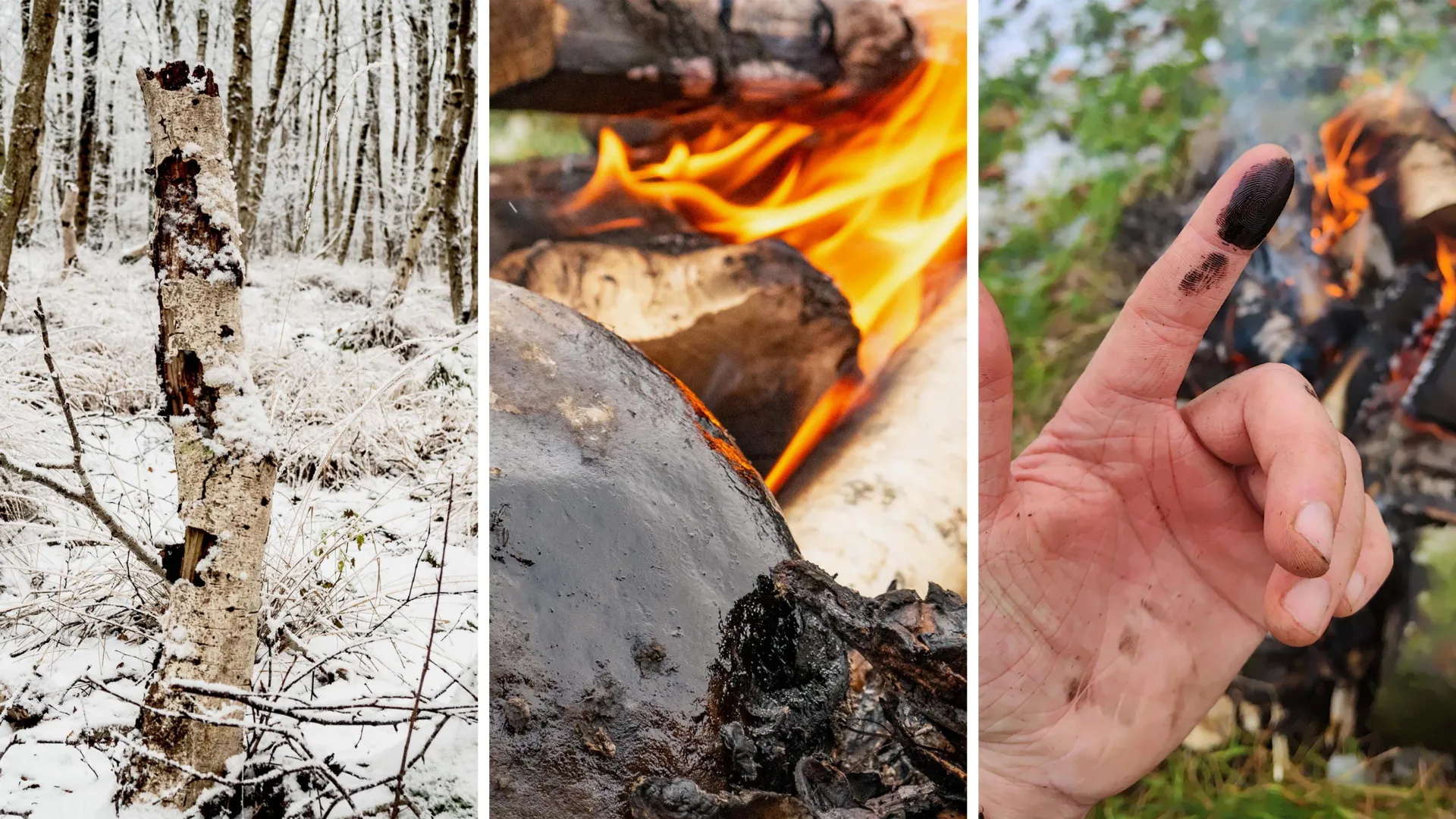
In one method, birch bark was placed in a sealed underground pit and heated with little or no oxygen. Under these conditions, the bark undergoes carbonization: heat breaks down the material and releases substances that can be collected as tar.
The researchers also tested a simpler method. They burned birch bark near a solid surface, such as a stone. As the bark burned, tar vapor condensed on the cooler surface, leaving a sticky residue that could be collected.
These experiments allowed the scientists to determine whether birch tar produced using different prehistoric techniques showed similar antibacterial properties.
Prehistoric Birch Tar Inhibited Staphylococcus aureus
The results revealed potentially important properties. Every type of birch tar produced in the experiments inhibited the growth of Staphylococcus aureus, a bacterium commonly associated with wound infections.
Staphylococcus aureus is also important in modern medicine because it can cause serious infections. Some strains have developed resistance to multiple antibiotics, contributing to difficult-to-treat hospital-acquired infections.
Notably, the antibacterial activity appeared regardless of which prehistoric extraction technique the researchers used. This suggests that birch tar’s antibacterial properties may not depend on one specific manufacturing method.
“These findings suggest that antimicrobial properties may have played a role dating back to early Neanderthals, and may have been used in a targeted manner,” Siemssen explains.
The experiment does not prove that Neanderthals applied birch tar to wounds. It does show, however, that the material they could produce had properties that might have been medically useful.
Could Neanderthal Medicine Offer Clues for Modern Antibiotics?
The discovery reveals another possible aspect of Neanderthal behavior and may also have implications for modern medical research.
Antibiotic resistance is a global health concern. As more bacteria become resistant to commonly used treatments, scientists are searching for additional substances that could help fight infections.
The antibacterial activity found in prehistoric birch tar suggests that this ancient material, along with traditional medical practices, may deserve further scientific investigation. Substances used thousands of years ago could contain compounds with properties that remain relevant today.
However, inhibiting bacteria in a laboratory experiment does not mean that birch tar is safe or effective for treating human wounds. Further research is needed to evaluate any potential medical applications.
“Our findings indicate that it may be worth investigating targeted antibiotics more deeply, either in an ethnographic context or, as in this case, in a prehistoric context,” Siemssen concluded.
The discovery adds to growing research portraying Neanderthals as resourceful humans who understood and exploited the natural materials around them. What archaeologists once viewed primarily as prehistoric glue may also have helped protect wounds, raising another intriguing possibility about the origins of human medical knowledge.
Source: www.sciencedaily.com