


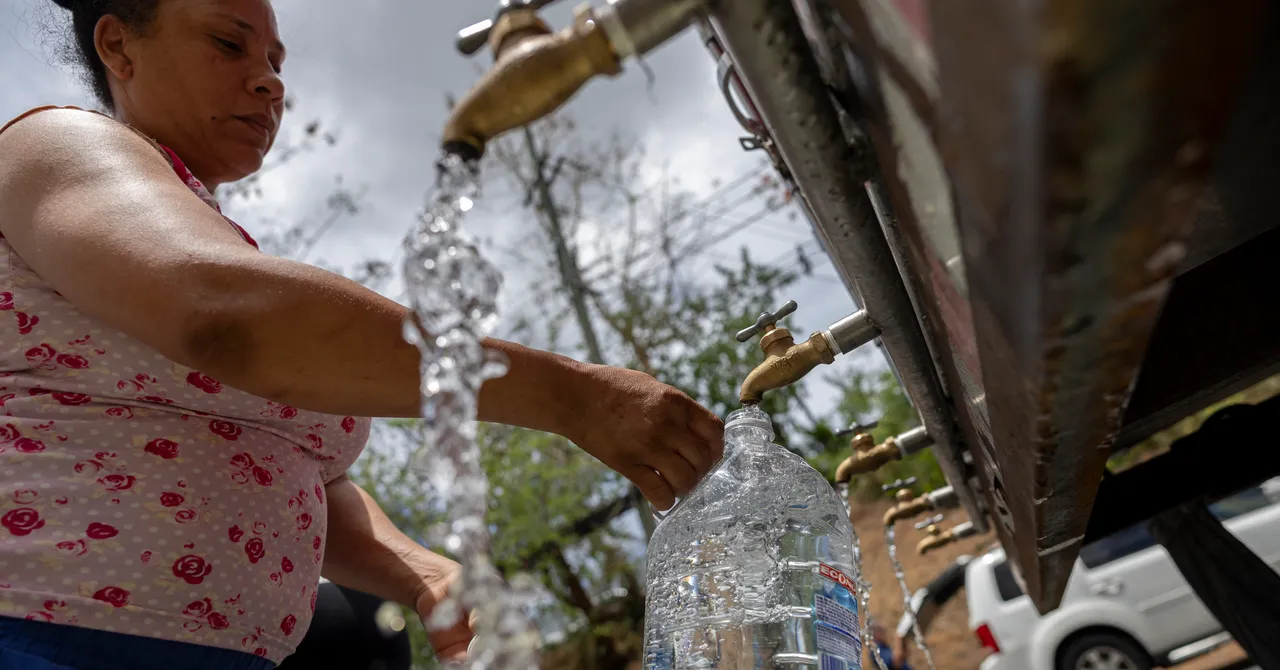
Puerto Rico is facing a worsening water crisis after a historic drought and the driest July on record led to water rationing across parts of the territory.
Yet one readily available solution remains largely underused: rainwater harvesting. Puerto Rico receives between 30 and 169 inches of rainfall each year, but unlike several other island communities, the government does not require homeowners to install rainwater collection systems. As climate change increases the risk of more frequent and severe droughts, decentralized water infrastructure could provide Puerto Ricans with a reliable emergency water supply.
“One of the most underused reservoirs in Puerto Rico is the roof of a house,” says Fernando Abruña, a partner at local architecture firm Abruña & Musgrave Architects.
The drought has intensified an existing water crisis caused by burst pipes, leaks and aging infrastructure. Over the past week, Puerto Rico Gov. Jennifer González ordered municipalities in the northeast to shut off water for two days at a time to conserve local supplies, leaving approximately 180,000 households with limited access. However, water shortages began long before the latest emergency, with many households lacking a reliable water supply for more than 100 days.
Environmental lawyer Ruth Santiago says drought is only part of the problem. In her view, government mismanagement poses a greater threat than water scarcity.
“Despite the climate crisis and drought, we still have plenty of water,” says Santiago, who works with local environmental organizations. The Comite Dialogo Ambiental (Environmental Dialogue Committee) advocates for improved water management and community resilience. “We might be collecting rainwater right now,” Santiago said when a storm began during our conversation.
The most resilient rainwater harvesting systems use gravity and gutters to direct water from rooftops into storage tanks or cisterns. These systems can connect to indoor plumbing, including faucets and showerheads. Larger rainwater collection systems can also supply water for cooling power plants and supporting other industrial applications.
Abruña, who is also a fellow at the American Institute of Architects, estimates that Puerto Rico could collect 30 billion gallons of rainwater annually if just 1 million households adopted rainwater harvesting technology. The average resident uses 62 gallons of water per day, equal to more than 72 billion gallons of residential water consumption each year.
The Puerto Rico Water and Sewerage Authority estimates that approximately 60 percent of the island’s drinking water is lost before reaching customers because of leaking pipes and failing infrastructure. The current emergency was partly triggered by multiple ruptures in a 72-inch water main, a critical artery serving major cities along the north coast. Santiago says repairing and modernizing Puerto Rico’s aging water distribution network is the most urgent priority, but rainwater harvesting could provide a cost-effective solution that communities can deploy quickly.
Although rainwater harvesting is not yet widespread in Puerto Rico, the practice is common in other island communities. About 90 percent of homes in the U.S. Virgin Islands have cisterns for collecting rainwater, and local building codes require many new developments to include this infrastructure. Barbados has similar requirements. In Hawaii, Honolulu County offers a limited number of free rainwater tank installations for residents.
Farrah Knibbs, an assistant professor at the University of Maryland’s School of Emergency and Disaster Health Systems, says that “nothing helps the Caribbean region as quickly and reliably as rainwater harvesting.” She argues that governments should recognize collected rainwater as part of the national water supply.
Knibbs also says governments should help cover installation costs to prevent rainwater harvesting from creating an “economic and financial burden on households.” In Puerto Rico, however, the government currently offers no incentives or financial assistance for residential rainwater collection. As a result, smaller community organizations are working to meet growing demand for water storage and emergency resilience.
Source: www.wired.com