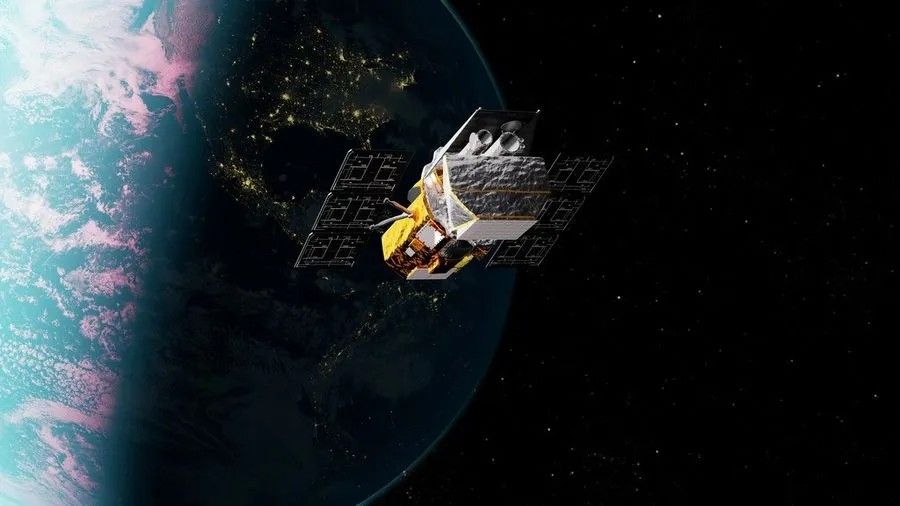
NASA’s Swift Observatory Set to Re-enter Earth’s Atmosphere After Rescue Mission Fails
NASA’s Neil Gehrels Swift Observatory is expected to re-enter Earth’s atmosphere later this year after a private rescue mission failed to raise the aging space telescope into a higher orbit.
The rescue spacecraft, called Link, was launched on July 3 by Arizona-based aerospace company Catalyst Space. Its mission was to rendezvous with Swift and boost the observatory to a safer orbit. However, problems emerged several weeks after launch when two instruments responsible for controlling Link’s orientation were affected by a power issue and began spinning out of control.
NASA announced on Wednesday, August 19, that the original Swift rescue mission would not continue as planned. Without a successful orbital boost, the observatory will continue losing altitude and is likely to fall back to Earth.
from the latest videoslive science
“While this is not the result we were aiming for, it still made this mission worth the effort,” NASA Administrator Jared Isaacman said in a statement.
The Neil Gehrels Swift Observatory launched in 2004 to study gamma-ray bursts, the most powerful explosions known in the universe. During its more than two decades in orbit, the spacecraft has gradually lost altitude as molecules in the upper atmosphere created drag and slowed its movement around Earth.
Higher solar activity has recently heated and expanded Earth’s upper atmosphere. This has increased the number of atmospheric molecules encountered by Swift, accelerating orbital decay and drawing the observatory closer to re-entry.
The $30 million Swift Boost mission was awarded to Catalyst Space in 2025. The plan called for the commercial spacecraft to meet with the aging telescope and lift it into a higher orbit. Because Swift’s altitude was declining rapidly, Catalyst engineers had less than a year to design and prepare the mission.
“We knew this was a high-risk, high-reward mission. It’s the first of its kind, developed on an unprecedented timeline driven by solar activity,” Sean Domagal-Goldman, head of NASA’s astrophysics division, said in a statement.
Link was scheduled to rendezvous with Swift approximately one month after launch. However, the spacecraft experienced ongoing altitude-control problems after the power issue affected its orientation systems in late July.
NASA has abandoned the mission’s original goal of boosting Swift into a higher orbit, but officials say the project is not entirely over. “LINK will continue to conduct rendezvous and close-in operations with NASA’s Neil Gehrels Swift Observatory, demonstrating key capabilities for the future of space exploration,” NASA said.
NASA and Catalyst Space will now assess the best way for the two spacecraft to gather useful data. The information could support future satellite-servicing, inspection and maintenance missions.
“We will learn everything we can from the Link rendezvous attempt and apply those lessons to subsequent missions,” Isaacman said.
Unless another intervention becomes possible, NASA expects the Neil Gehrels Swift Observatory to re-enter Earth’s atmosphere later this year.