


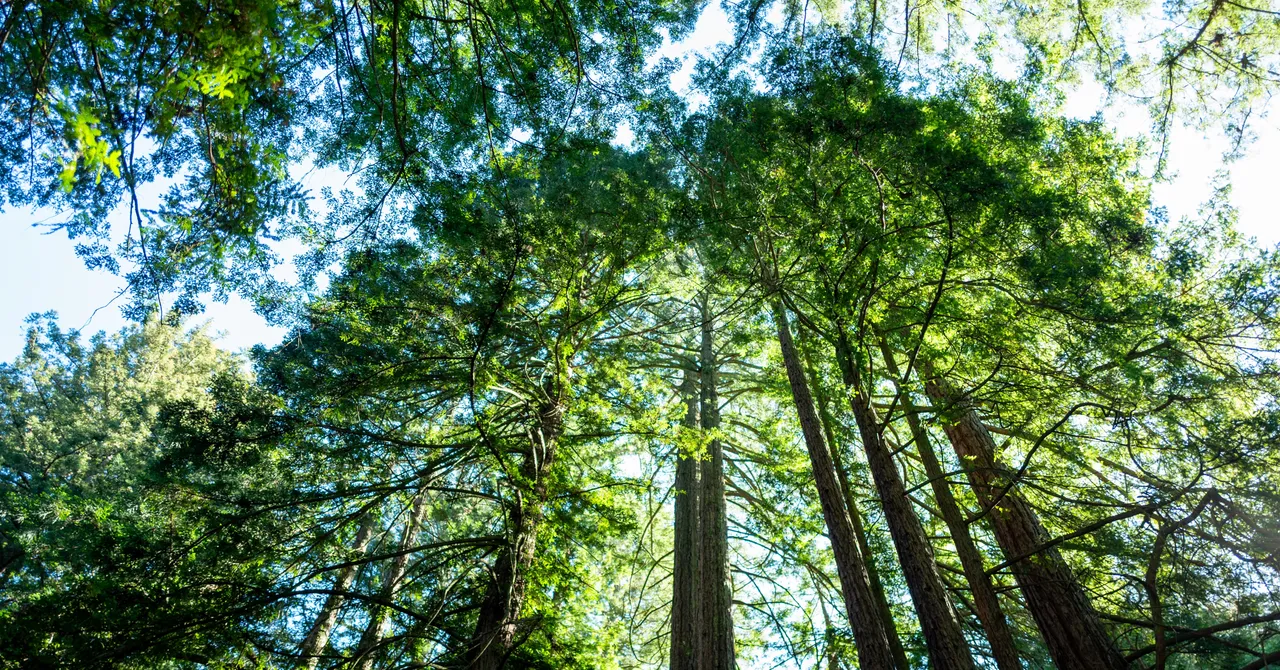
Climate Change Is Putting Coastal Redwoods Under Heat and Drought Stress
California’s coastal redwoods are facing a “double whammy”: less water and more heat. Todd Dawson, a plant ecophysiologist at the University of California, Berkeley, who was not involved in the study, said the trees are adapted to a narrow temperature range of 8 to 27 degrees Celsius (about 46 to 80 degrees Fahrenheit).
“California, like the rest of the world, is having some of the warmest days we’ve ever experienced,” Dawson said. The state is also experiencing 30 to 40 percent less fog, which typically acts as natural air conditioning for coastal redwoods.
Less Fog and More Heat Could Disrupt the Redwood Ecosystem
Rising temperatures and shifting conditions could also affect the organisms living in the upper floors of redwood trees. If excessive summer heat causes soil mats and ferns to dry out more quickly, salamanders and birds may no longer be able to survive there, said Ambrose. That could trigger a cascading effect throughout the ecosystem.
Redwood Leaves Recovered After Heat Exposure
Klinek said the trees appeared to recover after the heat passed. During the team’s two-year study, the leaves they observed were not acclimatized to high temperatures, but they did not lose their ability to photosynthesize after the heat subsided.
Although that finding offers some hope, it does not reduce the urgency of understanding how climate change is affecting these trees or addressing the warming itself.
“Temperatures are now returning to normal levels for fall and winter, and trees are recovering,” Klinek said. “But in five, 10 years, when temperatures get even hotter and heat waves become more frequent, we don’t really know if there will be a recovery.”
The Future of California’s Coastal Redwoods Is Uncertain
For now, salamanders and seabirds still have a home high in the coastal redwoods. But even people who live far from these trees are connected to their larger ecosystem. Like other forests, redwoods play an important role in supporting the health of the planet.
The trees Klinek studied could live for more than a thousand years. The question is whether they will be able to withstand a future of hotter temperatures, less fog and more frequent heat waves.
Source: www.wired.com