


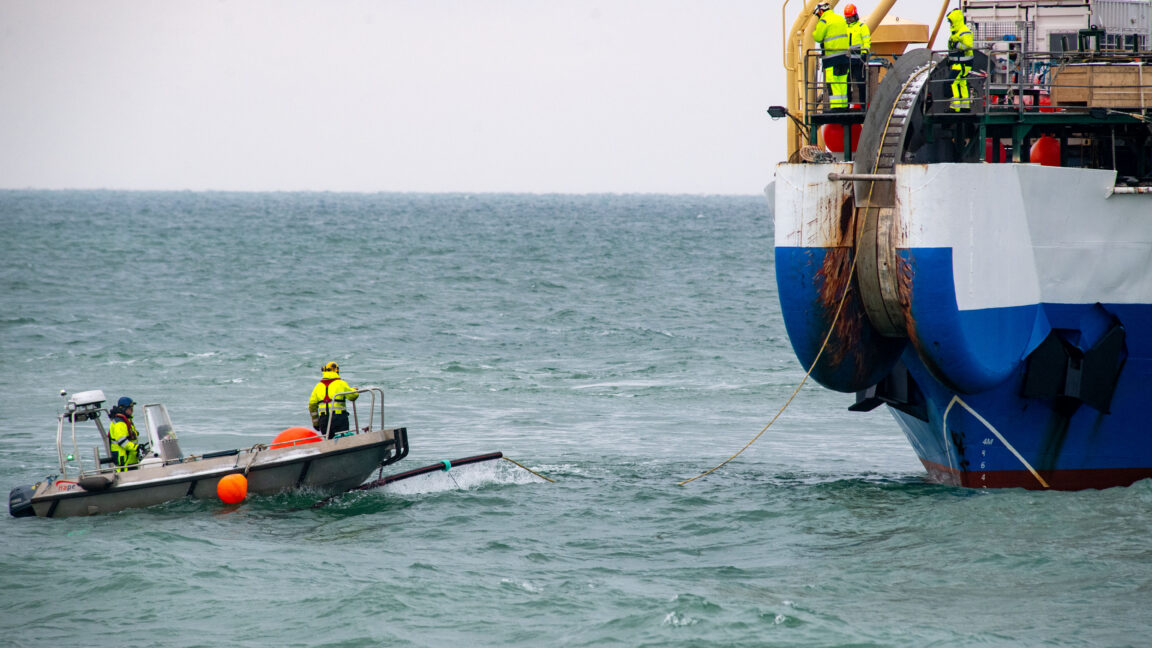
Undersea Cables Are Becoming Targets in a New Era of Undersea War
Submarine cables and pipelines are becoming increasingly attractive targets as geopolitical tensions rise and countries challenge the informal international rules that have protected critical undersea infrastructure for decades.
In Taiwan, the captain of the Chinese-owned ship Hontai was convicted in February 2025 of cutting submarine communications cables and sentenced to three years in prison in June 2025. Taiwan’s democratic parliament later amended the law to increase fines for the intentional damage of submarine cables or pipelines and allow prison sentences of up to seven years.
This year has brought several high-profile incidents involving overt and covert threats to undersea infrastructure. Iran has attempted to impose fees on operators of a disputed undersea cable running through the Strait of Hormuz. Separately, a joint operation involving Britain, Norway, and the United States confronted a Russian submarine that was training to disable undersea cables with new technology in Arctic waters near Svalbard, Norway.
What happens when the undersea backbone of the internet—and critical energy infrastructure—is no longer protected by near-universal international agreements? Ars Technica spoke with Elisabeth Braw, author of Undersea War, to find out. The interview has been condensed and edited for clarity.
Elisabeth Braw is the author of Undersea War.
Credit: Hachette Book Group (cover art) / Annabel Moeller (author photo)
Why are undersea cables becoming targets?
Ars Technica: There is a great deal of doubt and tension surrounding undersea infrastructure right now. Yet for several decades, including during the Cold War, a broad international framework appeared to work. Countries generally agreed not to interfere with one another’s undersea infrastructure.
Elisabeth Braw: That’s right. It worked for a very long time, which is why it is so alarming to see a system that depends on everyone doing the right thing—on countries being good undersea dwellers, so to speak—beginning to break down.
Ars Technica: It is not really a single factor, but what would you identify as the main reason this general consensus is breaking down?
Elisabeth Braw: If you consider how critical undersea cables and pipelines are—especially undersea cables—disrupting them for even one minute could cause massive damage. It would affect not only the New York City area but also New York as a financial hub. The consequences would include operational losses as well as the loss of the money moving through the cable every second of every day.
Because submarine cables are so important to modern society and the global economy, they have become incredibly attractive targets.
During the Cold War, there were telephone cables, but there were fewer of them and they were not used as extensively. They carried international calls and could transmit telegrams, but people did not send telegrams around the clock or make international calls continuously. The cables existed, but they were not nearly as important as they are today.
Source: arstechnica.com