


Climate Attribution Science Faces Growing Legal and Political Pressure
Public-records requests targeting U.S. climate researchers appear to be part of an effort to challenge studies linking fossil-fuel emissions to extreme weather and climate-related damage.
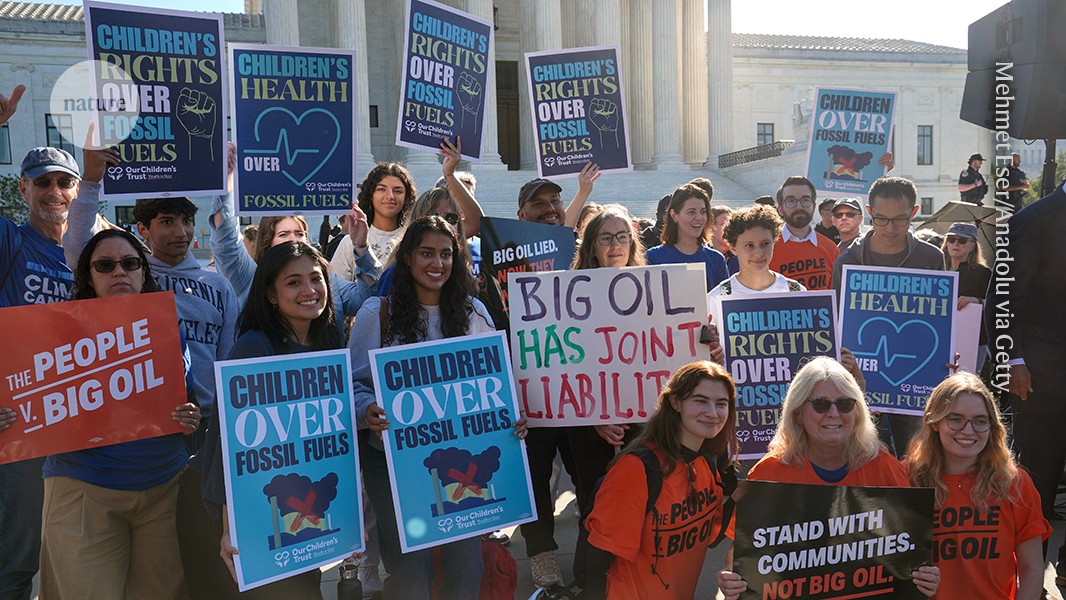
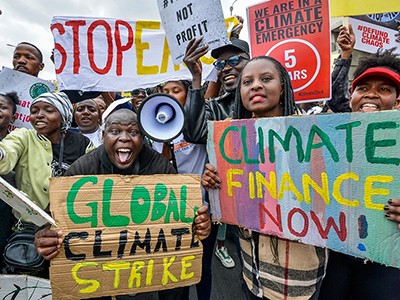
Protesters demonstrated outside the U.S. Supreme Court on October 5 as judges heard a case that could determine whether fossil-fuel companies will be held responsible for global warming.
Credit: Mehmet Eser/Anadolu via Getty
Last month, climate scientists working in the University of California system received a troubling message from their institution. University officials asked one scientist to submit all correspondence related to research linking fossil-fuel emissions to environmental damage caused by climate change.
The university had received a public-records request from a Des Moines, Iowa, law firm representing the Patriots Foundation, which describes itself as a government watchdog agency. It was the fifth similar request involving the scientist this year. The researcher asked to remain anonymous to avoid attracting further requests.
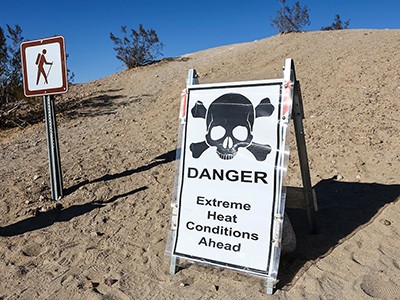
Heat waves are linked to carbon emissions from certain companies
The request appears to be part of a growing effort by groups linked to the energy industry to discredit research in the expanding field of climate attribution science. This research estimates the extent to which extreme weather events, including floods and heat waves, are connected to climate change.
Attribution science is playing an increasingly important role in lawsuits against major industrial emitters. Research by Nature identified at least 30 requests for communications related to climate attribution science that U.S. researchers say they have received since 2024. The requests involved the Patriots Foundation and other groups, were sent to 13 public universities, and were reported by dozens of climate scientists, legal scholars and lawyers.
Last month, Politico reported that more than 100 open-records requests had been made against researchers since 2021. Those requests involved climate-change harm litigation, rather than climate attribution research alone. It is unclear how many of the requests were duplicates.
Neither the Patriots Foundation nor the law firm representing it responded to Nature questions about the purpose of the request or the scientist’s concerns. Government Accountability and Oversight, a Wyoming-based organization that also submitted the request, said in a blog post that attribution researchers are activists opposed to the fossil-fuel industry. The organization argued that if researchers have the right to lobby, “the rest of us have a right under state transparency laws to see the receipts.”
Climate science is aiding lawsuits that could save the world
Recipients say the timing of the requests and the information being sought suggest that the groups are looking for conflicts of interest that could be used to undermine scientists’ work. One hypothetical conflict would be a lawyer paying a climatologist to conduct a particular study.
Researchers also believe the requests could be intended to gather information about collaborators and associates who are not covered by public-records laws, including scientists or lawyers at private institutions.
Why climate scientists say the requests are intimidating
These requests are legal. Scientists who spoke with Nature said they had nothing to hide. They emphasized that communications with lawyers involved in climate-change litigation do not bias their work or create a conflict of interest.
However, some researchers say the sheer volume of requests appears designed to discourage climate-attribution research while consuming scientists’ time and public funds. They also warn that open scientific discussion could be suppressed if researchers fear that email conversations with colleagues might be investigated or taken out of context.
“It’s a nuisance. It’s harassment,” said the University of California climate scientist.
How climate attribution science is being used in court
Research connecting climate change to specific weather phenomena has been conducted since 2004.1 In recent years, researchers have begun using climate models to estimate how emissions from particular companies may contribute to specific forms of damage, including deaths during heat waves.
Dozens of climate-related lawsuits are pending in U.S. courts. Their outcomes could depend on whether judges and juries consider attribution tests scientifically rigorous.
Among them is a case heard by the U.S. Supreme Court this month involving the U.S. energy company Suncor and representatives of Boulder County, Colorado. The court’s decision could determine whether similar cases proceed in state courts.
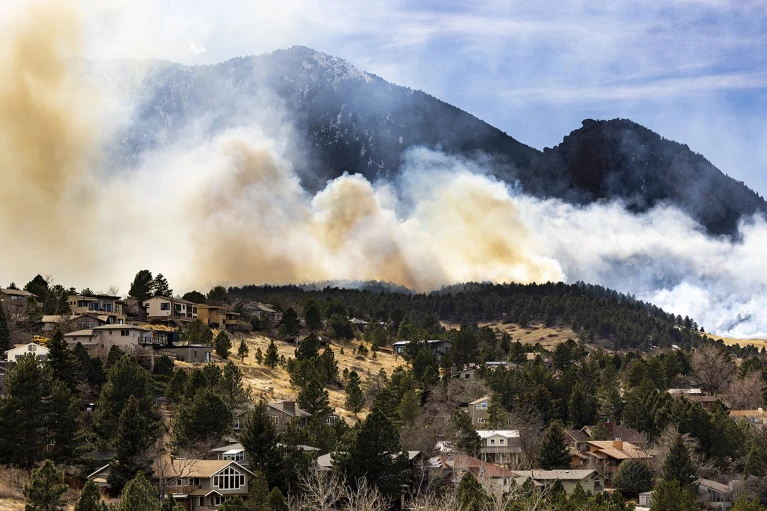
Climate attribution science estimates how much extreme weather events, such as the Boulder, Colorado, wildfires shown here, are attributable to climate change.
Credit: Michael Ciaglo/Getty
“Climate attribution is under attack”
Researchers say the legal implications of attribution science have made the field a political target. Republican-led committees in the U.S. Congress investigated a chapter in a reference manual for federal judges that describes attribution science and argues that it is an improper attempt by climate activists to influence judges.
Republican President Donald Trump, who favors the fossil-fuel industry and has claimed that climate change is a hoax, described the chapter on social media as “deceptive, biased and misleading.”
“Climate attribution is under attack,” says Christopher Callahan, a climatologist at Indiana University Bloomington. In May, he received a public-records request from Government Accountability and Oversight seeking communications with eight people involved in climate-change litigation.
Public-records requests are “completely skyrocketing”
Lauren Kurtz of the Climate Science Legal Defense Fund in New York City says requests targeting climate researchers have increased significantly this year. The organization helps scientists address legal issues related to their work.
“It’s a complete spike,” Kurtz said.
Will climate change litigation lead to action? Researchers assess impact
Source: www.nature.com